
Title
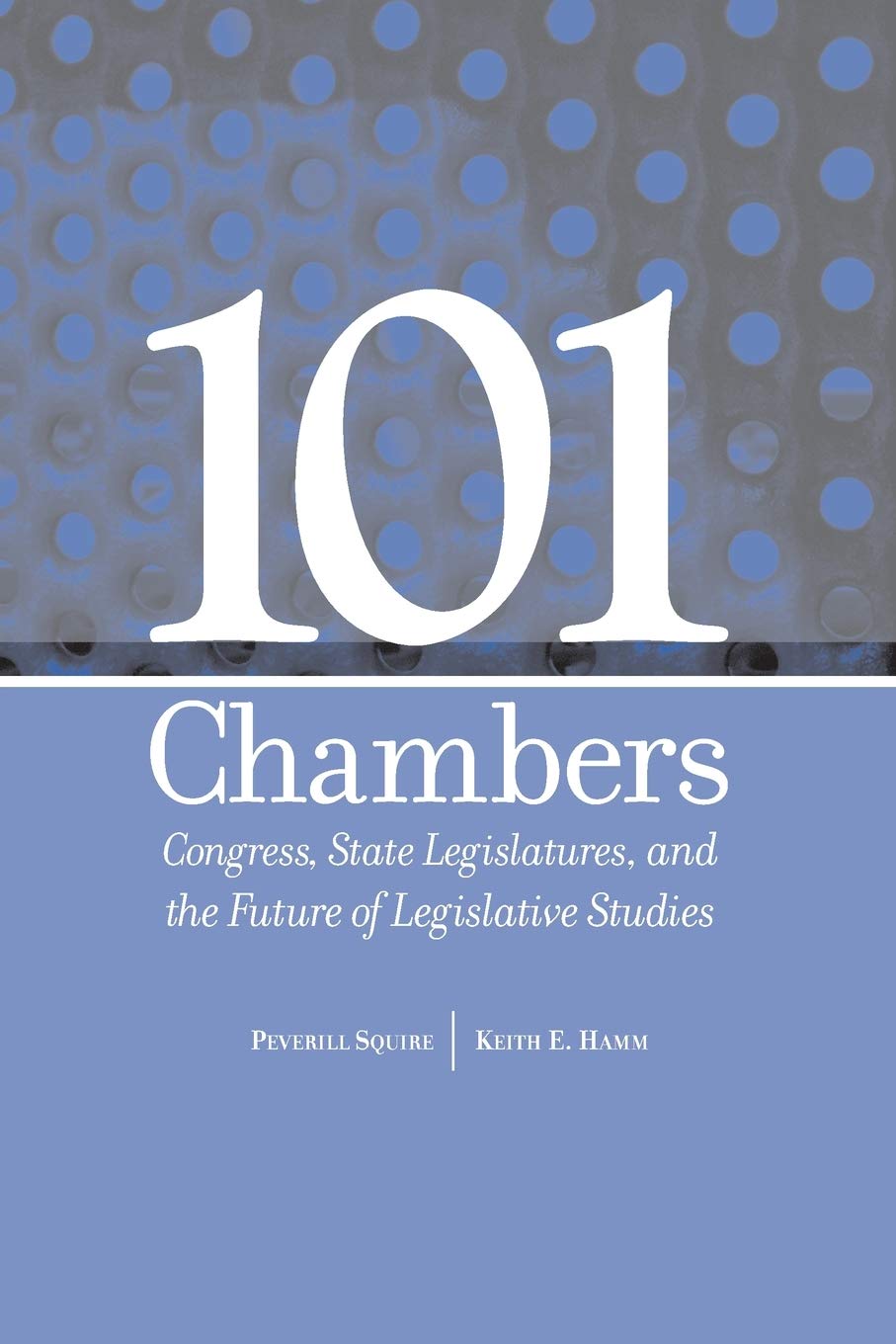
101 Chambers: Congress, State Legislatures, & The Future Of Legislative Studies (Parliaments & Legislatures),Used
Sold by Ergodebooks, an authorized reseller.
Returns accepted within 30 days | support@ergodebooks.com
Shipping Information
- Free Standard Shipping — United States only
- Processing Time: 3–5 business days
- Estimated Delivery: 6–10 business days after dispatch
- Double-boxed, fully insured & discreetly packaged
- Tracking number sent via email once dispatched
Returns & Refund
Returns accepted within 30 days of delivery.
Damaged or Defective Item
Free return shipping + replacement or full refund
Wrong Item Received
Free return shipping + replacement or full refund
Change of Mind
Return shipping at customer's expense · 25% restocking fee applies
Payment Option

Although legislative studies is thriving, it suffers from one glaring weakness: a lack of truly comparative, crossinstitutional research. Instead, research focuses overwhelmingly on the U.S. Congress. This unfortunate fixation limits the way scholars approach the testing of many compelling theories of legislative organization and behavior, and it ignores the invaluable research possibilities that comparison with the 99 American state legislative chambers offers.State legislatures are easily compared to Congress: They arise out of the same political culture and history. Their members represent the same parties and face the same voters in the same elections using the same rules. And the functions and roles are the same, with each fully capable of initiating, debating, and passing legislation. None of the methodological problems found when comparing presidential system legislatures with parliamentary system legislatures arise when comparing Congress and the state legislatures.However, while there are great similarities, there are also important differences that provide scholars leverage for rigorously testing theories. The book compares and contrasts Congress and the state legislatures on histories, fundamental structures, institutional and organizational characteristics, and members. By highlighting the vast array of organizational schemes and behavioral patterns evidenced in state legislatures, the authors demonstrate that the potential for the study of American legislatures, as opposed to the separate efforts of Congressional and state legislative scholars, is too great to leave unexplored.
⚠️ WARNING (California Proposition 65):
This product may contain chemicals known to the State of California to cause cancer, birth defects, or other reproductive harm.
For more information, please visit www.P65Warnings.ca.gov.