
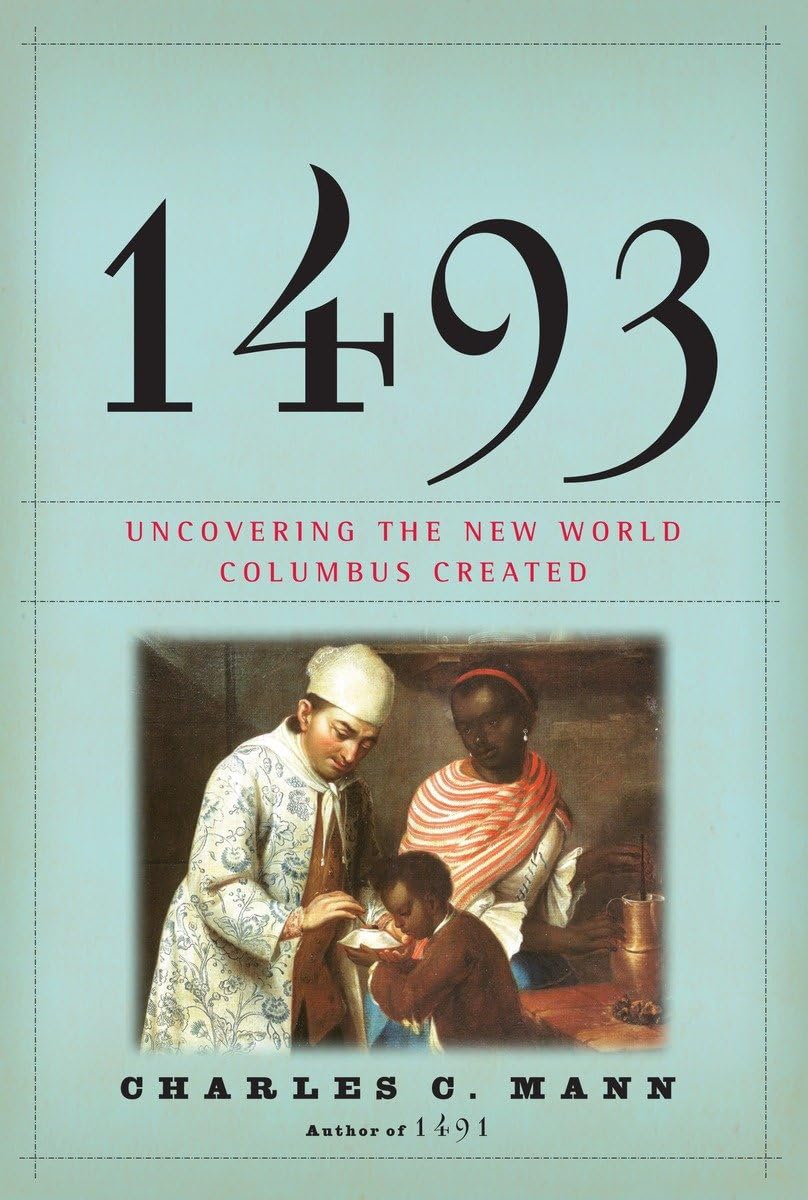
Title
1493: Uncovering The New World Columbus Created,New
Sold by Ergodebooks, an authorized reseller.
Returns accepted within 30 days | support@ergodebooks.com
Shipping Information
- Free Standard Shipping — United States only
- Processing Time: 3–5 business days
- Estimated Delivery: 6–10 business days after dispatch
- Double-boxed, fully insured & discreetly packaged
- Tracking number sent via email once dispatched
Returns & Refund
Returns accepted within 30 days of delivery.
Damaged or Defective Item
Free return shipping + replacement or full refund
Wrong Item Received
Free return shipping + replacement or full refund
Change of Mind
Return shipping at customer's expense · 25% restocking fee applies
Payment Option

From The Author Of 1491The Bestselling Study Of The Precolumbian Americasa Deeply Engaging New History Of The Most Momentous Biological Event Since The Death Of The Dinosaurs.More Than 200 Million Years Ago, Geological Forces Split Apart The Continents. Isolated From Each Other, The Two Halves Of The World Developed Radically Different Suites Of Plants And Animals. When Christopher Columbus Set Foot In The Americas, He Ended That Separation At A Stroke. Driven By The Economic Goal Of Establishing Trade With China, He Accidentally Set Off An Ecological Convulsion As European Vessels Carried Thousands Of Species To New Homes Across The Oceans.The Columbian Exchange, As Researchers Call It, Is The Reason There Are Tomatoes In Italy, Oranges In Florida, Chocolates In Switzerland, And Chili Peppers In Thailand. More Important, Creatures The Colonists Knew Nothing About Hitched Along For The Ride. Earthworms, Mosquitoes, And Cockroaches; Honeybees, Dandelions, And African Grasses; Bacteria, Fungi, And Viruses; Rats Of Every Descriptionall Of Them Rushed Like Eager Tourists Into Lands That Had Never Seen Their Like Before, Changing Lives And Landscapes Across The Planet.Eight Decades After Columbus, A Spaniard Named Legazpi Succeeded Where Columbus Had Failed. He Sailed West To Establish Continual Trade With China, Then The Richest, Most Powerful Country In The World. In Manila, A City Legazpi Founded, Silver From The Americas, Mined By African And Indian Slaves, Was Sold To Asians In Return For Silk For Europeans. It Was The First Time That Goods And People From Every Corner Of The Globe Were Connected In A Single Worldwide Exchange. Much As Columbus Created A New World Biologically, Legazpi And The Spanish Empire He Served Created A New World Economically.As Charles C. Mann Shows, The Columbian Exchange Underlies Much Of Subsequent Human History. Presenting The Latest Research By Ecologists, Anthropologists, Archaeologists, And Historians, Mann Shows How The Creation Of This Worldwide Network Of Ecological And Economic Exchange Fostered The Rise Of Europe, Devastated Imperial China, Convulsed Africa, And For Two Centuries Made Mexico Citywhere Asia, Europe, And The New Frontier Of The Americas Dynamically Interactedthe Center Of The World. In Such Encounters, He Uncovers The Germ Of Today
⚠️ WARNING (California Proposition 65):
This product may contain chemicals known to the State of California to cause cancer, birth defects, or other reproductive harm.
For more information, please visit www.P65Warnings.ca.gov.
- Q: How many pages does this book have? A: This book contains five hundred sixty pages. It offers an in-depth exploration of historical events and their impact.
- Q: What is the binding type of this book? A: This book is hardcover. Hardcover books tend to be more durable and are often preferred for long-term use.
- Q: What are the dimensions of this book? A: This book measures six point six one inches in length, one point six five inches in width, and nine point six one inches in height.
- Q: Who is the author of this book? A: The author is Charles C. Mann. He is known for his insightful historical analyses and engaging writing style.
- Q: What is the genre of this book? A: This book falls under the Native American history genre. It examines significant historical events related to the Americas.
- Q: Is this book suitable for young readers? A: No, this book is not specifically aimed at young readers. It covers complex historical themes that may be more appropriate for adults.
- Q: How do I approach reading this book? A: To get the most out of this book, read it at a comfortable pace, taking notes on key themes and events for better understanding.
- Q: What themes are explored in this book? A: This book explores themes such as ecological exchange, economic history, and the impact of colonization on global trade.
- Q: Is this book part of a series? A: No, this book is not part of a series. It is a standalone work that builds on the author's previous book, '1491'.
- Q: How should I store this book to keep it in good condition? A: Store this book upright on a shelf in a cool, dry place. Avoid direct sunlight to prevent fading and damage.
- Q: Can I lend this book to a friend? A: Yes, you can lend this book to a friend. Just ensure they handle it carefully to maintain its condition.
- Q: What if the book arrives damaged? A: If the book arrives damaged, you should contact the seller for a return or exchange. Most sellers have a customer service policy for such cases.
- Q: How do I clean the cover of this book? A: To clean the cover, lightly dust it with a soft, dry cloth. Avoid using water or cleaners that could damage the material.
- Q: What is the main focus of this book? A: The main focus of this book is the Columbian Exchange and its vast implications on global ecology and economy.
- Q: Is there a bibliography in this book? A: Yes, this book includes a bibliography. It provides sources for further reading and research on the topics discussed.
- Q: What makes this book unique? A: This book is unique for its comprehensive analysis of how historical events shaped modern ecological and economic landscapes.