
Title
1939: The Alliance That Never Was and the Coming of World War II,Used
Sold by Ergodebooks, an authorized reseller.
Returns accepted within 30 days | support@ergodebooks.com
Shipping Information
- Free Standard Shipping — United States only
- Processing Time: 3–5 business days
- Estimated Delivery: 6–10 business days after dispatch
- Double-boxed, fully insured & discreetly packaged
- Tracking number sent via email once dispatched
Returns & Refund
Returns accepted within 30 days of delivery.
Damaged or Defective Item
Free return shipping + replacement or full refund
Wrong Item Received
Free return shipping + replacement or full refund
Change of Mind
Return shipping at customer's expense · 25% restocking fee applies
Payment Option

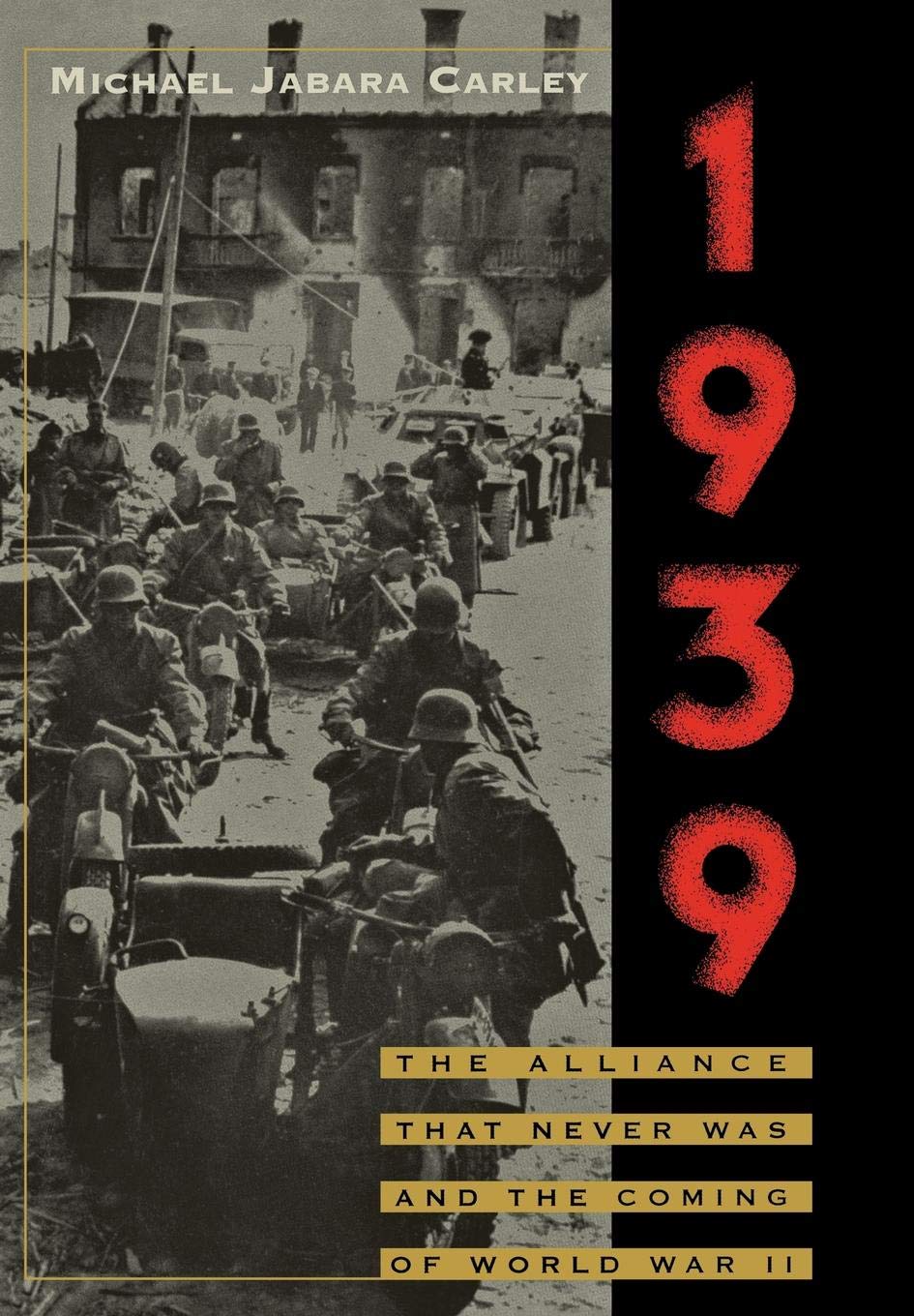
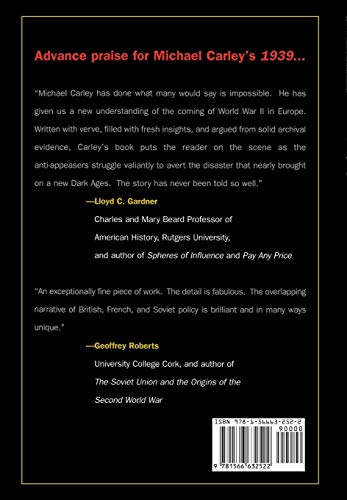
At a crucial point in the twentieth century, as Nazi Germany prepared for war, negotiations between Britain, France, and the Soviet Union became the last chance to halt Hitlers aggression. Incredibly, the French and British governments dallied, talks failed, and in August 1939 the Soviet Union signed a nonaggression pact with Germany. Michael Carleys gripping account of these negotiations is not a pretty story. It is about the failures of appeasement and collective security in Europe. It is about moral depravity and blindness, about villains and cowards, and about heroes who stood against the intellectual and popular tides of their time. Some died for their beliefs, others labored in obscurity and have been nearly forgotten. In 1939 they sought to make the Grand Alliance that never was between France, Britain, and the Soviet Union. This story of their efforts is background to the wartime alliance created in 1941 without France but with the United States in order to defeat a demonic enemy. 1939 is based upon Mr. Carleys longtime research on the period, including work in French, British, and newly opened Soviet archives. He challenges prevailing interpretations of the origins of World War II by situating 1939 at the end of the early cold war between the Soviet Union, France, and Britain, and by showing how anticommunism was the major cause of the failure to form an alliance against Hitler. 1939 was published on September 1, the sixtieth anniversary of the Nazi invasion of Poland and the start of the war.
⚠️ WARNING (California Proposition 65):
This product may contain chemicals known to the State of California to cause cancer, birth defects, or other reproductive harm.
For more information, please visit www.P65Warnings.ca.gov.
- Q: What is the main subject of the book '1939: The Alliance That Never Was and the Coming of World War II'? A: The book explores the failed negotiations between Britain, France, and the Soviet Union in 1939, which were the last chance to halt Nazi Germany's aggression before World War II began.
- Q: Who is the author of this book? A: The author is Michael Carley, who has conducted extensive research on the period, utilizing various historical archives.
- Q: What is the publication date of '1939: The Alliance That Never Was'? A: The book was published on May 25, 1999.
- Q: What is the condition of the book being sold? A: The book is listed as 'Used Book in Good Condition', indicating it has been previously owned but is still in a satisfactory state.
- Q: How many pages does the book have? A: The book contains a total of 384 pages.
- Q: What type of binding does this book have? A: The book is available in hardcover binding, which is known for its durability.
- Q: What are the key themes discussed in the book? A: Key themes include the failures of appeasement, moral depravity, collective security in Europe, and the political dynamics leading to World War II.
- Q: Is there any specific research or archival work referenced in the book? A: Yes, the book is based on Michael Carley's research, which includes work in French, British, and newly opened Soviet archives.
- Q: What historical perspective does the book provide regarding World War II? A: The book challenges prevailing interpretations by situating the events of 1939 at the end of the early Cold War and showing how anti-communism contributed to the failure of an alliance against Hitler.
- Q: Is this book suitable for readers interested in World War II history? A: Yes, this book is well-suited for readers interested in the intricacies of World War II history, particularly the political dynamics leading up to the war.