
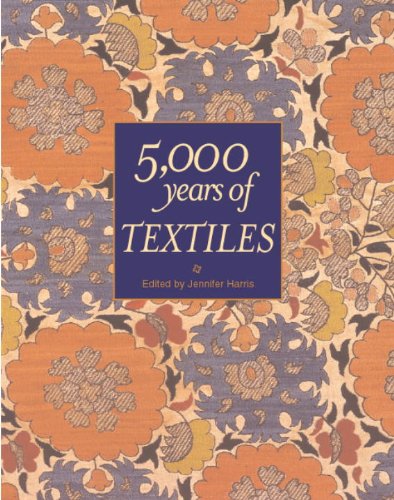
Title
5,000 Years of Textiles (Five Thousand Years of Textiles),Used
Sold by Ergodebooks, an authorized reseller.
Returns accepted within 30 days | support@ergodebooks.com
Shipping Information
- Free Standard Shipping — United States only
- Processing Time: 3–5 business days
- Estimated Delivery: 6–10 business days after dispatch
- Double-boxed, fully insured & discreetly packaged
- Tracking number sent via email once dispatched
Returns & Refund
Returns accepted within 30 days of delivery.
Damaged or Defective Item
Free return shipping + replacement or full refund
Wrong Item Received
Free return shipping + replacement or full refund
Change of Mind
Return shipping at customer's expense · 25% restocking fee applies
Payment Option

5,000 Years of Textiles is an authoritative reference and a visual delight, with examples from the Far East to the Americas, from Africa to Scandinavia, and from Egyptian artifacts dating from 3000 BC to the most uptodate modern craftwork and furnishings. The book includes an expert guide to nine fundamental textile techniques, from rug weaving and tapestry to felt and bark cloth. Each is clearly explained, using line drawings and closeup color details from actual textiles, to show how people from many different traditions have made and decorated cloth through the centuries. The breathtaking wealth of illustrations drawn from major collections all over the world includes costumes, period interiors, archival photographs, and a vast range of fabrics, from the simplest handwoven cloths to sumptuous brocades and exquisite embroidery.
⚠️ WARNING (California Proposition 65):
This product may contain chemicals known to the State of California to cause cancer, birth defects, or other reproductive harm.
For more information, please visit www.P65Warnings.ca.gov.
- Q: How many pages does the book have? A: This book has three hundred twenty pages. It is filled with rich illustrations and detailed descriptions of textile techniques.
- Q: What is the binding type of this book? A: The book is a paperback. This makes it lightweight and easy to handle for readers.
- Q: What are the dimensions of the book? A: The book measures six point six one inches in length, zero point nine one inches in width, and eight point two seven inches in height. These dimensions make it portable for reading.
- Q: Who is the author of the book? A: The author of the book is Jennifer Harris. She provides expert insights into the history and techniques of textiles.
- Q: What category does this book belong to? A: This book belongs to the Textile & Costume category. It covers a wide range of textile traditions from around the world.
- Q: How can I best use this book? A: You can use this book as a reference guide to understand textile techniques. It is suitable for both enthusiasts and professionals interested in textiles.
- Q: Is this book suitable for beginners? A: Yes, this book is suitable for beginners and experts alike. It explains fundamental techniques in a clear and accessible manner.
- Q: What textile techniques are covered in the book? A: The book covers nine fundamental textile techniques, including rug weaving, tapestry, felt, and bark cloth. Each technique is well illustrated and explained.
- Q: Can I use this book for educational purposes? A: Yes, this book is excellent for educational purposes. It serves as a comprehensive resource for studying the history and art of textiles.
- Q: How do I keep this book in good condition? A: To keep this book in good condition, store it in a cool, dry place away from direct sunlight. Avoid bending the spine or pages.
- Q: Is there a warranty for this book? A: No, this book does not come with a warranty. However, it is in good condition and should meet your expectations.
- Q: What should I do if the book arrives damaged? A: If the book arrives damaged, you should contact the seller for a return or exchange. Most sellers offer return policies for such issues.
- Q: How should I clean this book? A: To clean this book, gently dust it with a soft cloth. Avoid using water or cleaning solutions as they can damage the pages.
- Q: Is this book a good gift for textile enthusiasts? A: Yes, this book makes a great gift for textile enthusiasts. Its rich illustrations and expert insights are sure to be appreciated.
- Q: What makes this book unique? A: This book is unique because it spans five thousand years of textile history, showcasing a vast array of techniques and cultures. It is both visually stunning and informative.
- Q: Does the book include color illustrations? A: Yes, the book includes close-up color illustrations of actual textiles. These visuals enhance the learning experience and appreciation of textile arts.