
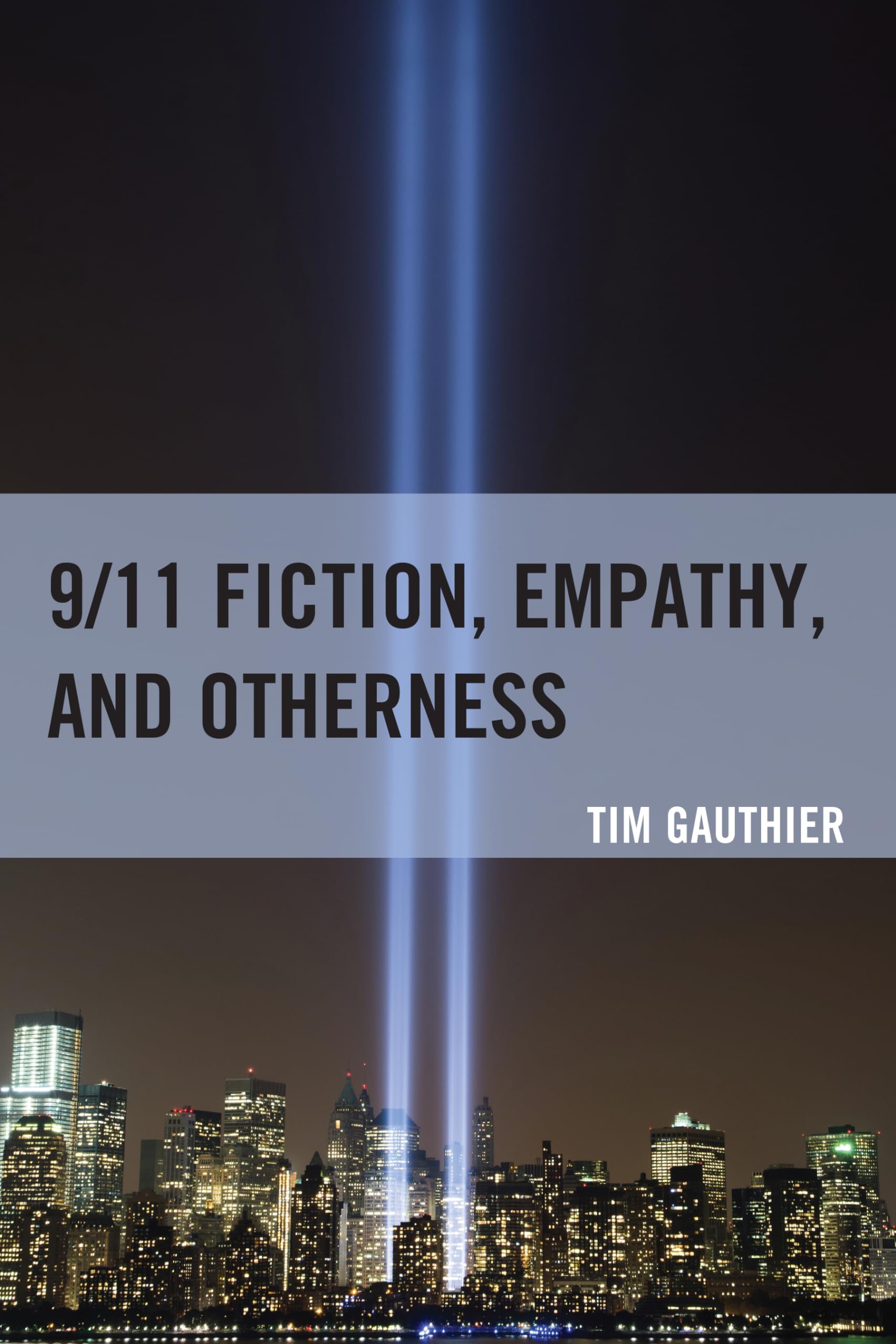
Title
9/11 Fiction, Empathy, and Otherness,Used
Sold by Ergodebooks, an authorized reseller.
Returns accepted within 30 days | support@ergodebooks.com
Shipping Information
- Free Standard Shipping — United States only
- Processing Time: 3–5 business days
- Estimated Delivery: 6–10 business days after dispatch
- Double-boxed, fully insured & discreetly packaged
- Tracking number sent via email once dispatched
Returns & Refund
Returns accepted within 30 days of delivery.
Damaged or Defective Item
Free return shipping + replacement or full refund
Wrong Item Received
Free return shipping + replacement or full refund
Change of Mind
Return shipping at customer's expense · 25% restocking fee applies
Payment Option

9/11 Fiction, Empathy, and Otherness analyzes recent works of fiction whose principal subject is the attacks of September 11, 2001. The readings of the novels question and assess the validity and potential effectiveness of both the subsequent calls for a cosmopolitan outlook and the related, but no less significant, emphasis placed on empathy, and exhibited in such recent studies as Jeremy Rifkin's The Empathic Civilization, Karsten Stueber's Rediscovering Empathy, and Julinna Oxley's The Moral Dimensions of Empathy. As such, this study examines the extent to which "us" and "them" narratives proliferated after 9/11, and the degree to which calls for greater empathy and a renewed emphasis on cosmopolitan values served to counterbalance an apparent movement towards increased polarization, encapsulated in the oftmentioned "clash of civilizations." A principal objective of the book is thus to examine the ethical and political implications revealed in the exercising or withholding of empathy. For though empathy, in and of itself, may not be sufficient, it is nevertheless a vital component in the generation of actions one might identify as cosmopolitan. In other words, this book examines the responses to 9/11 (in both Western and nonWestern novels) in order to uncover what their dramatic renderings might tell us about the possibility of a truly globalized community. The attainability of any cosmopolitan engagement is contingent upon our abilities to understand the other, knowing always that otherness eludes our grasp, and the best we can do is imagine some version of it. It is primarily in this capacity that the novel has a role to play. Whether it is the challenge of connecting with the survivors of trauma and the inhabitants of a traumatized city, or with a hyperpower that has experienced its own vulnerability for the first time, or even with the terrorist who seeks to commit violent acts, these novels afford us the means of examining the complex dynamics involved in any exhibition of fellowfeeling for the other, and the everpresent potential failure of that engagement.
⚠️ WARNING (California Proposition 65):
This product may contain chemicals known to the State of California to cause cancer, birth defects, or other reproductive harm.
For more information, please visit www.P65Warnings.ca.gov.