If you have any questions, you are always welcome to contact us. We'll get back to you as soon as possible, withing 24 hours on weekdays.
Customer service
All questions about your order, return and delivery must be sent to our customer service team by e-mail at yourstore@yourdomain.com
Sale & Press
If you are interested in selling our products, need more information about our brand or wish to make a collaboration, please contact us at press@yourdomain.com
Help
If you have any questions, you are always welcome to contact us. We'll get back to you as soon as possible, withing 24 hours on weekdays.
Customer service
All questions about your order, return and delivery must be sent to our customer service team by e-mail at yourstore@yourdomain.com
Sale & Press
If you are interested in selling our products, need more information about our brand or wish to make a collaboration, please contact us at press@yourdomain.com
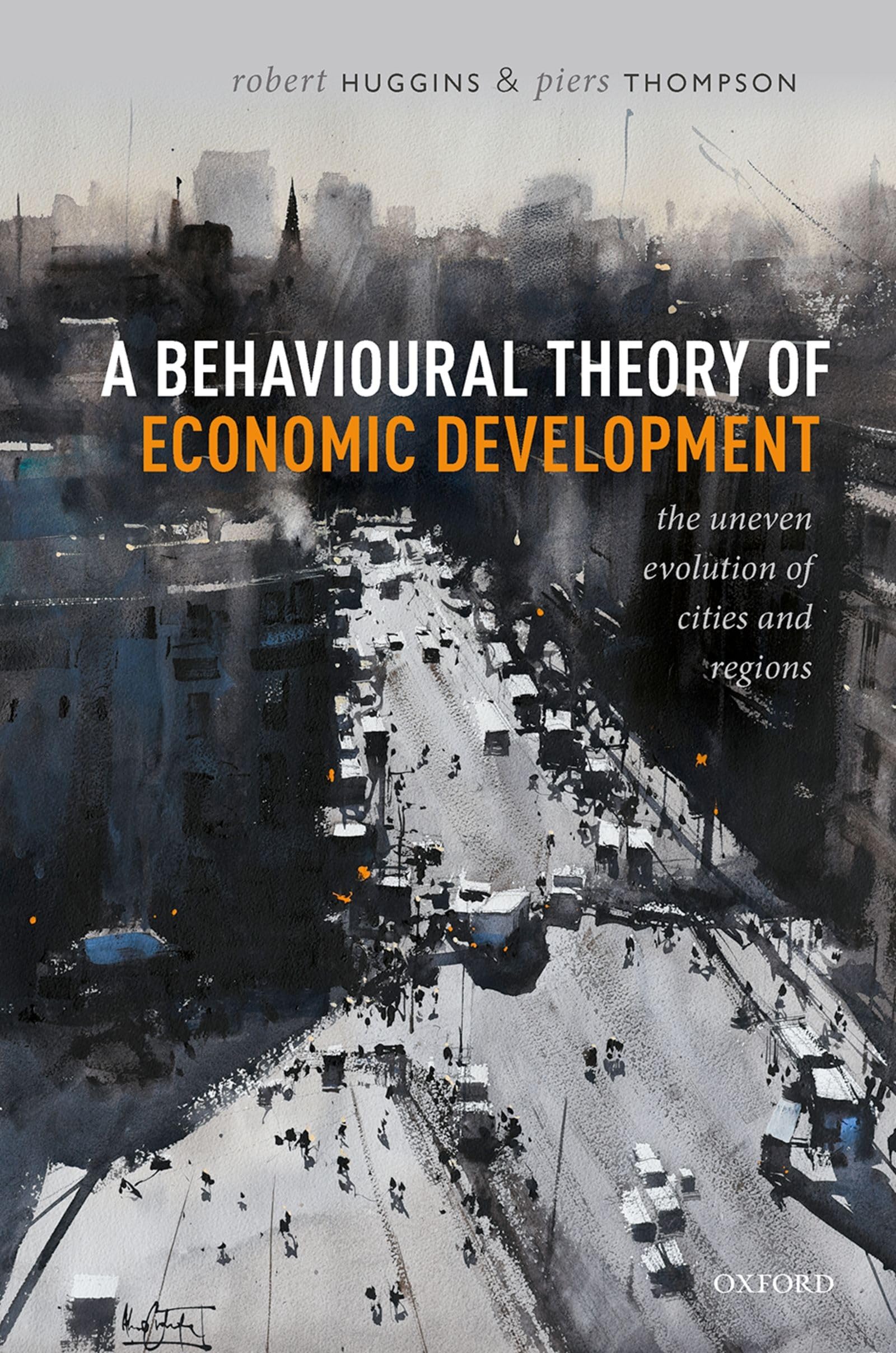
Innovation, entrepreneurship, knowledge, and human capital are widely acknowledged as key levers of development. Yet what are the sources of these factors, and why do they differ in their endowment across regions? Motivated by a belief that theories of economic development can move beyond the generally accepted explanations of location and the organization of industries and capital, this book establishes a behavioural theory of economic development illustrating that differences in human behaviour across cities and regions are a significant deeprooted cause of uneven development.Fusing a range of concepts relating to culture, psychology, human agency, institutions, and power, it proposes that the longterm differentials in economic development between cities and regions, both within and across nations, is strongly connected to the underlying forms of behaviour enacted by humans on an individual and collective basis. Given a world of finite and limited resources, coupled with a rapidly growing population especially in cities and urban regions human behaviour, and the expectations and preferences upon which it is based, are central to understanding how notions of development may change in coming years. This book provides a novel theory of the role of psychocultural context and human behavioural and institutional frameworks in uneven economic development on a global scale.
⚠️ WARNING (California Proposition 65):
This product may contain chemicals known to the State of California to cause cancer,
birth defects, or other reproductive harm.
For MAP (Minimum Advertised Price) violations and Intellectual Property (IP) or Trademark concerns, please contact:
support@ergodebooks.com
⚠️ California Proposition 65 Warning: Some products sold on this website may expose you to chemicals known to the State of California to cause cancer, birth defects, or other reproductive harm. For more information, visit www.P65Warnings.ca.gov.