If you have any questions, you are always welcome to contact us. We'll get back to you as soon as possible, withing 24 hours on weekdays.
Customer service
All questions about your order, return and delivery must be sent to our customer service team by e-mail at yourstore@yourdomain.com
Sale & Press
If you are interested in selling our products, need more information about our brand or wish to make a collaboration, please contact us at press@yourdomain.com
Help
If you have any questions, you are always welcome to contact us. We'll get back to you as soon as possible, withing 24 hours on weekdays.
Customer service
All questions about your order, return and delivery must be sent to our customer service team by e-mail at yourstore@yourdomain.com
Sale & Press
If you are interested in selling our products, need more information about our brand or wish to make a collaboration, please contact us at press@yourdomain.com
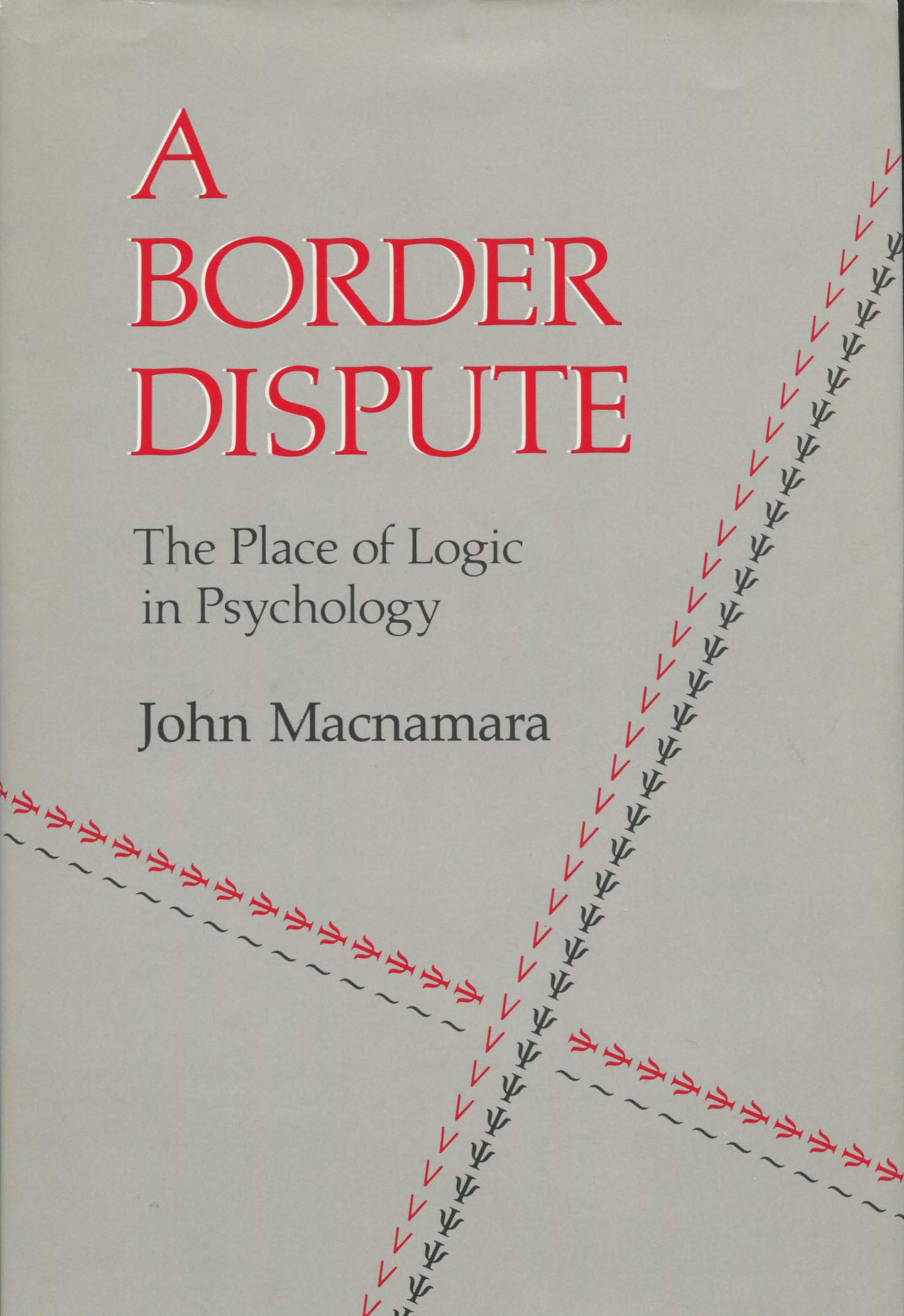
A Border Dispute integrates the latest work in logic and semantics into a theory of language learning and presents six worked examples of how that theory revolutionizes cognitive psychology.Macnamara's thesis is set against the background of a fresh analysis of the psychologism debate of the 19thcentury, which led to the current standoff between logic and psychology. The book presents psychologism through the writings of John Stuart Mill and Immanuel Kant, and its rejection by Gottlob Frege and Edmund Husserl. It then works out the general thesis that logic ideally presents a competence theory for part of human reasoning and explains how logical intuition is grounded in properties of the mind.The next six chapters present examples that illustrate the relevance of logic to psychology. These problems are all in the semantics of child language (the learning of proper names, personal pronouns, sortals or common nouns, quantifiers, and the truthfunctional connectives) and reflect Macnamara's rich background in developmental psychology, particularly child language a field, he points out, that embraces all of cognition. Technical problems raised by but not included in the examples in the main part of the text are dealt with in a separate chapter. The book concludes by describing laws in cognitive psychology, or the type of science made possible by Macnamara's new theory.John Macnamara is Professor of Psychology and Director of the Program in the History and Philosophy of Science, McGill University. A Bradford Book.
⚠️ WARNING (California Proposition 65):
This product may contain chemicals known to the State of California to cause cancer,
birth defects, or other reproductive harm.
For MAP (Minimum Advertised Price) violations and Intellectual Property (IP) or Trademark concerns, please contact:
support@ergodebooks.com
⚠️ California Proposition 65 Warning: Some products sold on this website may expose you to chemicals known to the State of California to cause cancer, birth defects, or other reproductive harm. For more information, visit www.P65Warnings.ca.gov.