
Title
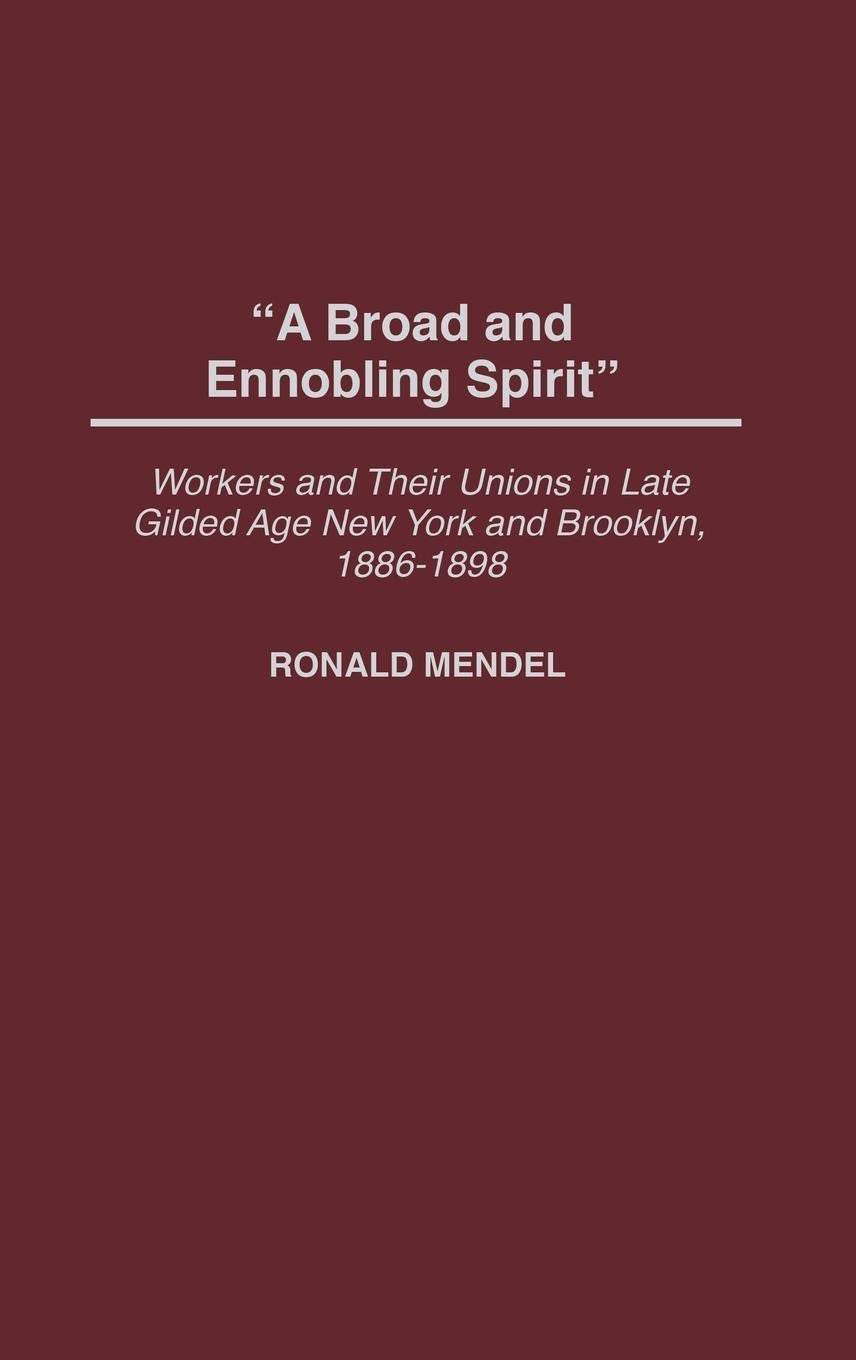
A Broad And Ennobling Spirit: Workers And Their Unions In Late Gilded Age New York And Brooklyn, 18861898 (Contributions In Lab,New
Sold by Ergodebooks, an authorized reseller.
Returns accepted within 30 days | support@ergodebooks.com
Shipping Information
- Free Standard Shipping — United States only
- Processing Time: 3–5 business days
- Estimated Delivery: 6–10 business days after dispatch
- Double-boxed, fully insured & discreetly packaged
- Tracking number sent via email once dispatched
Returns & Refund
Returns accepted within 30 days of delivery.
Damaged or Defective Item
Free return shipping + replacement or full refund
Wrong Item Received
Free return shipping + replacement or full refund
Change of Mind
Return shipping at customer's expense · 25% restocking fee applies
Payment Option

With the introduction of new production methods and technological innovation, tradesmen and workers encountered new challenges. This study examines the development of trade unions as a manifestation of working class experience in late Gilded Age America. It underscores both the distinctive and the common features of trade unionism across four occupations: building tradesmen, cigar makers, garment workers, and printers. While reactions differed, the unions representing these workers displayed a convergence in their strategic orientation, programmatic emphasis and organizational modus operandi. As such, they were not disparate organizations, concerned only with sectional interests, but participants in an organizationalnetwork in which cooperation and solidarity became benchmarks for the labor movement.Printers coped with the mechanization of typesetting by promoting greater cooperation among the different craft unions within the industry, with the aim of establishing effective job control. Building tradesmen exerted a pragmatic militancy, which combined strikes with overtures to the employers' business sense, to uphold the standards of craft labor. Cigar makers, especially handicraftsmen who found their position threatened by machinery and the growth of factory production, debated the merits of a craftbased union against the possible advantages of an industrialoriented organization. Garment workers, caught in the snare of a sweating system of labor in which wages and work loads were inversely related, organized unions to mount strikes during the busy season in the hope of securing higher wages, only to see them whither in the midst of slack periods.
⚠️ WARNING (California Proposition 65):
This product may contain chemicals known to the State of California to cause cancer, birth defects, or other reproductive harm.
For more information, please visit www.P65Warnings.ca.gov.