If you have any questions, you are always welcome to contact us. We'll get back to you as soon as possible, withing 24 hours on weekdays.
Customer service
All questions about your order, return and delivery must be sent to our customer service team by e-mail at yourstore@yourdomain.com
Sale & Press
If you are interested in selling our products, need more information about our brand or wish to make a collaboration, please contact us at press@yourdomain.com
Help
If you have any questions, you are always welcome to contact us. We'll get back to you as soon as possible, withing 24 hours on weekdays.
Customer service
All questions about your order, return and delivery must be sent to our customer service team by e-mail at yourstore@yourdomain.com
Sale & Press
If you are interested in selling our products, need more information about our brand or wish to make a collaboration, please contact us at press@yourdomain.com
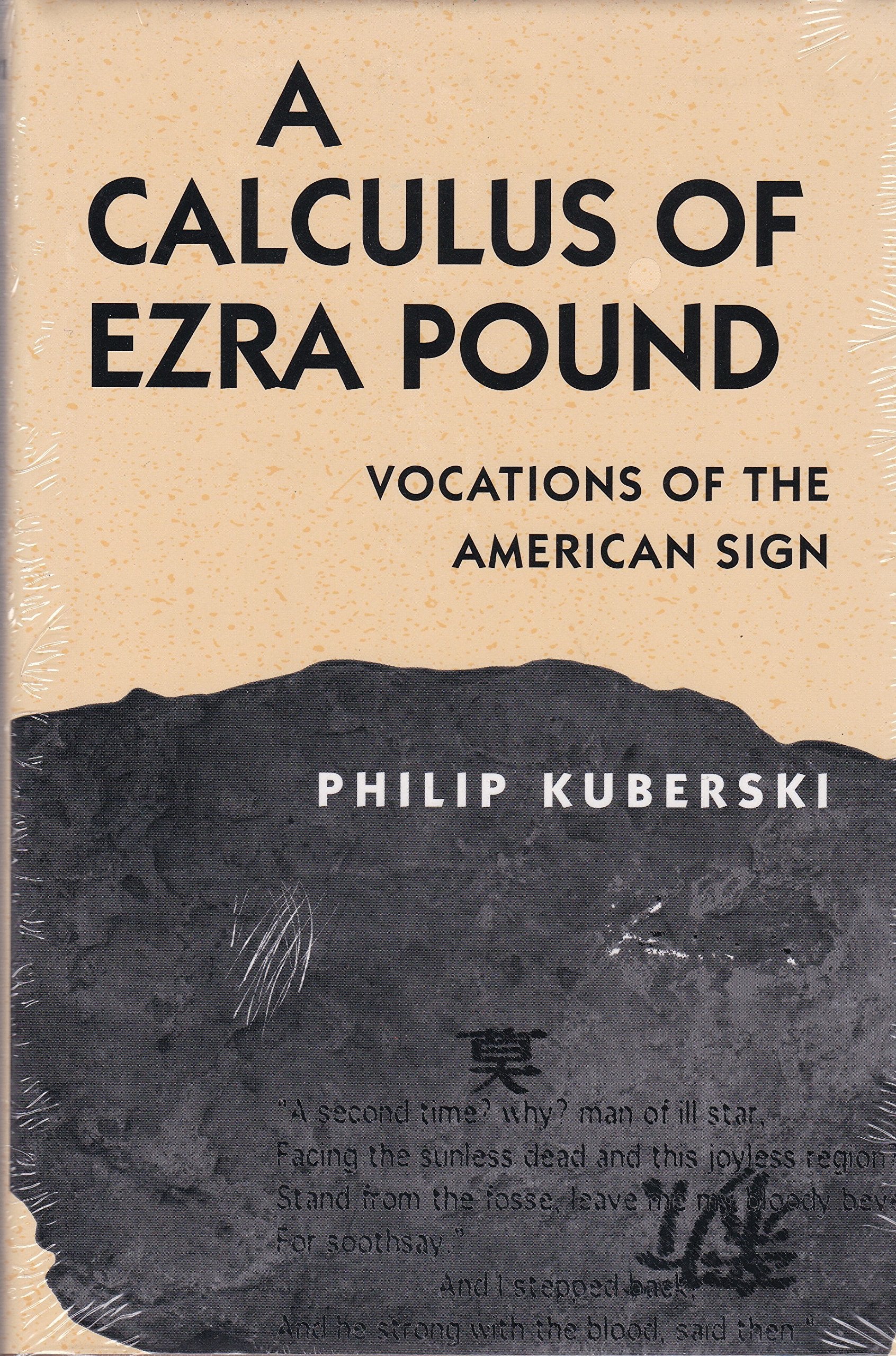
That the beauty of Ezra Pound's late Cantos can appear on the same page with the rankest antiSemitism continues to be a problem worth serious discussion, as well as a problem in the understanding of modernism.Philip Kuberski locates the central tension between Pound's poetry and his politics in the contrast between the poet's technical innovations his commitment to modernist writing and his antimodernist conception of reading and esthetics. Few twentiethcentury poets, Kuberski says, have been 'as dedicated to a reconciliation of metaphysical values and the materiality of human languages.' Focusing on this juncture of form and meaning, he asserts that Pound's work presents 'a dramatic, perhaps tragic, illustration of the costs involved in moving from a theocentric or logocentric understanding of art to a truly modern or postmodern understanding of it.'Kuberski also considers the ways in which Pound's career reflects an extreme version of tensions in American culture. Both Pound's poetry and his fascism can be derived from elements of American Romanticism, he claims, citing Emerson's exposition of 'natural' language, Whitman's sense of the poet as Adamic Superman, and Poe's exploration of nonalphabetic scripts.In his title and his terminology, Kuberski employs the metaphor of stones, a calculating device, to chart Pound's overt concerns with a stonelike foundation for human knowledge, for origin, and for civilization.
⚠️ WARNING (California Proposition 65):
This product may contain chemicals known to the State of California to cause cancer,
birth defects, or other reproductive harm.
For MAP (Minimum Advertised Price) violations and Intellectual Property (IP) or Trademark concerns, please contact:
support@ergodebooks.com
⚠️ California Proposition 65 Warning: Some products sold on this website may expose you to chemicals known to the State of California to cause cancer, birth defects, or other reproductive harm. For more information, visit www.P65Warnings.ca.gov.