If you have any questions, you are always welcome to contact us. We'll get back to you as soon as possible, withing 24 hours on weekdays.
Customer service
All questions about your order, return and delivery must be sent to our customer service team by e-mail at yourstore@yourdomain.com
Sale & Press
If you are interested in selling our products, need more information about our brand or wish to make a collaboration, please contact us at press@yourdomain.com
Help
If you have any questions, you are always welcome to contact us. We'll get back to you as soon as possible, withing 24 hours on weekdays.
Customer service
All questions about your order, return and delivery must be sent to our customer service team by e-mail at yourstore@yourdomain.com
Sale & Press
If you are interested in selling our products, need more information about our brand or wish to make a collaboration, please contact us at press@yourdomain.com
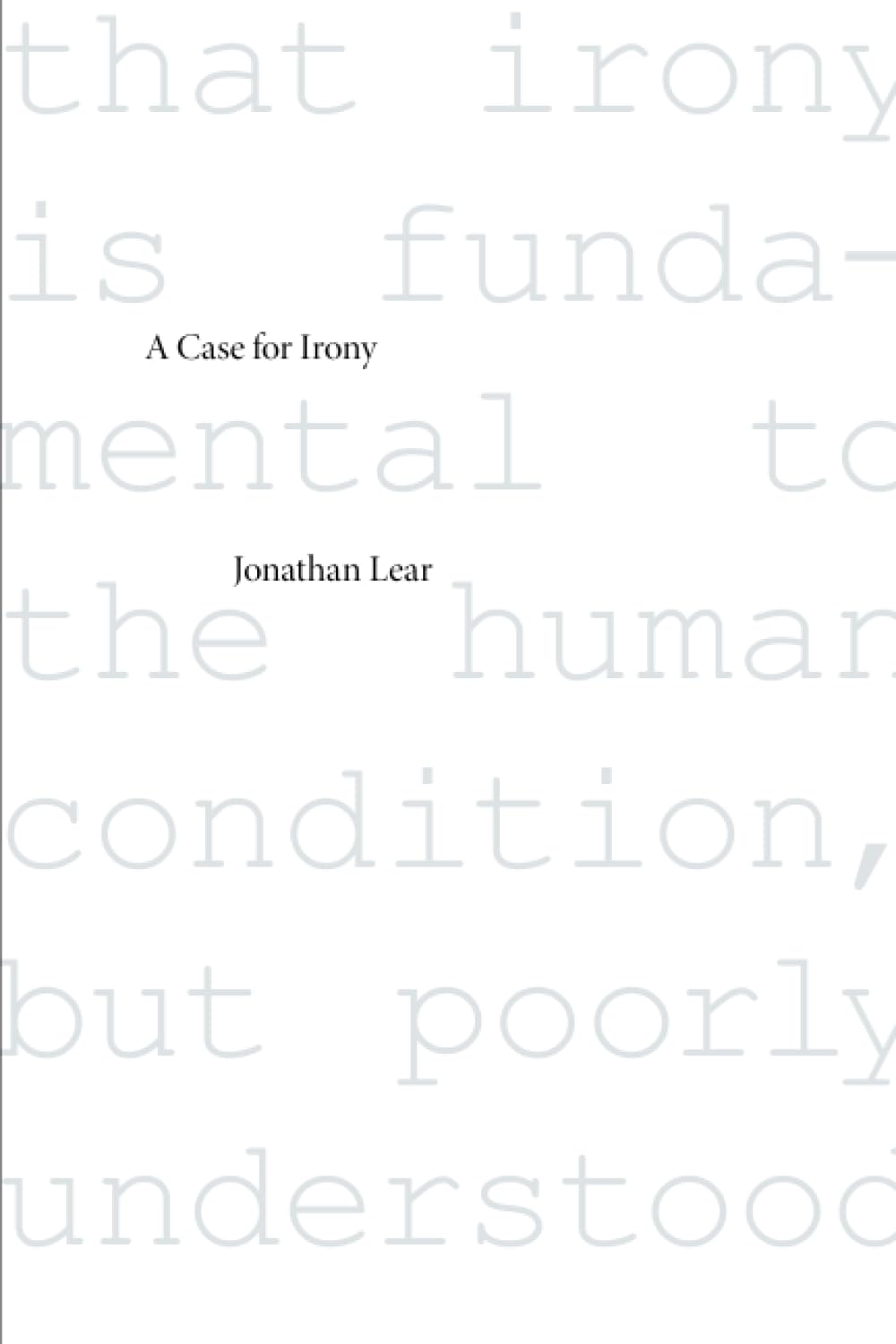
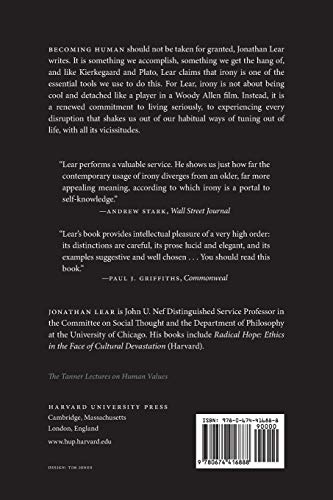
In 2001, Vanity Fair declared that the Age of Irony was over. Joan Didion has lamented that the United States in the era of Barack Obama has become an "ironyfree zone." Jonathan Lear in his 2006 book Radical Hope looked into Americas heart to ask how might we dispose ourselves if we came to feel our way of life was coming to an end. Here, he mobilizes a squad of philosophers and a psychoanalyst to once again forge a radical way forward, by arguing that no genuinely human life is possible without irony.Becoming human should not be taken for granted, Lear writes. It is something we accomplish, something we get the hang of, and like Kierkegaard and Plato, Lear claims that irony is one of the essential tools we use to do this. For Lear and the participants in his Socratic dialogue, irony is not about being cool and detached like a player in a Woody Allen film. That, as Johannes Climacus, one of Kierkegaards pseudonymous authors, puts it, is something only assistant professors assume. Instead, it is a renewed commitment to living seriously, to experiencing every disruption that shakes us out of our habitual ways of tuning out of life, with all its vicissitudes. While many over the centuries have argued differently, Lear claims that our feelings and desires tend toward order, a structure that irony shakes us into seeing. Lears exchanges with his interlocutors strengthen his claims, while his experiences as a practicing psychoanalyst bring an emotionally gripping dimension to what is at stakethe psychic costs and benefits of living with irony.
⚠️ WARNING (California Proposition 65):
This product may contain chemicals known to the State of California to cause cancer,
birth defects, or other reproductive harm.
For MAP (Minimum Advertised Price) violations and Intellectual Property (IP) or Trademark concerns, please contact:
support@ergodebooks.com
⚠️ California Proposition 65 Warning: Some products sold on this website may expose you to chemicals known to the State of California to cause cancer, birth defects, or other reproductive harm. For more information, visit www.P65Warnings.ca.gov.