If you have any questions, you are always welcome to contact us. We'll get back to you as soon as possible, withing 24 hours on weekdays.
Customer service
All questions about your order, return and delivery must be sent to our customer service team by e-mail at yourstore@yourdomain.com
Sale & Press
If you are interested in selling our products, need more information about our brand or wish to make a collaboration, please contact us at press@yourdomain.com
Help
If you have any questions, you are always welcome to contact us. We'll get back to you as soon as possible, withing 24 hours on weekdays.
Customer service
All questions about your order, return and delivery must be sent to our customer service team by e-mail at yourstore@yourdomain.com
Sale & Press
If you are interested in selling our products, need more information about our brand or wish to make a collaboration, please contact us at press@yourdomain.com
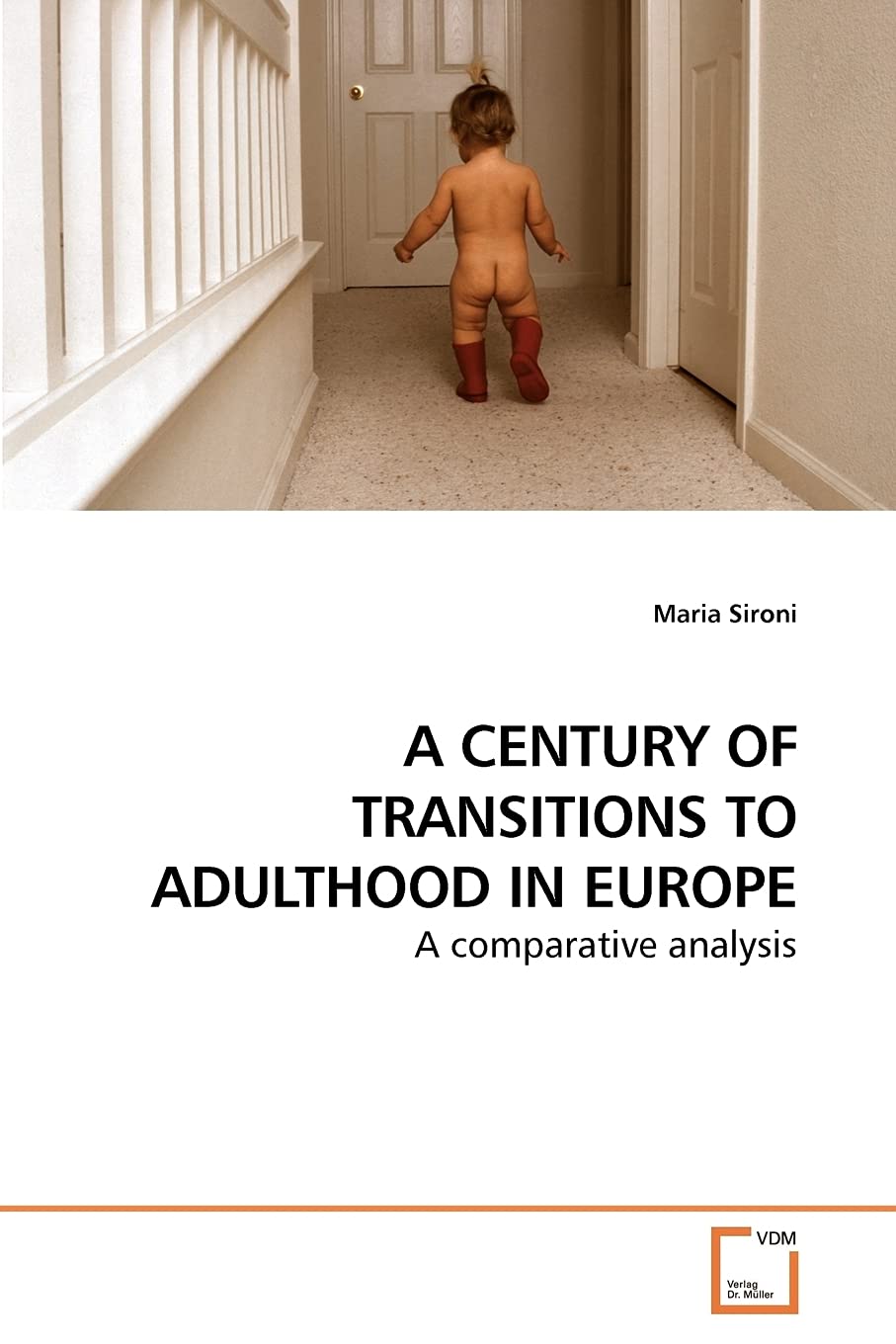
This work aims to explore how the process of the transition to adulthood has changed during the 20th century in Europe. Through data collected in the European Social Survey, individuals born between 1926 and 1985 in 23 European countries are analyzed: the median age at which major events of the transition take place and the order in which they occur are taken into account. The comparative perspective enables acknowledge recent trends in life course trajectories and to understand to which extent the transition takes a longer time to occur for recent birth cohorts and if patterns are standardized or an individualization process is at work. Moreover, this study examines how macrocontexts influence the organization of the life course, in particular which is the impact of housing market conditions and gender disparities on the decision to leave the parental home before starting a union, and if they may explain some of the differences in transition trends across countries. This is done using a multilevel model to answer the question on how much of the variability in individuals decisions is attributable to country level factors and how much to individual level factors.
⚠️ WARNING (California Proposition 65):
This product may contain chemicals known to the State of California to cause cancer,
birth defects, or other reproductive harm.
For MAP (Minimum Advertised Price) violations and Intellectual Property (IP) or Trademark concerns, please contact:
support@ergodebooks.com
⚠️ California Proposition 65 Warning: Some products sold on this website may expose you to chemicals known to the State of California to cause cancer, birth defects, or other reproductive harm. For more information, visit www.P65Warnings.ca.gov.