
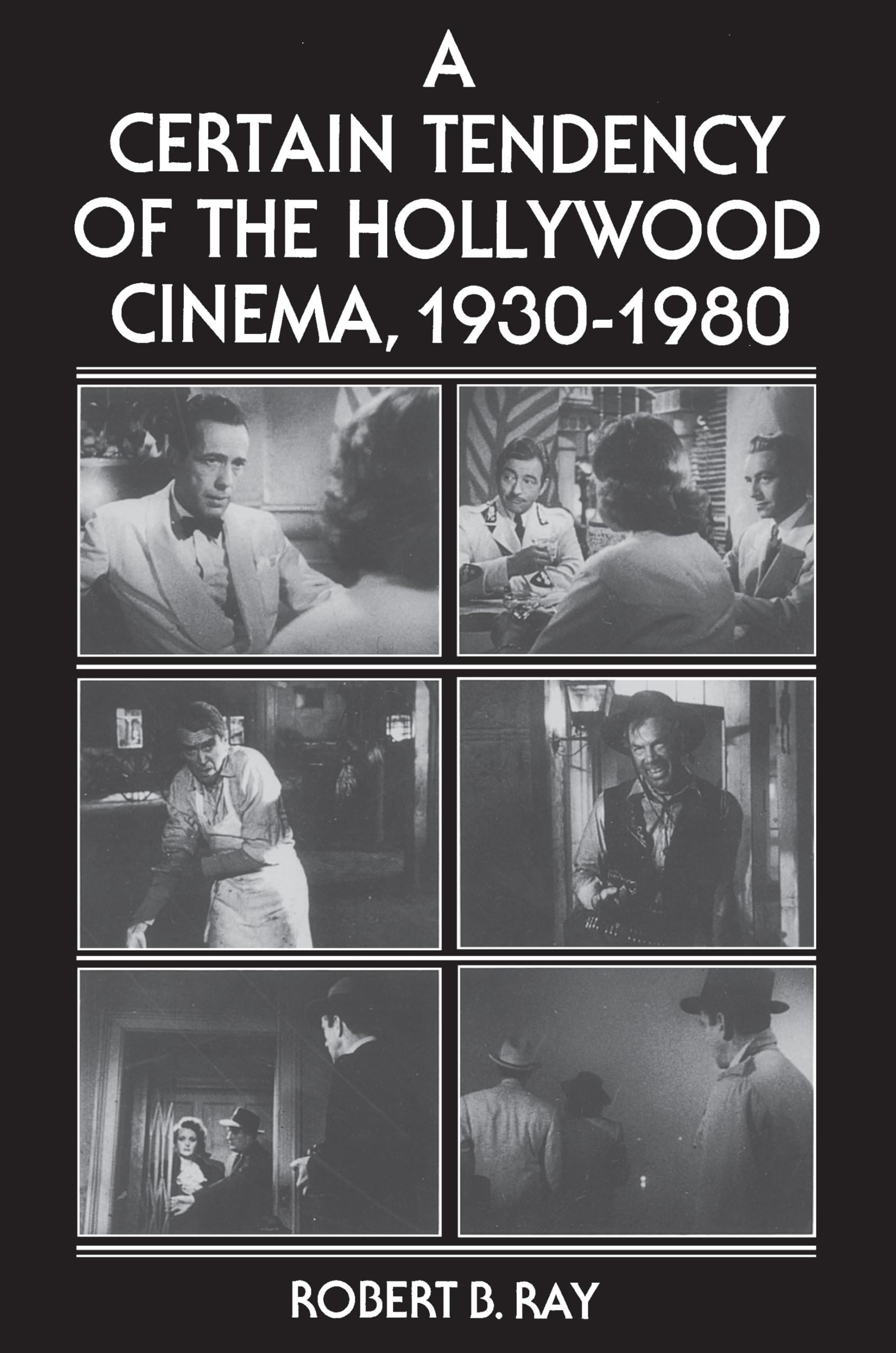
Title
A Certain Tendency Of The Hollywood Cinema, 19301980
Sold by Ergodebooks, an authorized reseller.
Returns accepted within 30 days | support@ergodebooks.com
Shipping Information
- Free Standard Shipping — United States only
- Processing Time: 3–5 business days
- Estimated Delivery: 6–10 business days after dispatch
- Double-boxed, fully insured & discreetly packaged
- Tracking number sent via email once dispatched
Returns & Refund
Returns accepted within 30 days of delivery.
Damaged or Defective Item
Free return shipping + replacement or full refund
Wrong Item Received
Free return shipping + replacement or full refund
Change of Mind
Return shipping at customer's expense · 25% restocking fee applies
Payment Option

Robert B. Ray Examines The Ideology Of The Most Enduringly Popular Cinema In The Worldthe Hollywood Movie. Aided By 364 Frame Enlargements, He Describes The Development Of That Historically Overdetermined Form, Giving Close Readings Of Five Typical Instances: Casablanca, It'S A Wonderful Life, The Man Who Shot Liberty Valance, The Godfather, And Taxi Driver. Like The Heroes Of These Movies, American Filmmaking Has Avoided Commitment, In Both Plot And Technique. Instead Of Choosing Left Or Right, Avantgarde Or Tradition, American Cinema Tries To Have It Both Ways.Although Hollywood'S Commercial Success Has Led The World Audience To Equate The American Cinema With Film Itself, Hollywood Filmmaking Is A Particular Strategy Designed To Respond To Specific Historical Situations. As An Art Restricted In Theoretical Scope But Rich In Individual Variations, The American Cinema Poses The Most Interesting Question Of Popular Culture: Do Dissident Forms Have Any Chance Of Remaining Free Of A Mass Medium Seeking To Coopt Them?
⚠️ WARNING (California Proposition 65):
This product may contain chemicals known to the State of California to cause cancer, birth defects, or other reproductive harm.
For more information, please visit www.P65Warnings.ca.gov.
- Q: What is the page count of this book? A: This book contains four hundred twenty-four pages. It offers an in-depth analysis of Hollywood cinema from nineteen thirty to nineteen eighty.
- Q: What are the dimensions of the book? A: The book measures six point twenty-six inches in length, nine point twenty-five inches in height, and is zero point ninety-six inches thick. These dimensions make it easy to handle and store.
- Q: What type of binding does this book have? A: The book is available in paperback binding. This type of binding is flexible and lightweight, making it convenient for reading.
- Q: Who is the author of the book? A: The author of this book is Robert B. Ray. He explores the ideological aspects of Hollywood cinema through various film examples.
- Q: What genre does this book belong to? A: This book falls under the Performing Arts genre. It specifically examines the cultural and ideological elements of American cinema.
- Q: Is this book suitable for academic study? A: Yes, this book is suitable for academic study. It provides critical insights into Hollywood's influence on popular culture and film theory.
- Q: How does this book analyze Hollywood films? A: The book provides close readings of five notable films, including 'Casablanca' and 'The Godfather.' It highlights the ideological underpinnings of these cinematic works.
- Q: Is there any specific audience for this book? A: This book is ideal for students, film enthusiasts, and scholars interested in film studies and cultural analysis. Its academic approach makes it suitable for higher education.
- Q: What themes are explored in this book? A: The book explores themes of ideology, popular culture, and the duality of American filmmaking. It discusses how Hollywood navigates artistic and commercial interests.
- Q: How should I care for this paperback book? A: To care for this paperback book, store it in a cool, dry place. Avoid exposing it to direct sunlight to preserve the cover and pages.
- Q: Is this book appropriate for younger readers? A: No, this book may not be appropriate for younger readers. It discusses complex themes and contains mature content related to film analysis.
- Q: What if the book arrives damaged? A: If the book arrives damaged, you should contact the seller for a return or replacement. Most sellers have policies in place for damaged items.
- Q: Can this book be used for group discussions? A: Yes, this book can be used for group discussions. Its analytical content provides ample topics for debate regarding film and culture.
- Q: What are the key films discussed in the book? A: The key films discussed include 'It's a Wonderful Life,' 'Taxi Driver,' and 'The Man Who Shot Liberty Valance.' These films serve as case studies for Hollywood's ideological approach.
- Q: Is there any visual content in the book? A: Yes, the book includes three hundred sixty-four frame enlargements. These visuals support the text and enhance the analysis of the films.
- Q: Does the book cover modern cinema? A: No, the book primarily focuses on cinema from nineteen thirty to nineteen eighty. It does not cover modern films or trends.