
Title
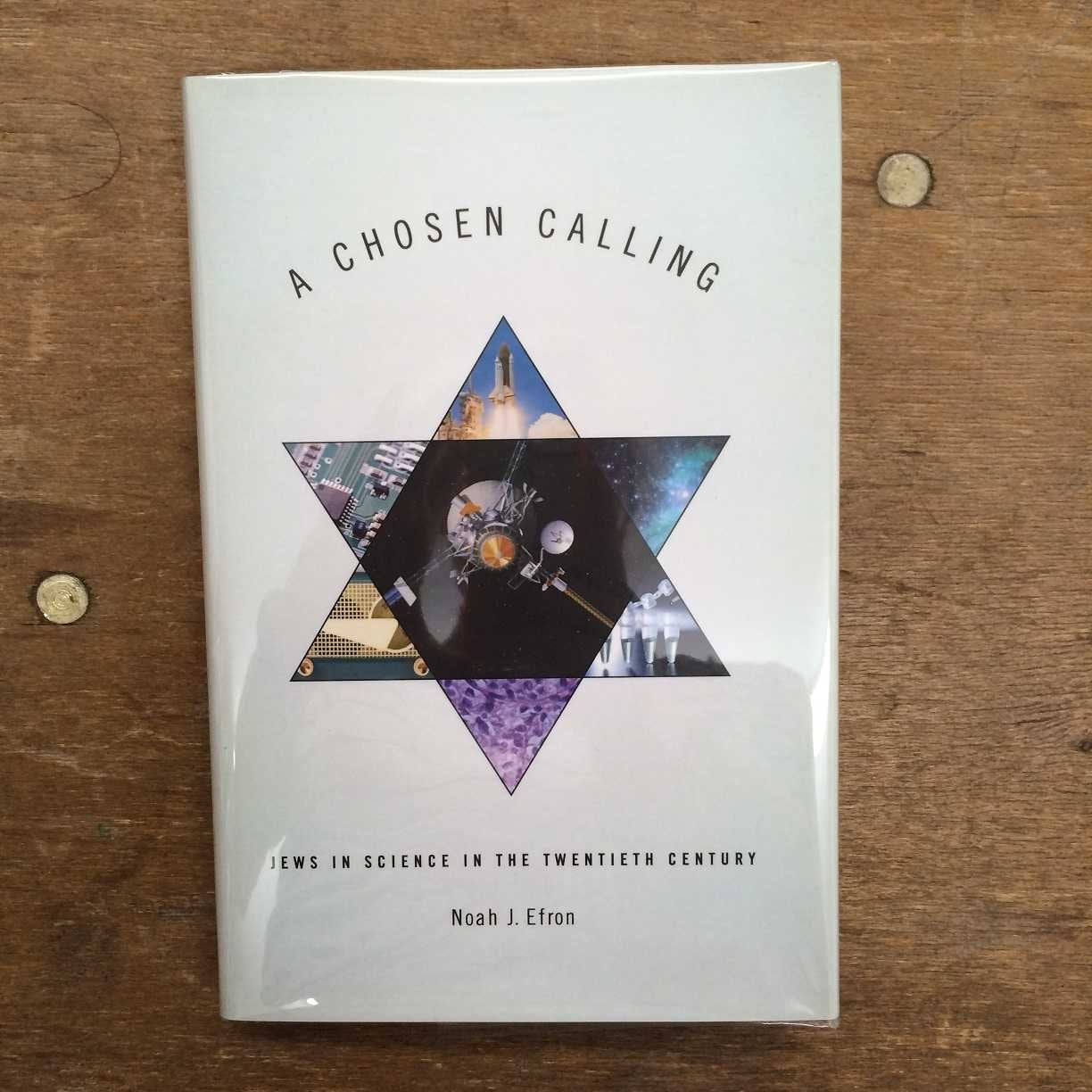
A Chosen Calling: Jews In Science In The Twentieth Century (Medicine, Science, And Religion In Historical Context)
Sold by Ergodebooks, an authorized reseller.
Returns accepted within 30 days | support@ergodebooks.com
Shipping Information
- Free Standard Shipping — United States only
- Processing Time: 3–5 business days
- Estimated Delivery: 6–10 business days after dispatch
- Double-boxed, fully insured & discreetly packaged
- Tracking number sent via email once dispatched
Returns & Refund
Returns accepted within 30 days of delivery.
Damaged or Defective Item
Free return shipping + replacement or full refund
Wrong Item Received
Free return shipping + replacement or full refund
Change of Mind
Return shipping at customer's expense · 25% restocking fee applies
Payment Option

Questions Traditional Explanations For Jewish Excellence In Science In The United States, The Soviet Union, And Palestine In The Twentieth Century.Scholars Have Struggled For Decades To Explain Why Jews Have Succeeded Extravagantly In Modern Science. A Variety Of Controversial Theoriesfrom Such Intellects As C. P. Snow, Norbert Wiener, And Nathaniel Weylhave Been Promoted. Snow Hypothesized An Evolved Genetic Predisposition To Scientific Success. Wiener Suggested That The Breeding Habits Of Jews Sustained Hereditary Qualities Conducive For Learning. Economist And Eugenicist Weyl Attributed Jewish Intellectual Eminence To Seventeen Centuries Of Breeding For Scholars.Rejecting The Idea That Jews Have Done Well In Science Because Of Uniquely Jewish Traits, Jewish Brains, And Jewish Habits Of Mind, Historian Of Science Noah J. Efron Approaches The Jewish Affinity For Science Through The Geographic And Cultural Circumstances Of Jews Who Were Compelled To Settle In New Worlds In The Early Twentieth Century.Seeking Relief From Religious Persecution, Millions Of Jews Resettled In The United States, Palestine, And The Soviet Union, With Large Concentrations Of Settlers In New York, Tel Aviv, And Moscow. Science Played A Large Role In The Lives And Livelihoods Of These Immigrants: It Was A Universal Force That Transcended The Arbitrary Old World Orders That Had Long Ensured The Exclusion Of All But A Few Jews From The Seats Of Power, Wealth, And Public Esteem. Although The Three Destinations Were Far Apart Geographically, The Links Among The Communities Were Enduring And Spirited. This Shared Experienceof Facing The Future In New Worlds, Both Physical And Conceptualprovided A Generation Of Jews With Opportunities Unlike Any Their Parents And Grandparents Had Known.The Tumultuous Recent Century Of Jewish History, Which Saw Both A Methodical Campaign To Blot Out Europe'S Jews And The Inexorable Absorption Of Western Jews Into The Societies In Which They Now Live, Is Illuminated By The Place Of Honor Science Held In Jewish Imaginations. Science Was Central To Their Dreams Of Creating New Worldswelcoming Worldsfor A Persecuted People.This Provocative Work Will Appeal To Historians Of Science As Well As Scholars Of Religion, Jewish Studies, And Zionism.
⚠️ WARNING (California Proposition 65):
This product may contain chemicals known to the State of California to cause cancer, birth defects, or other reproductive harm.
For more information, please visit www.P65Warnings.ca.gov.
- Q: What is the size of the book? A: The book measures six inches in length, nine inches in height, and zero point sixty-seven inches in width. This size makes it portable and easy to handle.
- Q: How many pages does the book have? A: The book contains one hundred sixty-eight pages. This length is typical for a scholarly work, providing a thorough exploration of the topic.
- Q: What type of binding does the book have? A: This book is bound in hardcover. Hardcover bindings are known for their durability and are ideal for long-term use.
- Q: Who is the author of the book? A: The author of the book is Noah J. Efron. He is a historian of science with expertise in Jewish studies.
- Q: What genre does this book belong to? A: This book falls under the genre of Jewish studies. It specifically addresses the intersection of science and Jewish history.
- Q: What is the main focus of the book? A: The main focus of the book is to question traditional explanations for Jewish success in science during the twentieth century. It provides a historical context for Jewish contributions to science.
- Q: Is this book suitable for academic study? A: Yes, this book is suitable for academic study. It appeals to scholars of history, science, religion, and Jewish studies.
- Q: How does the book approach its subject matter? A: The book approaches its subject matter by examining cultural and geographic factors rather than attributing success to genetic traits. This perspective is unique and thought-provoking.
- Q: Can this book be used for research purposes? A: Yes, this book can be used for research purposes. Its scholarly insights and references make it a valuable resource for academic inquiry.
- Q: What themes are explored in the book? A: The book explores themes of immigration, cultural identity, and the role of science in Jewish life. These themes are central to understanding Jewish history in the twentieth century.
- Q: What is the recommended age group for this book? A: This book is recommended for adults and higher education students. Its complex themes and scholarly analysis are best suited for mature readers.
- Q: How should the book be stored? A: The book should be stored upright on a bookshelf to maintain its shape. Keeping it away from direct sunlight will also help preserve the cover and pages.
- Q: Is there any specific care needed for the book? A: No specific care is needed beyond regular handling. Avoid exposing the book to moisture and extreme temperatures to keep it in good condition.
- Q: What if the book arrives damaged? A: If the book arrives damaged, you can contact the seller for a return or exchange. Most retailers have policies in place for damaged items.
- Q: Is there a warranty for this book? A: No, there is typically no warranty for books. However, check with the retailer for their specific return policies.
- Q: Can this book be given as a gift? A: Yes, this book makes a thoughtful gift for anyone interested in Jewish studies or the history of science. Its unique perspective adds value for readers.