
Title
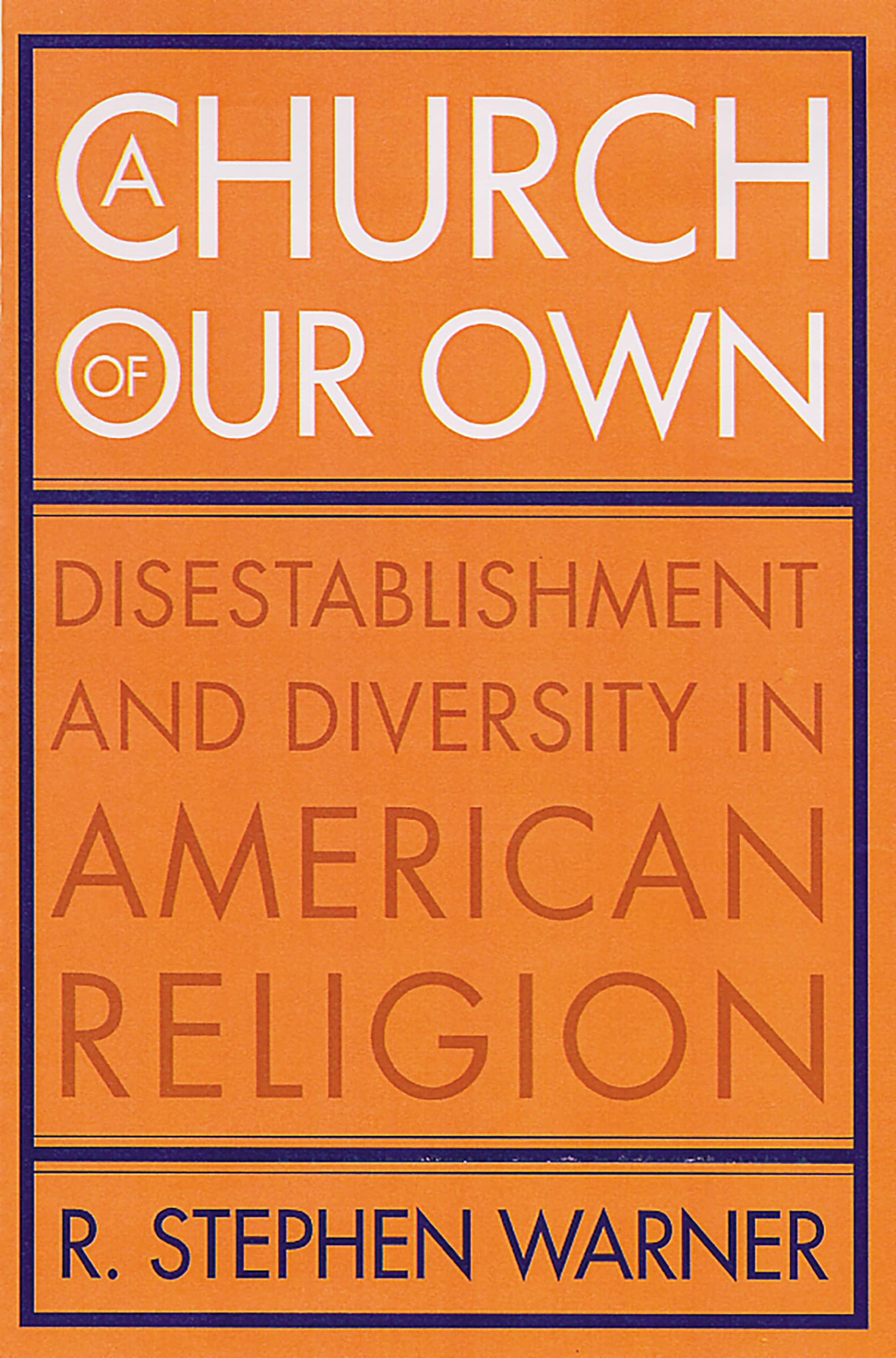
A Church of Our Own: Disestablishment and Diversity in American Religion,Used
Sold by Ergodebooks, an authorized reseller.
Returns accepted within 30 days | support@ergodebooks.com
Shipping Information
- Free Standard Shipping — United States only
- Processing Time: 3–5 business days
- Estimated Delivery: 6–10 business days after dispatch
- Double-boxed, fully insured & discreetly packaged
- Tracking number sent via email once dispatched
Returns & Refund
Returns accepted within 30 days of delivery.
Damaged or Defective Item
Free return shipping + replacement or full refund
Wrong Item Received
Free return shipping + replacement or full refund
Change of Mind
Return shipping at customer's expense · 25% restocking fee applies
Payment Option

In this definitive collection of essays spanning fifteen years, R. Stephen Warner traces the development of the new paradigm interpretation of American religion. Originally formulated in the 1990s in response to prevailing theories of secularization that focused on the waning plausibility of religion in modern societies, the new paradigm reoriented the study of religion to a focus on communities, subcultures, new religious institutions, and the fluidity of modern religious identities. This perspective continues to be one of the most important driving forces in the field and one of the most significant challenges to the idea that religious pluralism inevitably leads to religious decline.A leading sociologist of religion, Warner shows how the new paradigm stresses the role that religion plays as a vehicle for the bonding and expression of communities within the United Statesa society founded on the principle of religious disestablishment and characterized by a diverse and mobile population. Chapters examine evangelicals and Pentecostals, gay and lesbian churches, immigrant religious institutions, Hispanic parishes, and churches for the deaf in terms of this framework. Newly written introductory and concluding essays set these groups within the broad context of the developing field. A thoughtfully organized and timely collection, the volume is a valuable classroom resource as well as essential reading for scholars of contemporary religion.
⚠️ WARNING (California Proposition 65):
This product may contain chemicals known to the State of California to cause cancer, birth defects, or other reproductive harm.
For more information, please visit www.P65Warnings.ca.gov.
- Q: What is the main focus of 'A Church of Our Own'? A: 'A Church of Our Own' primarily focuses on the development of the 'new paradigm' interpretation of American religion, emphasizing the importance of communities, subcultures, and the fluidity of religious identities in modern society.
- Q: Who is the author of this book? A: The book is authored by R. Stephen Warner, a leading sociologist of religion.
- Q: What themes are explored in the essays of this collection? A: The essays explore themes such as religious disestablishment, the role of religion in community bonding, and the experiences of various religious groups including evangelicals, Pentecostals, and immigrant churches.
- Q: How many pages does the book have? A: 'A Church of Our Own' contains a total of 320 pages.
- Q: When was this book published? A: The book was published on August 24, 2005.
- Q: What type of binding does this book have? A: This book is available in paperback binding.
- Q: Is this book suitable for academic use? A: Yes, it is a valuable resource for classrooms and essential reading for scholars studying contemporary religion.
- Q: What is the condition of the book? A: The book is listed as 'New' condition, indicating it has not been previously owned or used.
- Q: Does this book include introductory or concluding essays? A: Yes, the book includes newly written introductory and concluding essays that provide context to the various religious groups discussed.
- Q: What distinguishes the new paradigm interpretation discussed in the book? A: The new paradigm interpretation distinguishes itself by shifting focus from secularization theories to the dynamics of religious communities and institutions, challenging the notion that religious pluralism leads to decline.