
Title
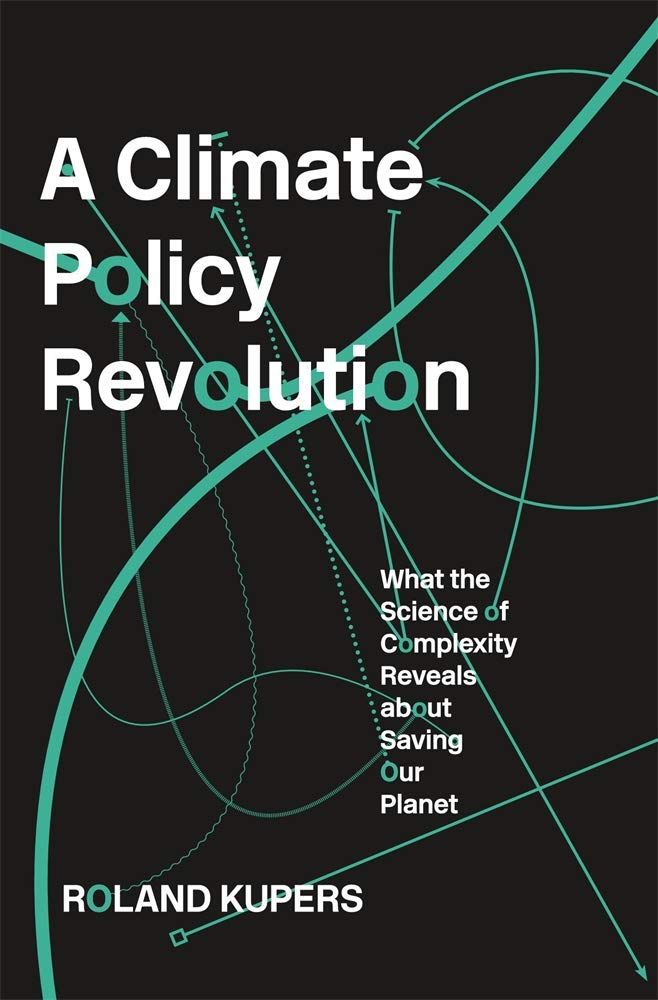
A Climate Policy Revolution: What the Science of Complexity Reveals about Saving Our Planet,Used
Sold by Ergodebooks, an authorized reseller.
Returns accepted within 30 days | support@ergodebooks.com
Shipping Information
- Free Standard Shipping — United States only
- Processing Time: 3–5 business days
- Estimated Delivery: 6–10 business days after dispatch
- Double-boxed, fully insured & discreetly packaged
- Tracking number sent via email once dispatched
Returns & Refund
Returns accepted within 30 days of delivery.
Damaged or Defective Item
Free return shipping + replacement or full refund
Wrong Item Received
Free return shipping + replacement or full refund
Change of Mind
Return shipping at customer's expense · 25% restocking fee applies
Payment Option

Humanitys best hope for confronting the looming climate crisis rests with the new science of complexity.The sheer complexity of climate change stops most solutions in their tracks. How do we give up fossil fuels when energy is connected to everything, from greatpower contests to the value of your pension? Global economic growth depends on consumption, but that also produces the garbage now choking the oceans. To give up cars, coal, or meat would upend industries and entire ways of life. Faced with seemingly impossible tradeoffs, politicians dither and economists offer solutions at the margins, all while we flirt with the sixth extinction.Thats why humanitys last best hope is the young science of complex systems. Quitting coal, making autonomous cars ubiquitous, ending the middleclass addiction to consumption: all necessary to head off climate catastrophe, all deemed fantasies by pundits and policymakers, and all plausible in a complex systems view.Roland Kupers shows how we have already broken the interwoven path dependencies that make fundamental change so daunting. Consider the mid2000s, when, against all predictions, the United States rapidly switched from a reliance on coal primarily to natural gas. The change required targeted regulations, a few lone investors, independent researchers, and generous technology subsidies. But in a stunningly short period of time, shale oil nudged out coal, and carbon dioxide emissions dropped by 10 percent. Kupers shows how to replicate such patterns in order to improve transit, reduce plastics consumption, and temper the environmental impact of middleclass diets. Whether dissecting Chinas Ecological Civilization or the United States Green New Deal, Kupers describes whats folly, whats possible, and which solutions just might work.
⚠️ WARNING (California Proposition 65):
This product may contain chemicals known to the State of California to cause cancer, birth defects, or other reproductive harm.
For more information, please visit www.P65Warnings.ca.gov.