If you have any questions, you are always welcome to contact us. We'll get back to you as soon as possible, withing 24 hours on weekdays.
Customer service
All questions about your order, return and delivery must be sent to our customer service team by e-mail at yourstore@yourdomain.com
Sale & Press
If you are interested in selling our products, need more information about our brand or wish to make a collaboration, please contact us at press@yourdomain.com
Help
If you have any questions, you are always welcome to contact us. We'll get back to you as soon as possible, withing 24 hours on weekdays.
Customer service
All questions about your order, return and delivery must be sent to our customer service team by e-mail at yourstore@yourdomain.com
Sale & Press
If you are interested in selling our products, need more information about our brand or wish to make a collaboration, please contact us at press@yourdomain.com
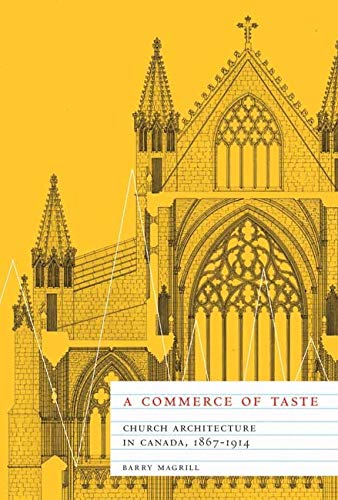
In the latenineteenth century the circulation of pattern books featuring medieval church architecture in England facilitated an unprecedented spread of Gothic revival churches in Canada. Engaging several themes around the spread of print culture, religion, and settlement, A Commerce of Taste details the business of church building. Drawing upon formal architectural analysis and cultural theory, Barry Magrill shows how pattern books offer a unique way of studying the relationships between taste, ideology, privilege, social change, and economics. Taste was a concept used to legitimize British and to an extent Anglican privilege, while other denominations resisted their aesthetic edicts. Pattern books eventually lost control of the exclusivity associated with taste as advances in printing technology and transatlantic shipping brought more books into the marketplace and readerships expanded beyond the professional classes. By the early twentieth century taste had become diluted, the architect had lost his heroic status, and architectural distinctions among denominations were less apparent. Drawing together the history of church building and the broader patterns of Canadian social and historical development, A Commerce of Taste presents an alternative perspective on the spread of religious monuments in Canada by looking squarely at pattern books as sources of social conflict around the issue of taste.
⚠️ WARNING (California Proposition 65):
This product may contain chemicals known to the State of California to cause cancer,
birth defects, or other reproductive harm.
For MAP (Minimum Advertised Price) violations and Intellectual Property (IP) or Trademark concerns, please contact:
support@ergodebooks.com
⚠️ California Proposition 65 Warning: Some products sold on this website may expose you to chemicals known to the State of California to cause cancer, birth defects, or other reproductive harm. For more information, visit www.P65Warnings.ca.gov.