
Title
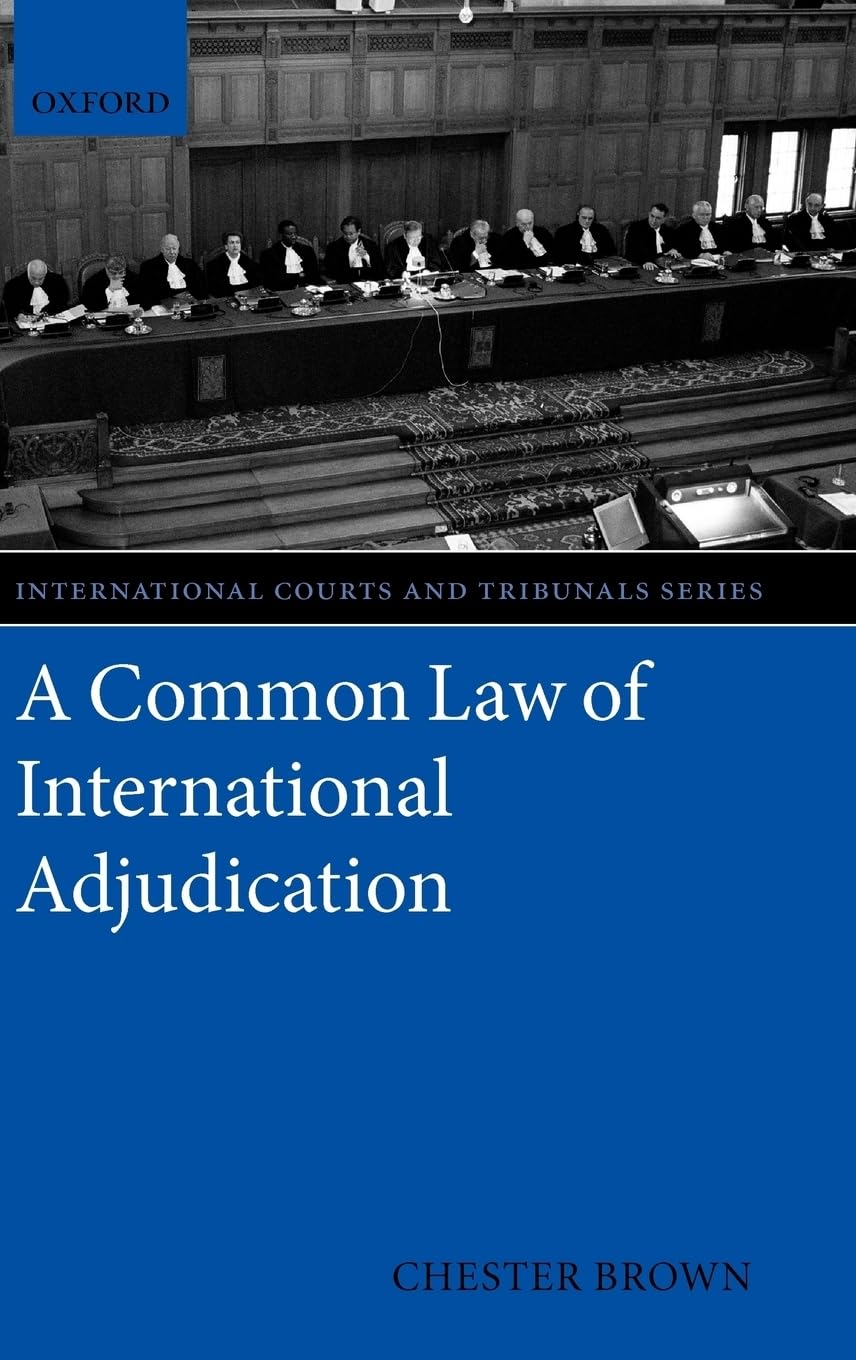
A Common Law of International Adjudication (International Courts and Tribunals Series),Used
Sold by Ergodebooks, an authorized reseller.
Returns accepted within 30 days | support@ergodebooks.com
Shipping Information
- Free Standard Shipping — United States only
- Processing Time: 3–5 business days
- Estimated Delivery: 6–10 business days after dispatch
- Double-boxed, fully insured & discreetly packaged
- Tracking number sent via email once dispatched
Returns & Refund
Returns accepted within 30 days of delivery.
Damaged or Defective Item
Free return shipping + replacement or full refund
Wrong Item Received
Free return shipping + replacement or full refund
Change of Mind
Return shipping at customer's expense · 25% restocking fee applies
Payment Option

The proliferation of international courts and tribunals has given rise to several new issues affecting the administration of international justice. This book makes a significant contribution to understanding the impact of this proliferation by addressing one important question: namely, whether international courts and tribunals are increasingly adopting common approaches to issues of procedure and remedies. This book's central argument is that there is an increasing commonality in the practice of international courts to the application of rules concerning these issues, and that this represents the emergence of a common law of international adjudication.The book examines this question by considering several key issues relating to procedure and remedies, and analyzes relevant international jurisprudence to demonstrate that there is substantial commonality. It goes on to look at why international courts are increasingly adopting common approaches to such questions, and why a greater degree of commonality may be found with respect to some issues rather than others. In doing so, light is shed on the methods adopted by international courts to engage in the crossfertilization of legal principles.The emergence of a common law of international adjudication has important practical and theoretical implications, as it suggests that international courts can also devise common approaches to the challenges that they face in the age of proliferation. It also suggests that international courts do not generally operate as selfcontained regimes, but rather that they regard themselves as forming part of a community of international courts, therefore having positive implications for the development of the international legal system.
⚠️ WARNING (California Proposition 65):
This product may contain chemicals known to the State of California to cause cancer, birth defects, or other reproductive harm.
For more information, please visit www.P65Warnings.ca.gov.