
Title
A Computational Perspective on Visual Attention,Used
Processing time: 1-3 days
US Orders Ships in: 3-5 days
International Orders Ships in: 8-12 days
Return Policy: 15-days return on defective items
Payment Option

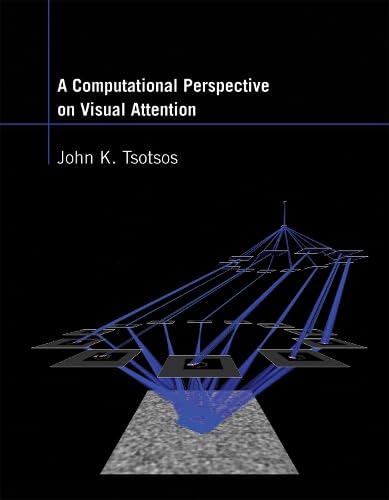
The derivation, exposition, and justification of the Selective Tuning model of vision and attention.Although William James declared in 1890, 'Everyone knows what attention is,' today there are many different and sometimes opposing views on the subject. This fragmented theoretical landscape may be because most of the theories and models of attention offer explanations in natural language or in a pictorial manner rather than providing a quantitative and unambiguous statement of the theory. They focus on the manifestations of attention instead of its rationale. In this book, John Tsotsos develops a formal model of visual attention with the goal of providing a theoretical explanation for why humans (and animals) must have the capacity to attend. He takes a unique approach to the theory, using the full breadth of the language of computationrather than simply the language of mathematicsas the formal means of description. The result, the Selective Tuning model of vision and attention, explains attentive behavior in humans and provides a foundation for building computer systems that see with humanlike characteristics. The overarching conclusion is that human vision is based on a general purpose processor that can be dynamically tuned to the task and the scene viewed on a momentbymoment basis.Tsotsos offers a comprehensive, uptodate overview of attention theories and models and a full description of the Selective Tuning model, confining the formal elements to two chapters and two appendixes. The text is accompanied by more than 100 illustrations in black and white and color; additional color illustrations and movies are available on the book's Web site
⚠️ WARNING (California Proposition 65):
This product may contain chemicals known to the State of California to cause cancer, birth defects, or other reproductive harm.
For more information, please visit www.P65Warnings.ca.gov.
- Q: What is the main focus of 'A Computational Perspective on Visual Attention'? A: The book focuses on the derivation, exposition, and justification of the Selective Tuning model of vision and attention, providing a formal model to explain the rationale behind human and animal attention.
- Q: Who is the author of this book? A: The author of 'A Computational Perspective on Visual Attention' is John K. Tsotsos.
- Q: What is the publication date of the book? A: The book was published on January 1, 2011.
- Q: What is the binding type of this book? A: This book is available in hardcover binding.
- Q: How many pages are in 'A Computational Perspective on Visual Attention'? A: The book contains 308 pages.
- Q: What is the primary goal of the Selective Tuning model described in the book? A: The primary goal of the Selective Tuning model is to provide a theoretical explanation for the capacity of humans and animals to attend, focusing on a general-purpose processor for dynamic tuning.
- Q: Does the book include illustrations? A: Yes, the book is accompanied by more than 100 illustrations in black and white and color.
- Q: Are there additional resources available online related to this book? A: Yes, additional color illustrations and movies are available on the book's website.
- Q: What category does this book fall under? A: The book falls under the category of Graphics & Design.
- Q: Is this book suitable for someone new to the subject of visual attention? A: Yes, the book offers a comprehensive overview of attention theories and models, making it suitable for both newcomers and those familiar with the subject.