
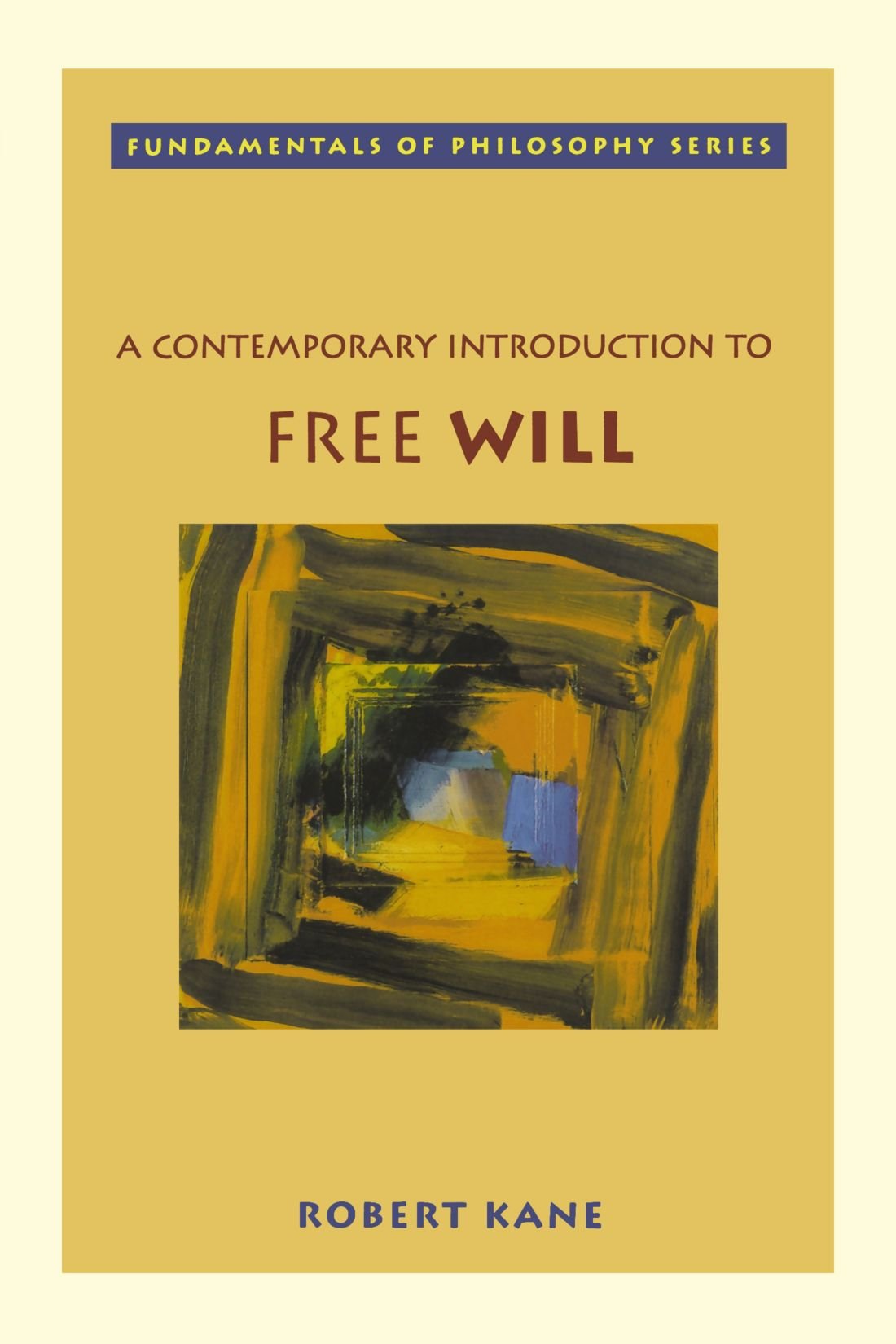
Title

A Contemporary Introduction to Free Will,Used
Sold by Ergodebooks, an authorized reseller.
Returns accepted within 30 days | support@ergodebooks.com
Shipping Information
- Free Standard Shipping — United States only
- Processing Time: 3–5 business days
- Estimated Delivery: 6–10 business days after dispatch
- Double-boxed, fully insured & discreetly packaged
- Tracking number sent via email once dispatched
Returns & Refund
Returns accepted within 30 days of delivery.
Damaged or Defective Item
Free return shipping + replacement or full refund
Wrong Item Received
Free return shipping + replacement or full refund
Change of Mind
Return shipping at customer's expense · 25% restocking fee applies
Payment Option

Accessible to students with no background in the subject, A Contemporary Introduction to Free Will provides an extensive and uptodate overview of all the latest views on this central problem of philosophy. Opening with a concise introduction to the history of the problem of free willand its place in the history of philosophythe book then turns to contemporary debates and theories about free will, determinism, and related subjects like moral responsibility, coercion, compulsion, autonomy, agency, rationality, freedom, and more. Classical compatibilist and new compatibilist theories of free will are considered along with the latest incompatibilist or libertarian theories and the most recent skeptical challenges to free will. Separate chapters are devoted to the relation of free will to moral responsibility and ethics; to modern science; and to religious questions about predestination, divine foreknowledge, and human freedom. Numerous downtoearth examples and challenging thought experiments enliven the text. The book is an ideal addition to introduction to philosophy, metaphysics, and free will courses.
⚠️ WARNING (California Proposition 65):
This product may contain chemicals known to the State of California to cause cancer, birth defects, or other reproductive harm.
For more information, please visit www.P65Warnings.ca.gov.
- Q: How many pages does the book have? A: The book has two hundred eight pages. This length provides a thorough exploration of free will and related philosophical concepts.
- Q: What is the binding type of this book? A: The book is paperback. This binding type is lightweight and flexible, making it easy to carry and read.
- Q: Who is the author of 'A Contemporary Introduction to Free Will'? A: The author is Robert Kane. He is known for his contributions to philosophy, particularly in the area of free will.
- Q: Is this book suitable for beginners? A: Yes, the book is accessible to students with no background in the subject. It provides a clear introduction to complex philosophical ideas.
- Q: What topics are covered in the book? A: The book covers free will, determinism, moral responsibility, and ethics. It also discusses the relationship between free will and modern science.
- Q: What are some thought-provoking elements in the book? A: The book includes numerous examples and challenging thought experiments. These elements engage readers and deepen their understanding of free will.
- Q: How should I store this book to keep it in good condition? A: Store the book in a cool, dry place, away from direct sunlight. This will help prevent damage to the cover and pages.
- Q: Can I return this book if I'm not satisfied? A: Yes, there is a no-quibbles return policy. You can return the book if it does not meet your expectations.
- Q: Is there a warranty on this book? A: No, books typically do not come with a warranty. However, you can return it if it's damaged upon arrival.
- Q: What if my book arrives damaged? A: You can return the book if it arrives damaged. The return policy ensures you can get a replacement or refund.
- Q: Is there a recommended reading level for this book? A: The book is suitable for high school students and above. It caters to readers interested in philosophy.
- Q: What makes this book a good choice for philosophy courses? A: Its comprehensive overview of contemporary debates on free will makes it ideal for introduction to philosophy courses. It also addresses key philosophical questions.
- Q: Are there any discussions about religious implications in the book? A: Yes, the book includes discussions on predestination and divine foreknowledge. This provides a philosophical perspective on religious questions.
- Q: How is this book relevant to modern science? A: The book discusses the implications of modern scientific findings on the concept of free will. It relates philosophical debates to contemporary scientific understanding.
- Q: Does the book include any historical context? A: Yes, the book begins with a concise introduction to the history of free will. This context helps readers understand its philosophical significance.
- Q: What themes does the book explore in relation to moral responsibility? A: It explores the connection between free will and moral responsibility. This includes discussions on autonomy, agency, and ethical implications.