
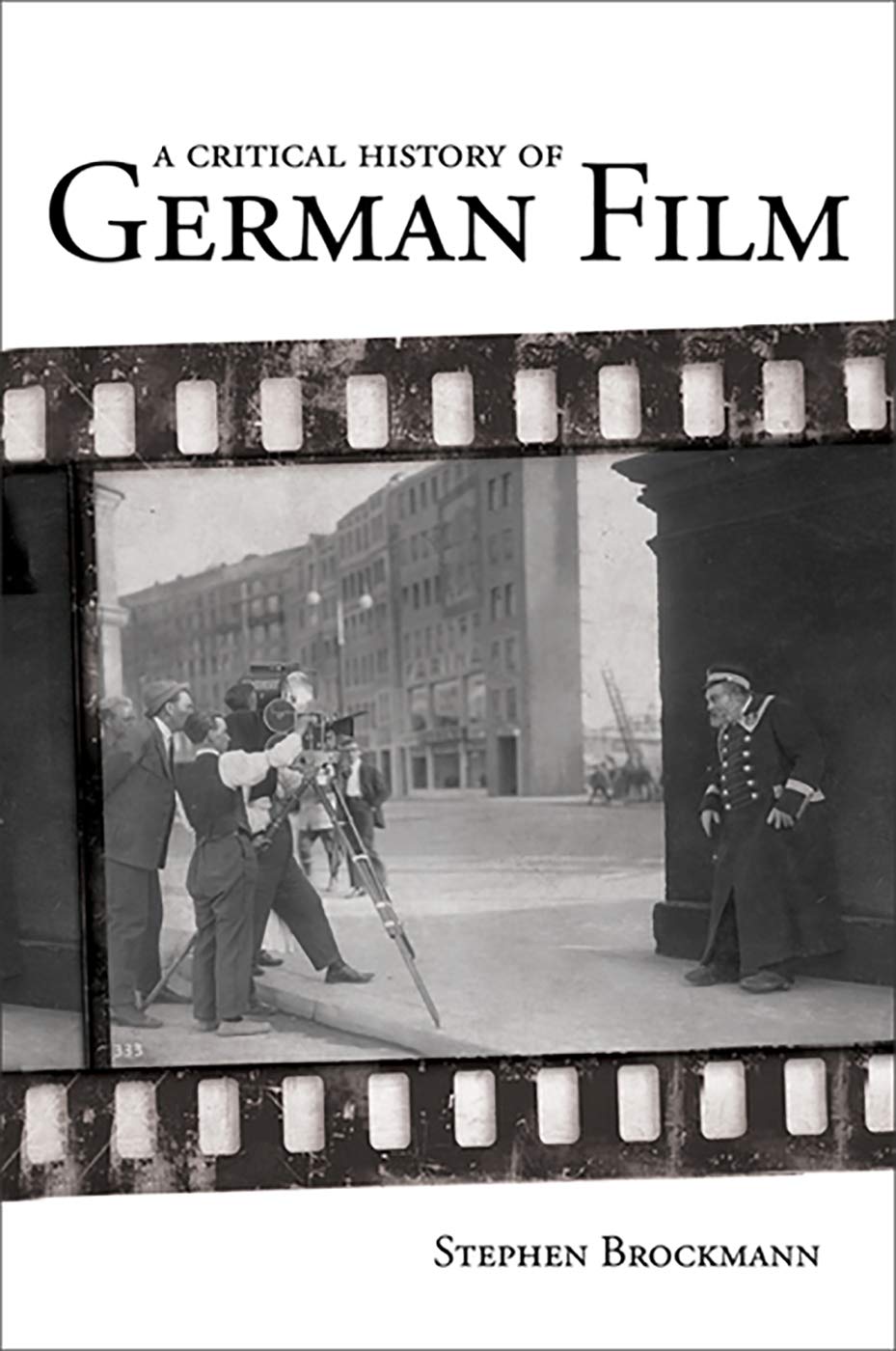
Title
A Critical History of German Film (Studies in German Literature Linguistics and Culture) (Volume 93),Used
Sold by Ergodebooks, an authorized reseller.
Returns accepted within 30 days | support@ergodebooks.com
Shipping Information
- Free Standard Shipping — United States only
- Processing Time: 3–5 business days
- Estimated Delivery: 6–10 business days after dispatch
- Double-boxed, fully insured & discreetly packaged
- Tracking number sent via email once dispatched
Returns & Refund
Returns accepted within 30 days of delivery.
Damaged or Defective Item
Free return shipping + replacement or full refund
Wrong Item Received
Free return shipping + replacement or full refund
Change of Mind
Return shipping at customer's expense · 25% restocking fee applies
Payment Option

A history of German film dealing with individual films as works of art has long been needed. Existing histories tend to treat cinema as an economic rather than an aesthetic phenomenon; earlier surveys that do engage with individual films do not include films of recent decades. This book treats representative films from the beginnings of German film to the present. Providing historical context through an introduction and interchapters preceding the treatments of each era's films, the volume is suitable for semester or yearlong survey courses and for anyone with an interest in German cinema.The films: The Student of Prague The Cabinet of Dr. Caligari The Last Laugh Metropolis The Blue Angel M Triumph of the Will The Great Love The Murderers Are among Us Sun Seekers Trace of Stones The Legend of Paul and Paula Solo Sunny The Bridge Young Trless Aguirre, The Wrath of God Germany in Autumn The Marriage of Maria Braun The Tin Drum Marianne and Juliane Wings of Desire Maybe, Maybe Not Rossini Run Lola Run Good Bye Lenin! Head On The Lives of OthersStephen Brockmann is Professor of German at Carnegie Mellon University and past President of the German Studies Assocation.Table of ContentsAcknowledgmentsIntroduction: Critical Film History and German StudiesEarly German Film History 18951918: Historical OverviewDer Student von Prag (1913) and Learning to LookWeimar Cinema 19191933: Historical OverviewDas Cabinet des Dr. Caligari (1920) or Film as HypnosisDer letzte Mann (1924) or Learning to MoveMetropolis (1927) or Technology and SexDer blaue Engel (1927) and Learning to TalkM (1931) or Sound and TerrorNazi Cinema 19331945: Historical OverviewTriumph des Willens: (1935): Documentary and PropagandaDie groe Liebe (1942) or Love and WarGerman Cinema at the Zero Hour 19451949: Historical OverviewDie Mrder sind unter uns: (1946): The Rubble FilmPostwar East German Cinema 19491989: Historical OverviewSonnensucher (1958) or Searching for the Socialist SunSpur der Steine (1966) or Traces of RepressionDie Legende von Paul und Paula (1966) or East Germany in the '70sSolo Sunny (1980) or Even Socialism Can't Stave Off LonelinessPostwar West German Cinema 19491989: Historical OverviewDie Brcke (1959): Film and WarDer junge Trless (1966) or Recapturing TraditionAguirre, der Zorn Gottes (1972): Film and the SublimeDeutschland im Herbst (1978) or Film and PoliticsDie Ehe der Maria Braun (1979) or West Germany RebuildsDie Blechtrommel (1979) or Coming to Terms with the Nazi PastDie bleierne Zeit (1981): Film and TerrorismDer Himmel ber Berlin (1987): Berlin, City of AngelsGerman Film after Reunification 19902010: Historical OverviewDer bewegte Mann (1994) or West German SelfAbsorptionRossini (1994) or West German SelfAbsorption CriticizedLola rennt (1998) or Cool GermaniaGood Bye Lenin! (2003) or Farewell to the Socialist MotherlandGegen die Wand (2004) or Germany Goes MulticulturalDas Leben der anderen (2006) or the Power of ArtIndex
⚠️ WARNING (California Proposition 65):
This product may contain chemicals known to the State of California to cause cancer, birth defects, or other reproductive harm.
For more information, please visit www.P65Warnings.ca.gov.
- Q: What is the main focus of 'A Critical History of German Film'? A: The book focuses on the aesthetic and historical aspects of German cinema, examining representative films from its inception to the present day.
- Q: Who is the author of this book? A: The author is Stephen Brockmann, a Professor of German at Carnegie Mellon University.
- Q: What types of films are discussed in the book? A: The book discusses a range of films, including classics like 'Metropolis', 'The Cabinet of Dr. Caligari', and contemporary works such as 'Good Bye Lenin!'.
- Q: How many pages does the book have? A: The book contains a total of 532 pages.
- Q: What edition of the book is available? A: The available edition is an illustrated version.
- Q: When was 'A Critical History of German Film' published? A: The book was published on November 1, 2010.
- Q: What is the condition of the book? A: The book is listed as 'New'.
- Q: Is this book suitable for academic courses? A: Yes, it is suitable for semester or year-long survey courses focused on German cinema.
- Q: What are some key films highlighted in the book? A: Key films highlighted include 'The Blue Angel', 'Wings of Desire', and 'Run Lola Run'.
- Q: Does the book provide historical context for the films discussed? A: Yes, it provides historical context through an introduction and interchapters that precede each era's films.