
Title
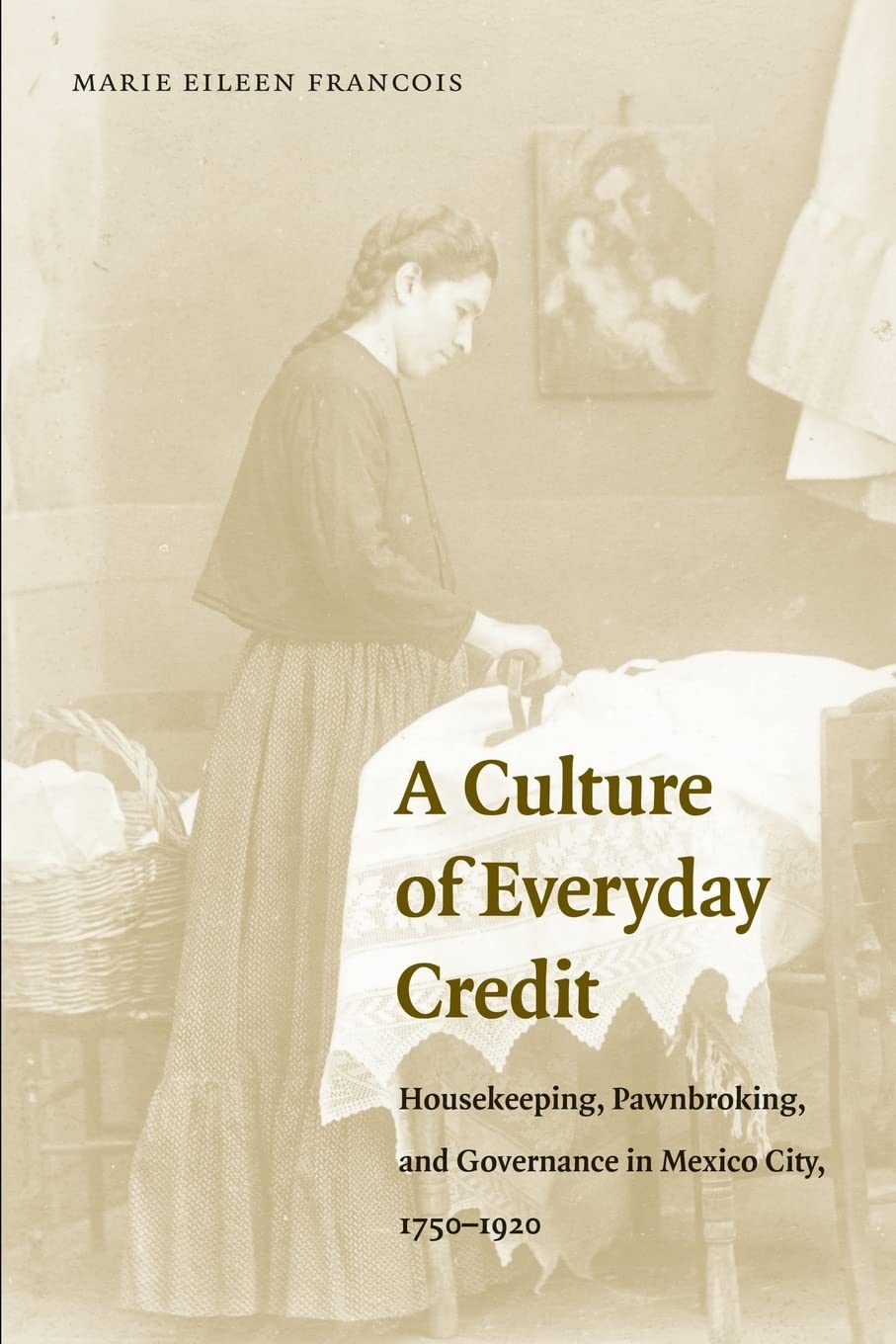
A Culture Of Everyday Credit: Housekeeping, Pawnbroking, And Governance In Mexico City, 17501920 (Engendering Latin America),Used
Sold by Ergodebooks, an authorized reseller.
Returns accepted within 30 days | support@ergodebooks.com
Shipping Information
- Free Standard Shipping — United States only
- Processing Time: 3–5 business days
- Estimated Delivery: 6–10 business days after dispatch
- Double-boxed, fully insured & discreetly packaged
- Tracking number sent via email once dispatched
Returns & Refund
Returns accepted within 30 days of delivery.
Damaged or Defective Item
Free return shipping + replacement or full refund
Wrong Item Received
Free return shipping + replacement or full refund
Change of Mind
Return shipping at customer's expense · 25% restocking fee applies
Payment Option

Pawning was the most common credit mechanism in Mexico City in the nineteenth century. A diverse, largely female pawning clientele from lower and middleclass households regularly secured small consumption loans by hocking household goods. A twotiered sector of public and private pawnbrokers provided collateral credit. Rather than just providing emergency subsistence for the poor, pawnbroking facilitated consumption by Creole and mestizo middle sectors of Mexican society and enhanced identity formation for those in middling households by allowing them to cash in on material investments to maintain status during lean times. A Culture of Everyday Credit shows how Mexican women have depended on credit to run their households since the Bourbon era and how the collateral credit business of pawnbroking developed into a profitable enterprise built on the demand for housekeeping loans as restrictions on usury waned during the nineteenth century.Pairing the study of household consumption with a detailed analysis of the rise of private and public pawnbroking provides an original context for understanding the role of small business in everyday life. Marie Eileen Francois weighs colonial reforms, liberal legislation, and social revolution in terms of their impact on households and pawning businesses.Based on evidence from pawnshop inventories, censuses, legislation, petitions, literature, and newspapers, A Culture of Everyday Credit portrays households, small businesses, and government entities as intersecting arenas in one material world, a world strapped for cash throughout most of the century and turned upside down during the Mexican Revolution.
⚠️ WARNING (California Proposition 65):
This product may contain chemicals known to the State of California to cause cancer, birth defects, or other reproductive harm.
For more information, please visit www.P65Warnings.ca.gov.