
Title
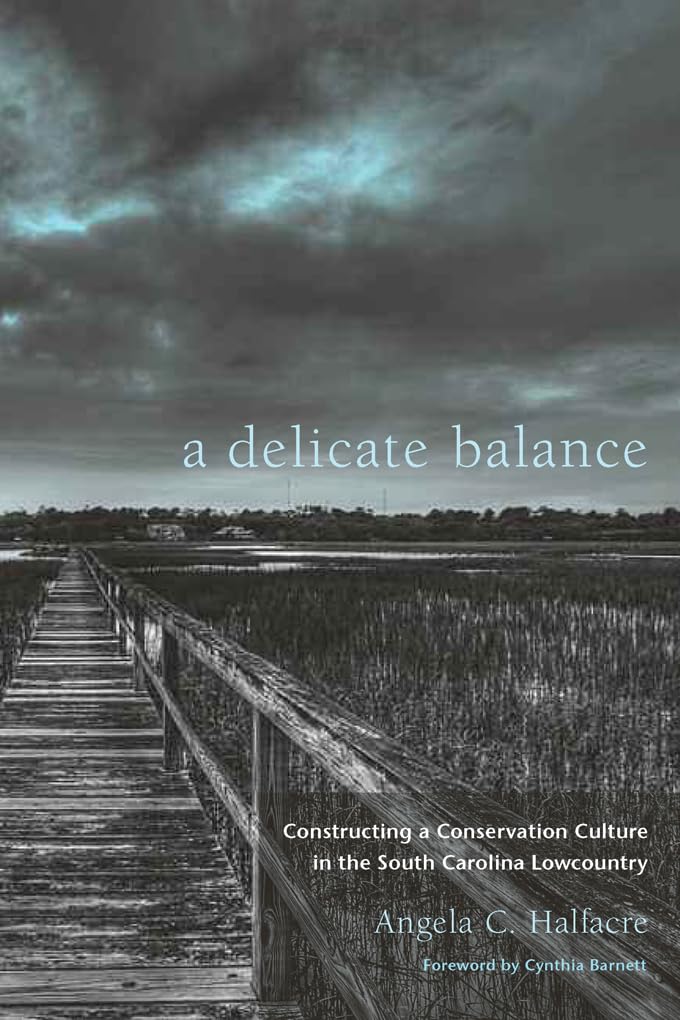
A Delicate Balance: Constructing a Conservation Culture in the South Carolina Lowcountry,Used
Sold by Ergodebooks, an authorized reseller.
Returns accepted within 30 days | support@ergodebooks.com
Shipping Information
- Free Standard Shipping — United States only
- Processing Time: 3–5 business days
- Estimated Delivery: 6–10 business days after dispatch
- Double-boxed, fully insured & discreetly packaged
- Tracking number sent via email once dispatched
Returns & Refund
Returns accepted within 30 days of delivery.
Damaged or Defective Item
Free return shipping + replacement or full refund
Wrong Item Received
Free return shipping + replacement or full refund
Change of Mind
Return shipping at customer's expense · 25% restocking fee applies
Payment Option

Sustainability of the natural environment and of our society has become one of the most urgent challenges facing modern Americans. Communities across the country are seeking a viable pattern of growth that promotes prosperity, protects the environment, and preserves the distinctive quality of life of their regions. The coastal zone of South Carolina is one of the most endangered, culturally complex regions in the state and perhaps in all of the American South. A Delicate Balance examines how a multilayered culture of environmental conservation and sustainable development has emerged in the lowcountry of South Carolina. Angela C. Halfacre, a political scientist, describes how sprawl shock, natural disaster, climate change, and other factors spawned and sustainbut also threaten and hinderthe culture of conservation.Since Hurricane Hugo in 1989, the coastal region of South Carolina has experienced unprecedented increases in residential and commercial development. A Delicate Balance uses interdisciplinary literature and ethnographic, historical, and spatial methods to show how growing numbers of lowcountry residents, bolstered by substantial political, corporate, and media support, have sought to maintain the region's distinctive sense of place as well as its fragile ecology. The diverse social and cultural threads forming the fabric of the lowcountry conservation culture include those who make their living from the land, such as African American basket makers and multigenerational famers, as well as those who own, manage, and develop the land and homeowner association members. Evolving perceptions, policies, and practices that characterize community priorities and help to achieve the ultimate goal of sustainability are highlighted here.As Halfacre demonstrates, maintaining the quality of the environment while accommodating residential, commercial, and industrial growth is a balancing act replete with compromises. This book documents the origins, goals, programs, leaders, tactics, and effectiveness of a conservation culture. A Delicate Balance deftly illustrates that a resilient culture of conservation that wields growing influence in the lowcountry has become an important regional model for conservation efforts across the nation.A Delicate Balance also includes a foreword by journalist Cynthia Barnett, author of Blue Revolution: Unmaking America's Water Crisis and Mirage: Florida and the Vanishing Water of the Eastern U.S.
⚠️ WARNING (California Proposition 65):
This product may contain chemicals known to the State of California to cause cancer, birth defects, or other reproductive harm.
For more information, please visit www.P65Warnings.ca.gov.
- Q: What is the page count of the book? A: The book has three hundred sixty-eight pages. This length provides a comprehensive exploration of conservation culture in South Carolina.
- Q: What type of binding does this book have? A: This book is available in paperback binding. Paperback editions are lightweight and flexible, making them easy to handle.
- Q: What are the dimensions of the book? A: The book measures six point one inches in length, nine point zero two inches in height, and zero point nine one inches in width. These dimensions make it a suitable size for easy reading.
- Q: Who is the author of the book? A: The author is Angela C. Halfacre. She is a political scientist with expertise in environmental conservation and community development.
- Q: What is the main theme of A Delicate Balance? A: The main theme is the culture of environmental conservation in South Carolina's lowcountry. It examines the balance between development and sustainability.
- Q: Is this book suitable for all ages? A: Yes, this book is suitable for adult readers and older teens. It discusses complex themes related to conservation and community challenges.
- Q: How can I apply the concepts from this book? A: You can apply the concepts by engaging in local conservation efforts. The book provides insights into sustainable practices and community involvement.
- Q: Are there any specific case studies in the book? A: Yes, the book includes various case studies of conservation efforts in the lowcountry. These examples highlight successful practices and challenges faced.
- Q: How should I store this book to keep it in good condition? A: Store the book in a cool, dry place away from direct sunlight. This will help prevent fading and damage to the pages.
- Q: What if the book arrives damaged? A: If the book arrives damaged, you should contact the seller for a return or exchange. Be sure to retain any packaging for the return process.
- Q: Is there a foreword in the book? A: Yes, the book includes a foreword by journalist Cynthia Barnett. Her insights add depth to the themes discussed in the book.
- Q: What topics are covered in the book? A: The book covers topics such as climate change, community priorities, and sustainable development practices. These themes are crucial for understanding conservation.
- Q: Can this book help with community conservation efforts? A: Yes, it offers practical insights and examples for communities looking to enhance their conservation practices. It serves as a guide for effective strategies.
- Q: Does the book discuss the impact of Hurricane Hugo? A: Yes, the book discusses the effects of Hurricane Hugo on South Carolina's coastal region. It highlights how the disaster influenced conservation efforts.
- Q: Is the book based on research? A: Yes, the book is based on interdisciplinary literature and ethnographic research. This provides a well-rounded perspective on the conservation culture.