If you have any questions, you are always welcome to contact us. We'll get back to you as soon as possible, withing 24 hours on weekdays.
Customer service
All questions about your order, return and delivery must be sent to our customer service team by e-mail at yourstore@yourdomain.com
Sale & Press
If you are interested in selling our products, need more information about our brand or wish to make a collaboration, please contact us at press@yourdomain.com
Help
If you have any questions, you are always welcome to contact us. We'll get back to you as soon as possible, withing 24 hours on weekdays.
Customer service
All questions about your order, return and delivery must be sent to our customer service team by e-mail at yourstore@yourdomain.com
Sale & Press
If you are interested in selling our products, need more information about our brand or wish to make a collaboration, please contact us at press@yourdomain.com
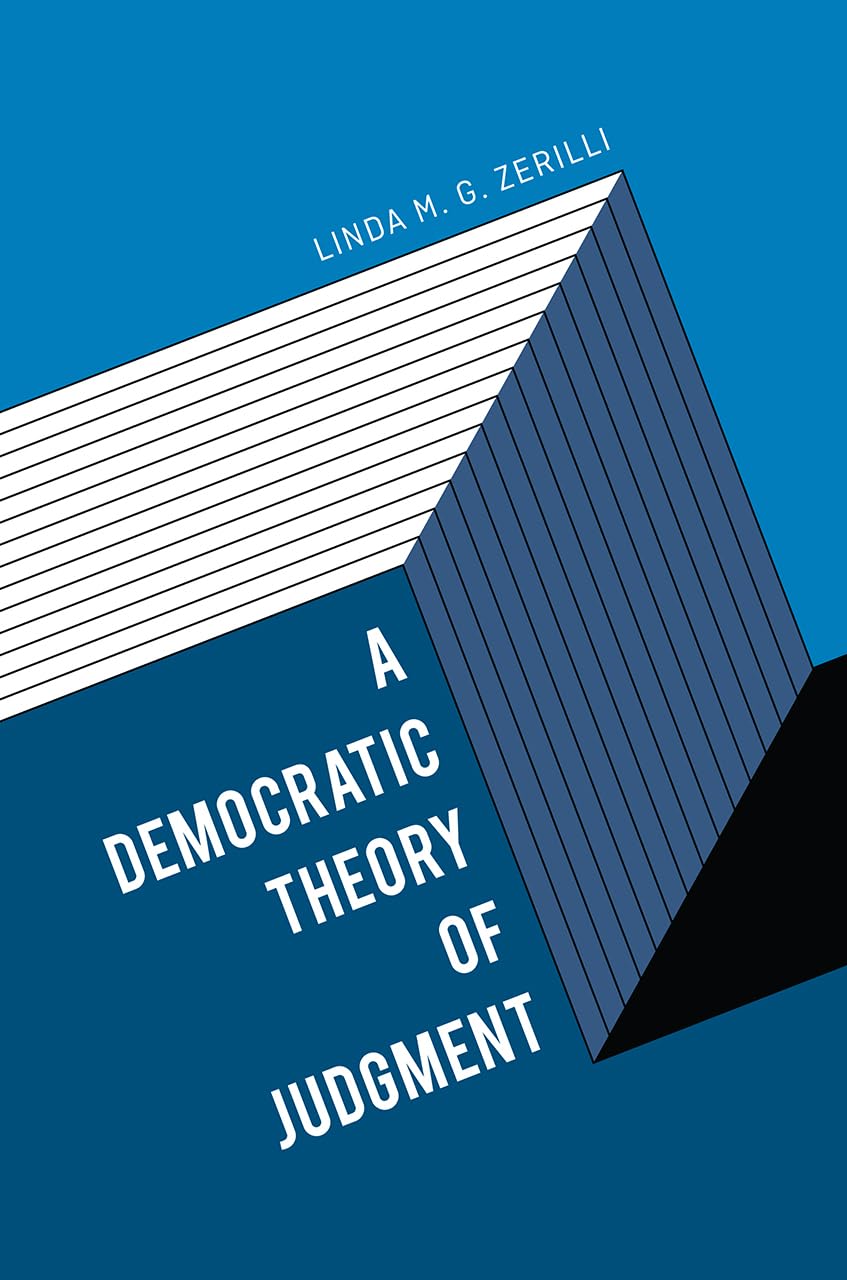
In this sweeping look at political and philosophical history, Linda M. G. Zerilli unpacks the tightly woven core of Hannah Arendts unfinished work on a tenacious modern problem: how to judge critically in the wake of the collapse of inherited criteria of judgment. Engaging a remarkable breadth of thinkers, including Ludwig Wittgenstein, Leo Strauss, Immanuel Kant, Frederick Douglass, John Rawls, Jrgen Habermas, Martha Nussbaum, and many others, Zerilli clears a hopeful path between an untenable universalism and a cultural relativism that forever defers the possibility of judging at all.Zerilli deftly outlines the limitations of existing debates, both those that concern themselves with the impossibility of judging across cultures and those that try to find transcendental, rational values to anchor judgment. Looking at Kant through the lens of Arendt, Zerilli develops the notion of a public conception of truth, and from there she explores relativism, historicism, and universalism as they shape feminist approaches to judgment. Following Arendt even further, Zerilli arrives at a hopeful new pathwayseeing the collapse of philosophical criteria for judgment not as a problem but a way to practice judgment anew as a worldbuilding activity of democratic citizens. The result is an astonishing theoretical argument that travels throughand goes beyondsome of the most important political thought of the modern period.
⚠️ WARNING (California Proposition 65):
This product may contain chemicals known to the State of California to cause cancer,
birth defects, or other reproductive harm.
For MAP (Minimum Advertised Price) violations and Intellectual Property (IP) or Trademark concerns, please contact:
support@ergodebooks.com
⚠️ California Proposition 65 Warning: Some products sold on this website may expose you to chemicals known to the State of California to cause cancer, birth defects, or other reproductive harm. For more information, visit www.P65Warnings.ca.gov.