
Title
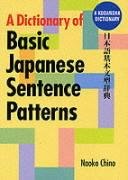
A Dictionary Of Basic Japanese Sentence Patterns (Kodansha Dictionary)
Sold by Ergodebooks, an authorized reseller.
Returns accepted within 30 days | support@ergodebooks.com
Shipping Information
- Free Standard Shipping — United States only
- Processing Time: 3–5 business days
- Estimated Delivery: 6–10 business days after dispatch
- Double-boxed, fully insured & discreetly packaged
- Tracking number sent via email once dispatched
Returns & Refund
Returns accepted within 30 days of delivery.
Damaged or Defective Item
Free return shipping + replacement or full refund
Wrong Item Received
Free return shipping + replacement or full refund
Change of Mind
Return shipping at customer's expense · 25% restocking fee applies
Payment Option

A Dictionary Of Basic Japanese Sentence Patterns Is A Fundamental Learning Tool For All Students Of The Japanese Language, Whether They Be Unblemished Beginners Or Scarred Veterans. With Both Types Of Struggling Student, As Well As For All The Gradations That Fall In Between, There Is A Strong Tendency, In The Heat Of Battle, To Lose Sight Of The Essential Nature Of The Japanese Sentence. It Is For Just Such People That This Dictionary Has Been Created, To Help Them Keep Their Eyes Fixed Firmly On The Target And Not Be Led Astray.The Dictionary Contains Fifty Of The Most Fundamental Japanese Sentence Patterns As Well As Sixtynine Variations. This Number Covers All The Patterns That Are Needed For Levels 3 And 4 Of The Japanese Language Proficiency Test. Each Pattern And Variation Is Clearly Defined By A Formula Given In Japanese, Romanization, And English. Each Is Exemplified By Sample Sentences (Both In Single Sentences And In Dialogues), And Each Is Represented In Both Polite And Informal Usage.By Means Of This Approach, The Essential Nature Of The Japanese Sentence Is Clarified, And Once That Has Been Done, The Many Patterns And Variations Fall Easily Into Place. The Simple, Undisguised Truth Is That There Are Only Three Types Of Sentence In Japanese, And All Of The Convolutions And Complications That Distract And Bemuse The Student Are Nothing More Than Modifications Of These Three Fundamental Types. The Study Of The Japanese Sentence Need Not Be As Difficult As It Is Seems.A Dictionary Of Basic Japanese Sentence Patterns May Be Used As A Reference Book To Look Up Individual Patterns For The Purpose Of Learning, Confirming, Or Reapproaching Them, Or It May Be Used As A Textbook To Be Read From Beginning To End, Providing An Overview Of The Japanese Sentence While Buttressing The Student'S Grasp Of Individual Patterns.Naoko Chino, The Author Of The Bestselling All About Particles And Japanese Verbs At A Glance, Has Again Presented One Of The More Forbidding Aspects Of The Language In A Way That Is Both Approachable And Eminently Comprehensible.Main Features Fifty Of The Most Common Basic Patterns Sixtynine Variations Of The Basic Patterns Formulas Delineating Basic Pattern Structure Definitions Of Terms Used In The Formulas Polite Example Sentences And Dialogues Informal Example Sentences And Dialogues Commentary On Individual Usages All The Basic Patterns Needed For Levels 3 & 4 Of The Japanese Language Proficiency Test
⚠️ WARNING (California Proposition 65):
This product may contain chemicals known to the State of California to cause cancer, birth defects, or other reproductive harm.
For more information, please visit www.P65Warnings.ca.gov.
- Q: What are the dimensions of the book? A: The book measures seven point one inches in length, five point one two inches in height, and zero point seven one inches in width. This compact size makes it portable and easy to handle.
- Q: How many pages does this book contain? A: The book contains three hundred twenty-four pages. This length provides a comprehensive overview of essential Japanese sentence patterns.
- Q: What type of binding does the book have? A: The book is paperback bound. This makes it flexible and lightweight, suitable for both casual reading and study.
- Q: How can I use this dictionary effectively? A: You can use this dictionary as a reference tool to look up sentence patterns or as a textbook to read sequentially. It helps clarify the essential nature of Japanese sentences.
- Q: Is this book suitable for beginners? A: Yes, this book is suitable for both beginners and advanced learners. It covers fundamental patterns essential for different levels of proficiency.
- Q: Can I use this book for test preparation? A: Yes, this dictionary includes all the basic patterns needed for levels three and four of the Japanese Language Proficiency Test. It's a great resource for exam preparation.
- Q: How should I store this book to keep it in good condition? A: Store the book in a cool, dry place away from direct sunlight. This will help prevent wear and fading of the cover and pages.
- Q: Is it safe to use this book around children? A: Yes, the book is safe for children, as it contains educational content about the Japanese language. However, parental guidance is recommended for younger learners.
- Q: What if the book arrives damaged? A: If the book arrives damaged, you can contact customer support for a return or exchange. Ensure you have your order details ready for a smooth process.
- Q: How do I clean the book if it gets dirty? A: To clean the book, gently wipe the cover with a soft, dry cloth. Avoid using water or cleaning solutions to prevent damage to the pages.
- Q: Is this book a good choice for advanced learners? A: Yes, advanced learners will find value in the detailed explanations and variations of sentence patterns. It serves as a useful reference for complex language structures.
- Q: Does the book include example sentences? A: Yes, the book provides example sentences in both polite and informal usage. This helps learners understand the application of each sentence pattern.
- Q: Can I find variations of sentence patterns in this book? A: Yes, the book includes sixty-nine variations of the basic sentence patterns. This variety aids in mastering the nuances of the Japanese language.
- Q: Who is the author of this book? A: The author of the book is Naoko Chino, recognized for her expertise in Japanese language education. She has also written other best-selling language resources.
- Q: What features are highlighted in this dictionary? A: The dictionary highlights fifty common basic patterns, detailed formulas, and commentary on individual usages. These features enhance the learning experience.