

Title
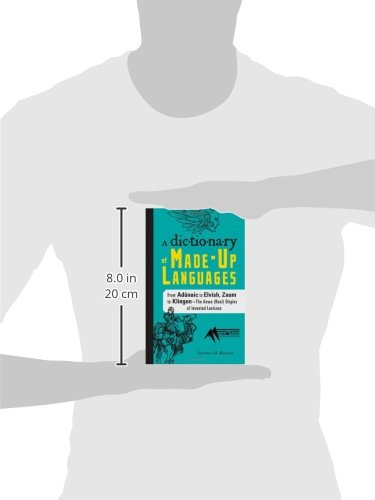
A Dictionary of MadeUp Languages: From Elvish to Klingon, The Anwa, Reella, Ealray, Yeht (Real) Origins of Invented Lexicons,Used
Sold by Ergodebooks, an authorized reseller.
Returns accepted within 30 days | support@ergodebooks.com
Shipping Information
- Free Standard Shipping — United States only
- Processing Time: 3–5 business days
- Estimated Delivery: 6–10 business days after dispatch
- Double-boxed, fully insured & discreetly packaged
- Tracking number sent via email once dispatched
Returns & Refund
Returns accepted within 30 days of delivery.
Damaged or Defective Item
Free return shipping + replacement or full refund
Wrong Item Received
Free return shipping + replacement or full refund
Change of Mind
Return shipping at customer's expense · 25% restocking fee applies
Payment Option

Can you converse in Klingon? Ask an Elf the time of day? Greet a speaker of Esperanto? These are among the more than 100 constructed languages you'll find in this book. For each one, author Stephen D. Rogers provides vocabulary, grammatical features, background information on the language and its inventor, and fascinating facts. What's more, easytofollow guidelines show you how to construct your own madeup languageeverything from building vocabulary to making up a grammar.So pick up this dictionary! In no time, you'll be telling your friends, "Tsun oe ngahu niNa'vi pangkxo a f'u oeru prrte' lu." ("It's a pleasure to be able to chat with you in Navi.")
⚠️ WARNING (California Proposition 65):
This product may contain chemicals known to the State of California to cause cancer, birth defects, or other reproductive harm.
For more information, please visit www.P65Warnings.ca.gov.
- Q: How many pages does the book have? A: This book has three hundred four pages. It's filled with vocabulary and grammatical features for over one hundred constructed languages.
- Q: What are the dimensions of the book? A: The book measures five point five one inches in length, zero point nine nine inches in width, and eight inches in height.
- Q: What type of binding does the book have? A: The book has a hardcover binding. This provides durability and a premium feel while reading.
- Q: Who is the author of this book? A: The author is Stephen D. Rogers. He explores the fascinating world of invented languages in this dictionary.
- Q: What is the main theme of the book? A: The main theme is constructed languages. It covers their vocabulary, grammar, and interesting facts about their creators.
- Q: How can I create my own language using this book? A: Follow the easy-to-understand guidelines provided in the book. These guidelines help you build vocabulary and grammar for your own language.
- Q: Is this book suitable for beginners? A: Yes, this book is suitable for beginners. It offers clear instructions and a variety of languages to explore.
- Q: Can I use this book for academic purposes? A: Yes, it can be used for academic purposes. It provides in-depth knowledge about language construction and linguistic features.
- Q: Is this book appropriate for children? A: Yes, the book is appropriate for children, especially those interested in languages and creativity. Parental guidance is recommended.
- Q: How should I care for the book? A: To care for the book, keep it in a dry place and avoid exposing it to direct sunlight. This will help preserve its condition.
- Q: What if the book is damaged upon arrival? A: If the book arrives damaged, contact customer support within fourteen days for a replacement or refund.
- Q: Is there a warranty for this book? A: No, there is no warranty for this book. However, customer satisfaction policies may apply for returns.
- Q: Can I gift this book? A: Yes, this book makes a great gift for language enthusiasts or anyone interested in creativity and linguistics.
- Q: Are there any similar books to this one? A: Yes, there are similar books that explore constructed languages, including guides and dictionaries on fictional languages.
- Q: How do I find specific languages in the book? A: You can find specific languages by using the index at the back of the book. This makes it easy to navigate.