
Title
A Fatherly Eye: Indian Agents, Government Power, and Aboriginal Resistance in Ontario, 19181939 (Canadian Social History Series,Used
Sold by Ergodebooks, an authorized reseller.
Returns accepted within 30 days | support@ergodebooks.com
Shipping Information
- Free Standard Shipping — United States only
- Processing Time: 3–5 business days
- Estimated Delivery: 6–10 business days after dispatch
- Double-boxed, fully insured & discreetly packaged
- Tracking number sent via email once dispatched
Returns & Refund
Returns accepted within 30 days of delivery.
Damaged or Defective Item
Free return shipping + replacement or full refund
Wrong Item Received
Free return shipping + replacement or full refund
Change of Mind
Return shipping at customer's expense · 25% restocking fee applies
Payment Option

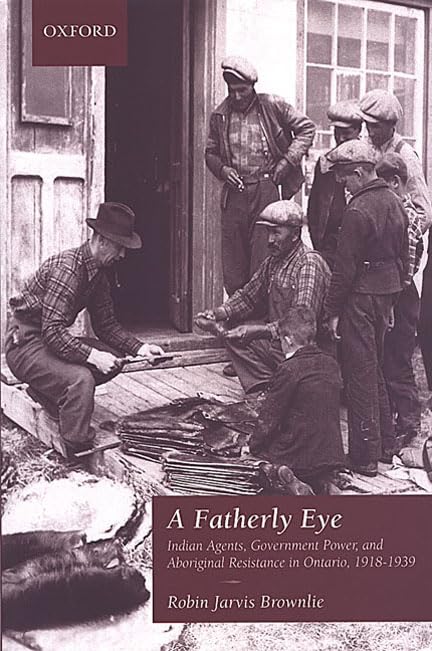
For more than a century, government policy towards Aboriginal peoples in Canada was shaped by paternalistic attitudes and an ultimate goal of assimilation. Indeed, remnants of that thinking still linger today, more than thirty years after protests against the White Paper of 1969 led to reconsideration Canada's 'Indian' policy. In A Fatherly Eye, historian Robin Brownlie examines how paternalism and assimilation during the interwar period were made manifest in the 'field', far from the bureaucrats in Ottawa, but never free of their oppressive supervision. At the same time, she reveals how the Aboriginal 'subjects' of official policy dealt with the control and coercion that lay at the heart of the Indian Act.This groundbreaking study sheds new light on a time and a place we know little about. Brownlie focuses on two Indian agencies in southern Ontario Parry Sound and Manitowaning (on Manitoulin Island) and the contrasting management styles of two agents, John daly and Robert Lewis, especially during the Great Depression. In administering the lives of the Anishinabek people, the government paid inadequate attention to the protection of treaty rights and was excessively concerned with maintaining control, in part through the paternalistic provision of assistance that helped to silence critics of the system and prevent political organizing. As Brownlie concludes, the Indian Affairs system still does not work well, and 'has come to represent all that is most oppressive about the history of colonization in this country'.Previously published by Oxford University Press
⚠️ WARNING (California Proposition 65):
This product may contain chemicals known to the State of California to cause cancer, birth defects, or other reproductive harm.
For more information, please visit www.P65Warnings.ca.gov.