
Title

A Field Guide To American Houses
Sold by Ergodebooks, an authorized reseller.
Returns accepted within 30 days | support@ergodebooks.com
Shipping Information
- Free Standard Shipping — United States only
- Processing Time: 3–5 business days
- Estimated Delivery: 6–10 business days after dispatch
- Double-boxed, fully insured & discreetly packaged
- Tracking number sent via email once dispatched
Returns & Refund
Returns accepted within 30 days of delivery.
Damaged or Defective Item
Free return shipping + replacement or full refund
Wrong Item Received
Free return shipping + replacement or full refund
Change of Mind
Return shipping at customer's expense · 25% restocking fee applies
Payment Option

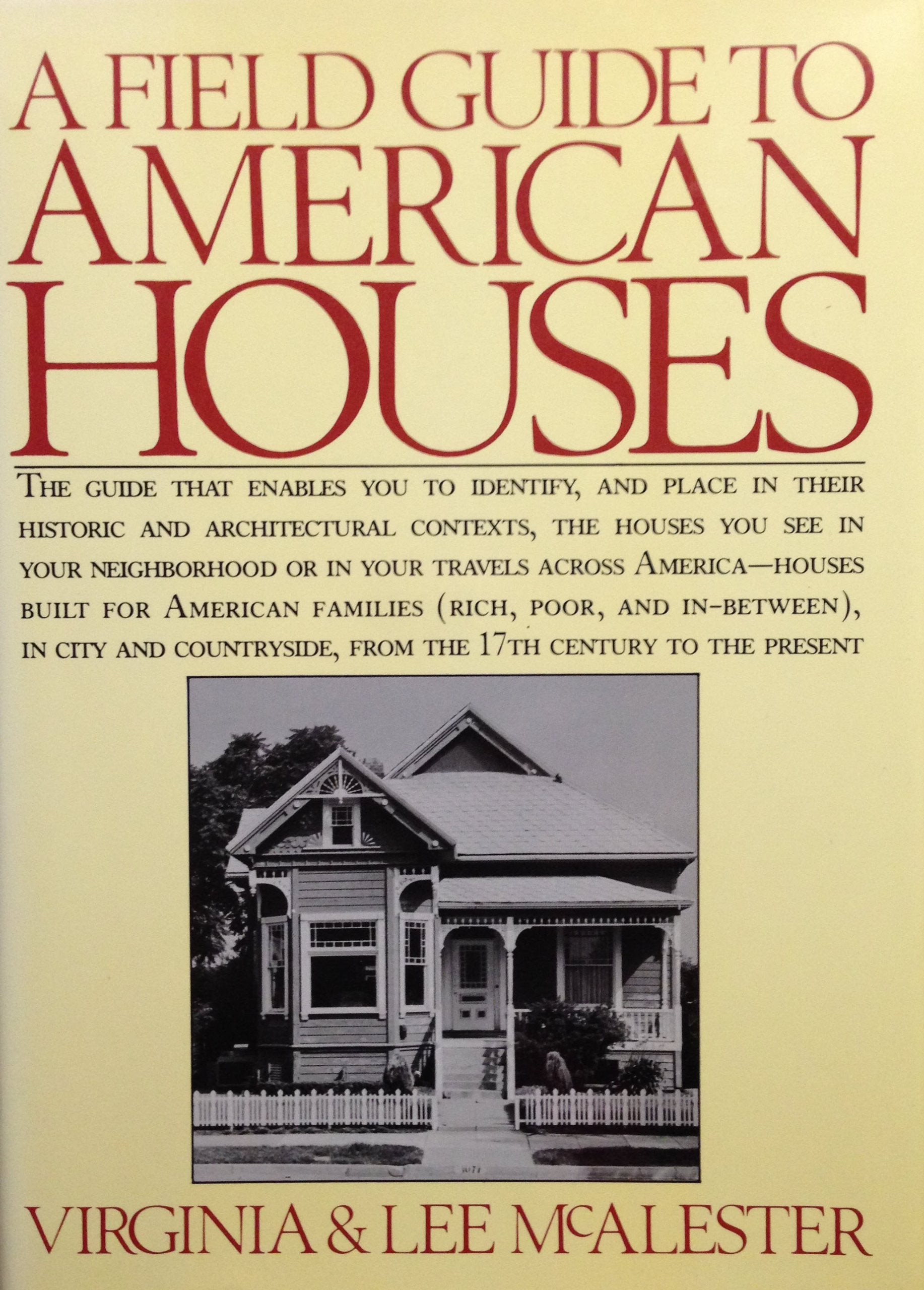
For The House Lover And The Curious Tourist, For The House Buyer And The Weekend Stroller, For Neighborhood Preservation Groups And For All Who Want To Know More About Their Community Here, At Last, Is A Book That Makes It Both Easy And Pleasurable To Identify The Various Styles And Periods Of American Domestic Architecture.Concentrating Not On Rare Landmarks But On Typical Dwellings In Ordinary Neighborhoods All Across The United States Houses Built Over The Past Three Hundred Years And Lived In By Americans Of Every Social And Economic Background The Book Provides You With The Facts (And Frame Of Reference) That Will Enable You To Look In A Fresh Way At The Houses You Constantly See Around You. It Tells You And Shows You In More Than 1,200 Illustrations What You Need To Know In Order To Be Able To Recognize The Several Distinct Architectural Styles And To Understand Their Historical Significance. What Does That Cornice Mean? Or That Porch? That Door? When Was This House Built? What Does Its Style Say About The People Who Built It? You'Ll Find The Answers To Such Questions Here.This Is How The Book Works: Each Of Thirtynine Chapters Focuses On A Particular Style (And Its Variants). Each Begins With A Large Schematic Drawing That Highlights The Style'S Most Important Identifying Features. Additional Drawings And Photographs Depict The Most Common Shapes And The Principal Subtypes, Allowing You To See At A Glance A Wide Range Of Examples Of Each Style. Still More Drawings Offer Closeup Views Of Typical Small Details Windows, Doors, Cornices, Etc. That Might Be Difficult To See In Fullhouse Pictures. The Accompanying Text Is Rich In Information About Each Style Describing In Detail Its Identifying Features, Telling You Where (And In What Quantity) You'Re Likely To Find Examples Of It, Discussing All Of Its Notable Variants, And Revealing Its Origin And Tracing Its History.In The Book'S Introductory Chapters You'Ll Find Invaluable General Discussions Of Housebuilding Materials And Techniques (Structure), House Shapes (Form), And The Many Traditions Of Architectural Fashion (Style) That Have Influenced American House Design Through The Past Three Centuries. A Pictorial Key And Glossary Help Lead You From Simple, Easily Recognized Architectural Features The Presence Of A Tile Roof, For Example To The Styles In Which That Feature Is Likely To Be Found.
⚠️ WARNING (California Proposition 65):
This product may contain chemicals known to the State of California to cause cancer, birth defects, or other reproductive harm.
For more information, please visit www.P65Warnings.ca.gov.
- Q: What is the page count of 'A Field Guide to American Houses'? A: The book contains five hundred forty-four pages. This comprehensive guide offers detailed insights into various architectural styles in American domestic architecture.
- Q: What are the dimensions of this book? A: The book measures six point eight five inches in length, one point three five inches in width, and nine point five inches in height. These dimensions make it a suitable size for both reading and reference.
- Q: What type of binding does this book have? A: This book is available in paperback binding. This makes it lightweight and easy to handle, perfect for taking along on architectural explorations.
- Q: How can I use 'A Field Guide to American Houses'? A: You can use this book as a reference guide while exploring neighborhoods. It provides insights into identifying different architectural styles and their historical significance.
- Q: Is this book suitable for beginners in architecture? A: Yes, it is suitable for beginners. The book is designed to be accessible to anyone interested in American architecture, regardless of prior knowledge.
- Q: What topics does this book cover? A: The book covers various architectural styles and periods of American domestic architecture. It also discusses house-building materials, techniques, and architectural fashion traditions.
- Q: How should I store 'A Field Guide to American Houses'? A: Store the book upright on a shelf or in a bookcase. This prevents bending or damage to the pages and keeps it accessible for future reference.
- Q: Can I clean the book if it gets dirty? A: Yes, you can clean the book gently. Use a soft, dry cloth to wipe the cover, avoiding any liquids that could damage the pages.
- Q: What if my book arrives damaged? A: If your book arrives damaged, you should contact the seller for a return or exchange. Most sellers offer a return policy to resolve such issues.
- Q: Is this book suitable for children? A: Yes, it is suitable for children with an interest in architecture. The book is educational and can inspire curiosity about different house styles.
- Q: Does this book include illustrations? A: Yes, it includes more than one thousand two hundred illustrations. These visuals help readers recognize various architectural features and styles.
- Q: Who is the author of 'A Field Guide to American Houses'? A: The author is Virginia Savage McAlester. She is known for her expertise in American architecture and preservation.
- Q: Are there any glossaries in the book? A: Yes, the book includes a pictorial key and glossary. These resources help explain architectural terms and features in an accessible way.
- Q: Can this book be used for academic purposes? A: Yes, it can be used for academic purposes. The detailed information on architectural styles makes it a valuable resource for students and enthusiasts.
- Q: What makes this book unique? A: Its focus on typical dwellings in ordinary neighborhoods sets it apart. It emphasizes practical identification of architectural styles rather than just rare landmarks.
- Q: Is there a specific chapter structure in the book? A: Yes, the book is organized into thirty-nine chapters, each focusing on a particular architectural style. This allows for easy navigation and focused study.