
Title
A Field Guide to American Windmills,New
Sold by Ergodebooks, an authorized reseller.
Returns accepted within 30 days | support@ergodebooks.com
Shipping Information
- Free Standard Shipping — United States only
- Processing Time: 3–5 business days
- Estimated Delivery: 6–10 business days after dispatch
- Double-boxed, fully insured & discreetly packaged
- Tracking number sent via email once dispatched
Returns & Refund
Returns accepted within 30 days of delivery.
Damaged or Defective Item
Free return shipping + replacement or full refund
Wrong Item Received
Free return shipping + replacement or full refund
Change of Mind
Return shipping at customer's expense · 25% restocking fee applies
Payment Option

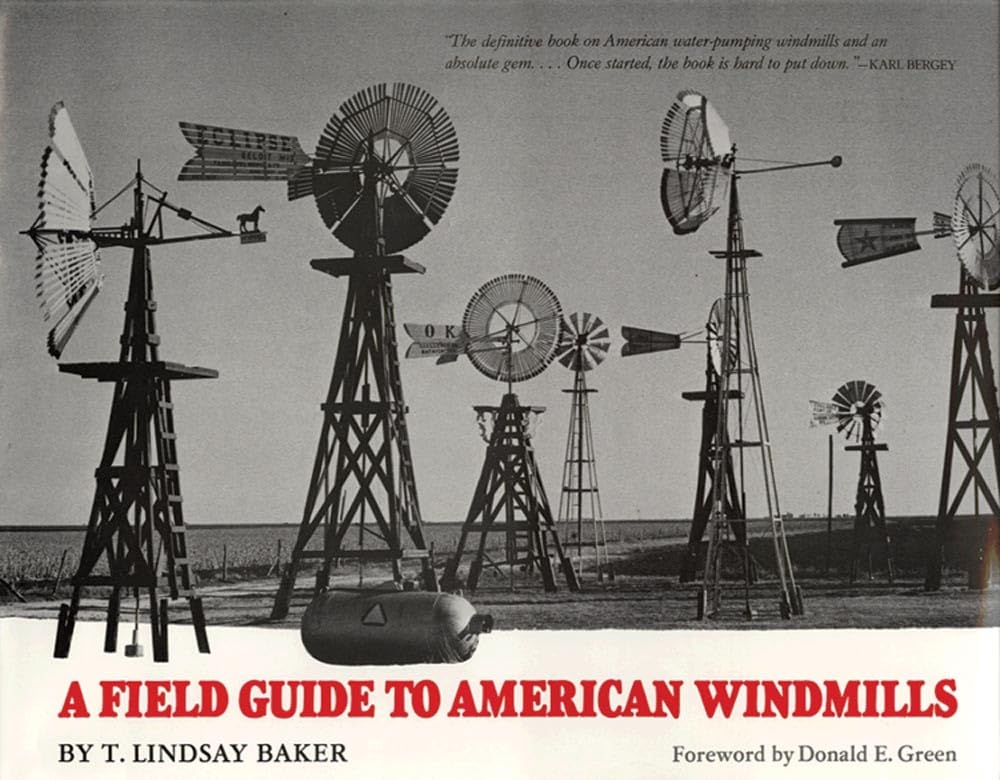
Before the development of the first selfgoverning windmill, settlement of the upland areas of the American West was almost impossible. Windmills were needed to pump underground water to the surface. As soon as their design and manufacture had been perfected, the mills became the most prominent feature of the American landscape, not only in the western twothirds of the nation but also in the East and particularly in the Middle East. Besides supplying the needs of farmers and ranchers, windmills performed such tasks as pumping water to the roofs of New York tenements, cleaning our mine shafts and ships bilges, and providing water for the boilers of locomotives.This guide to Americas windmills is both a complete general history of turbinewheel mills and an identification guide to the 112 most common models, which still dot the landscape today. With this guide a traveler or enthusiast crossing the plains and prairies of North American can identify virtually every farmstyle windmill that he or she can see with a good pair of binoculars. The guide also serves as a handbook for the restoration of antique mills.In his lively narrative T. Lindsay Baker clearly explains the technical evolution of the mills and shares a wealth of windmill folklore. Among the 376 illustrations are unpublished historical photographs, longlost engravings, field photographs by the author, and detailed Indiaink drawings of the 112 most popular designs. Appendices identify all the known windmill manufacturers in the United States, Canada, and Mexico and all the known windmill models from the 1850s to the present day. The comprehensive bibliography is the first published list of source materials on the history of windpower utilization.
⚠️ WARNING (California Proposition 65):
This product may contain chemicals known to the State of California to cause cancer, birth defects, or other reproductive harm.
For more information, please visit www.P65Warnings.ca.gov.
- Q: How many pages does 'A Field Guide to American Windmills' have? A: This book has five hundred twenty-eight pages. It provides a comprehensive overview and identification guide for various windmill models.
- Q: What are the dimensions of this book? A: The dimensions of the book are eleven inches in length, eight and a half inches in height, and one point three inches in width. It's a substantial hardcover edition.
- Q: Who is the author of this book? A: The author is T. Lindsay Baker. He offers a detailed narrative on the history and technical evolution of windmills.
- Q: What is the binding type of this book? A: The book is bound in hardcover. This binding ensures durability and makes it suitable for frequent handling.
- Q: What category does this book fall under? A: This book falls under the United States category. It focuses specifically on American windmills and their historical significance.
- Q: Is this book suitable for enthusiasts and travelers? A: Yes, this book is perfect for enthusiasts and travelers. It serves as both a guide for identification and a historical reference.
- Q: Can I use this book to restore antique windmills? A: Yes, this book can be used as a handbook for the restoration of antique mills. It provides detailed information on various models.
- Q: Is there any folklore included in this book? A: Yes, the book includes a wealth of windmill folklore. T. Lindsay Baker shares engaging stories related to windmills throughout the narrative.
- Q: Does the book contain illustrations? A: Yes, it includes three hundred seventy-six illustrations. These consist of historical photographs, engravings, and detailed drawings.
- Q: Are there appendices in this book? A: Yes, the book contains appendices. They identify windmill manufacturers and models from the United States, Canada, and Mexico.
- Q: What if I want to return the book? A: You can return the book if it is in its original condition. Check the retailer's return policy for specific guidelines and time frames.
- Q: How do I keep this book in good condition? A: To keep the book in good condition, store it in a cool, dry place away from direct sunlight. Avoid placing heavy objects on top of it.
- Q: Can this book be a good gift for someone interested in history? A: Yes, this book makes a great gift for anyone interested in history, especially those fascinated by American agriculture and technology.
- Q: Is this book appropriate for educational purposes? A: Yes, this book is suitable for educational purposes. It provides valuable information for history and engineering students.
- Q: What should I do if my book arrives damaged? A: If your book arrives damaged, contact the seller immediately. Most retailers have policies for handling damaged items.