
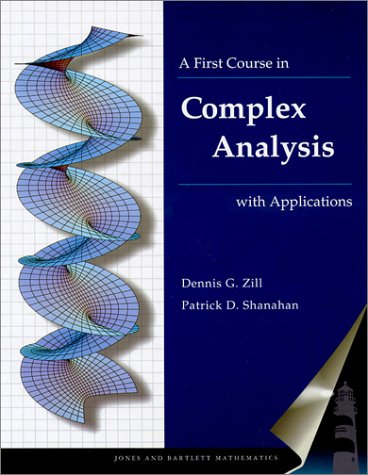
Title
A First Course In Complex Analysis,Used
Sold by Ergodebooks, an authorized reseller.
Returns accepted within 30 days | support@ergodebooks.com
Shipping Information
- Free Standard Shipping — United States only
- Processing Time: 3–5 business days
- Estimated Delivery: 6–10 business days after dispatch
- Double-boxed, fully insured & discreetly packaged
- Tracking number sent via email once dispatched
Returns & Refund
Returns accepted within 30 days of delivery.
Damaged or Defective Item
Free return shipping + replacement or full refund
Wrong Item Received
Free return shipping + replacement or full refund
Change of Mind
Return shipping at customer's expense · 25% restocking fee applies
Payment Option

Written For Juniorlevel Undergraduate Students That Are Majoring In Math, Physics, Computer Science, And Electrical Engineering.
⚠️ WARNING (California Proposition 65):
This product may contain chemicals known to the State of California to cause cancer, birth defects, or other reproductive harm.
For more information, please visit www.P65Warnings.ca.gov.
- Q: What is the page count of this book? A: This book contains five hundred twelve pages. It provides comprehensive coverage of complex analysis concepts, ideal for students.
- Q: What are the dimensions of this book? A: The dimensions are eight point two seven inches in length, ten point two four inches in height, and one point one nine inches in width. These measurements make it a standard-sized hardcover.
- Q: What type of binding does this book have? A: This book is bound in hardcover. The hardcover binding enhances durability and longevity for frequent use.
- Q: Who is the author of this book? A: The author of this book is Dennis G. Zill. He is recognized for his expertise in mathematics and educational contributions.
- Q: What subjects does this book cover? A: This book covers complex analysis and its applications. It is tailored for students in mathematics, physics, computer science, and electrical engineering.
- Q: Is this book suitable for beginners? A: Yes, this book is suitable for junior-level undergraduate students. It is designed to be accessible to those who are new to complex analysis.
- Q: How can I use this book effectively? A: You can use this book as a primary textbook for courses or as a supplementary resource for self-study. It includes numerous examples and problems for practice.
- Q: Is this book appropriate for high school students? A: No, this book is primarily intended for junior-level undergraduates. It assumes a foundational understanding of mathematics necessary for complex analysis.
- Q: What additional resources are included in this book? A: The book includes exercises and applications to reinforce learning. These resources are designed to enhance comprehension of complex analysis concepts.
- Q: How should I store this book to keep it in good condition? A: Store this book upright on a shelf away from direct sunlight. This will prevent warping and fading of the cover and pages.
- Q: Can I clean the cover of this book? A: Yes, you can clean the cover gently with a damp cloth. Avoid using harsh chemicals to prevent damage to the surface.
- Q: Is it safe to handle this book frequently? A: Yes, it is safe to handle this book frequently. However, maintain care to avoid bending the spine or tearing the pages.
- Q: What should I do if the book arrives damaged? A: If the book arrives damaged, contact the seller for a return or exchange. Most sellers will provide options for damaged items.
- Q: What is the return policy for this book? A: The return policy typically allows for returns within a specified period. Check with the seller for detailed return instructions.
- Q: Is this book available in digital format? A: No, this specific listing is for a hardcover version. Check with the publisher for any digital formats that may be available.
- Q: Can this book be used for self-study? A: Yes, this book is suitable for self-study. Its clear explanations and exercises make it beneficial for independent learners.