If you have any questions, you are always welcome to contact us. We'll get back to you as soon as possible, withing 24 hours on weekdays.
Customer service
All questions about your order, return and delivery must be sent to our customer service team by e-mail at yourstore@yourdomain.com
Sale & Press
If you are interested in selling our products, need more information about our brand or wish to make a collaboration, please contact us at press@yourdomain.com
Help
If you have any questions, you are always welcome to contact us. We'll get back to you as soon as possible, withing 24 hours on weekdays.
Customer service
All questions about your order, return and delivery must be sent to our customer service team by e-mail at yourstore@yourdomain.com
Sale & Press
If you are interested in selling our products, need more information about our brand or wish to make a collaboration, please contact us at press@yourdomain.com
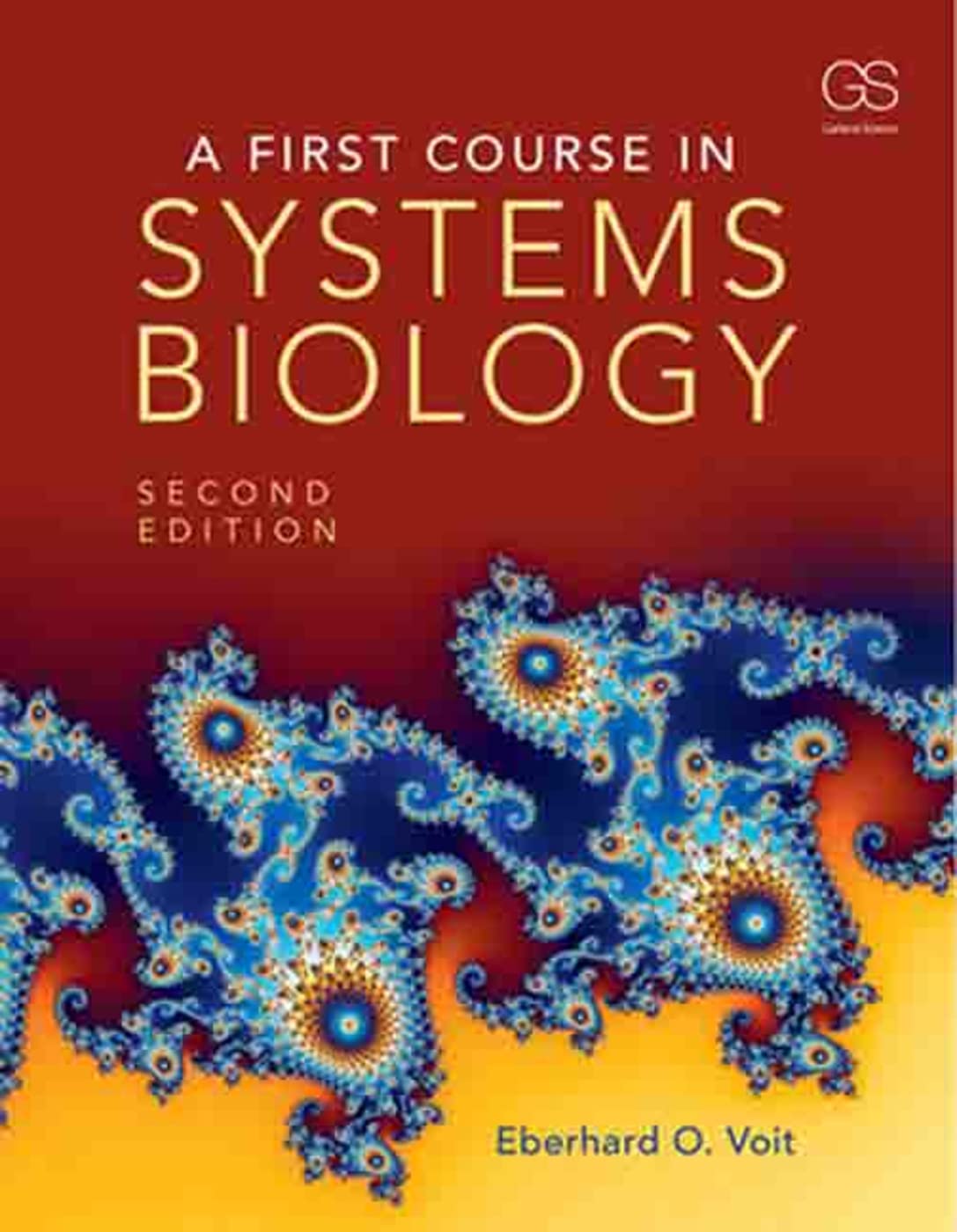
A First Course in Systems Biology is an introduction for advanced undergraduate and graduate students to the growing field of systems biology. Its main focus is the development of computational models and their applications to diverse biological systems. The book begins with the fundamentals of modeling, then reviews features of the molecular inventories that bring biological systems to life and discusses case studies that represent some of the frontiers in systems biology and synthetic biology. In this way, it provides the reader with a comprehensive background and access to methods for executing standard systems biology tasks, understanding the modern literature, and launching into specialized courses or projects that address biological questions using theoretical and computational means.New topics in this edition include: default modules for model design, limit cycles and chaos, parameter estimation in Excel, model representations of gene regulation through transcription factors, derivation of the MichaelisMenten rate law from the original conceptual model, different types of inhibition, hysteresis, a model of differentiation, system adaptation to persistent signals, nonlinear nullclines, PBPK models, and elementary modes.The format is a combination of instructional text and references to primary literature, complemented by sets of smallscale exercises that enable handson experience, and largescale, often openended questions for further reflection.
⚠️ WARNING (California Proposition 65):
This product may contain chemicals known to the State of California to cause cancer,
birth defects, or other reproductive harm.
For MAP (Minimum Advertised Price) violations and Intellectual Property (IP) or Trademark concerns, please contact:
support@ergodebooks.com
⚠️ California Proposition 65 Warning: Some products sold on this website may expose you to chemicals known to the State of California to cause cancer, birth defects, or other reproductive harm. For more information, visit www.P65Warnings.ca.gov.