
Title
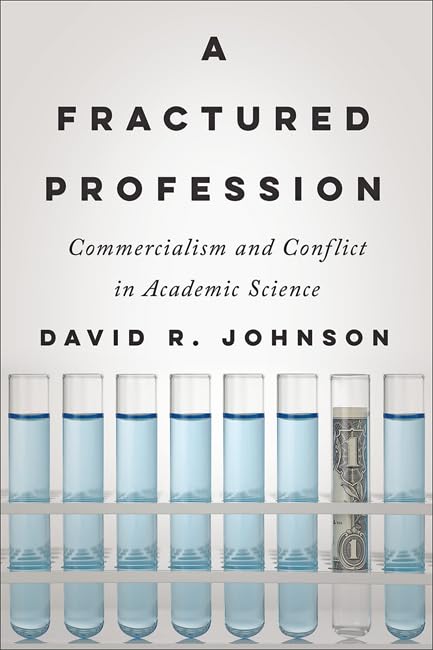
A Fractured Profession: Commercialism and Conflict in Academic Science (Critical University Studies),Used
Sold by Ergodebooks, an authorized reseller.
Returns accepted within 30 days | support@ergodebooks.com
Shipping Information
- Free Standard Shipping — United States only
- Processing Time: 3–5 business days
- Estimated Delivery: 6–10 business days after dispatch
- Double-boxed, fully insured & discreetly packaged
- Tracking number sent via email once dispatched
Returns & Refund
Returns accepted within 30 days of delivery.
Damaged or Defective Item
Free return shipping + replacement or full refund
Wrong Item Received
Free return shipping + replacement or full refund
Change of Mind
Return shipping at customer's expense · 25% restocking fee applies
Payment Option

Exploring the growing division among academic scientists over a profit motive in research.The commercialization of research is one of the most significant contemporary features of US higher education, yet we know surprisingly little about how scientists perceive and experience commercial rewards. A Fractured Profession is the first book to systematically examine the implications of commercialization for both universities and faculty members from the perspective of academic scientists. Drawing on richly detailed interviews with sixtyone scientists at four universities across the United States, sociologist David R. Johnson explores how an ideology of commercialism produces intraprofessional conflict in academia.The words of scientists themselves reveal competing constructions of status, conflicting norms, and divergent career paths and professional identities. Commercialist scientists embrace a professional ideology that emphasizes the creation of technologies that control societal uncertainties and advancing knowledge toward particularand financialends. Traditionalist scientists, on the other hand, often find themselves embattled and threatened by university and federal emphasis on commercialization. They are less concerned about issues such as conflicts of interest and corruption than they are about unequal rewards, unequal conditions of work, and conflicts of commitment to university roles and basic science.Arguing that the division between commercialists and traditionalists represents a new form of inequality in the academic profession, this book offers an incisive look into the changing conditions of work in an era of academic capitalism. Focusing on how the profit motive is reshaping higher education and redefining what faculty are supposed to do, this book will appeal to scientists and academics, higher education scholars, university administrators and policy makers, and students considering a career in science.
⚠️ WARNING (California Proposition 65):
This product may contain chemicals known to the State of California to cause cancer, birth defects, or other reproductive harm.
For more information, please visit www.P65Warnings.ca.gov.