
Title

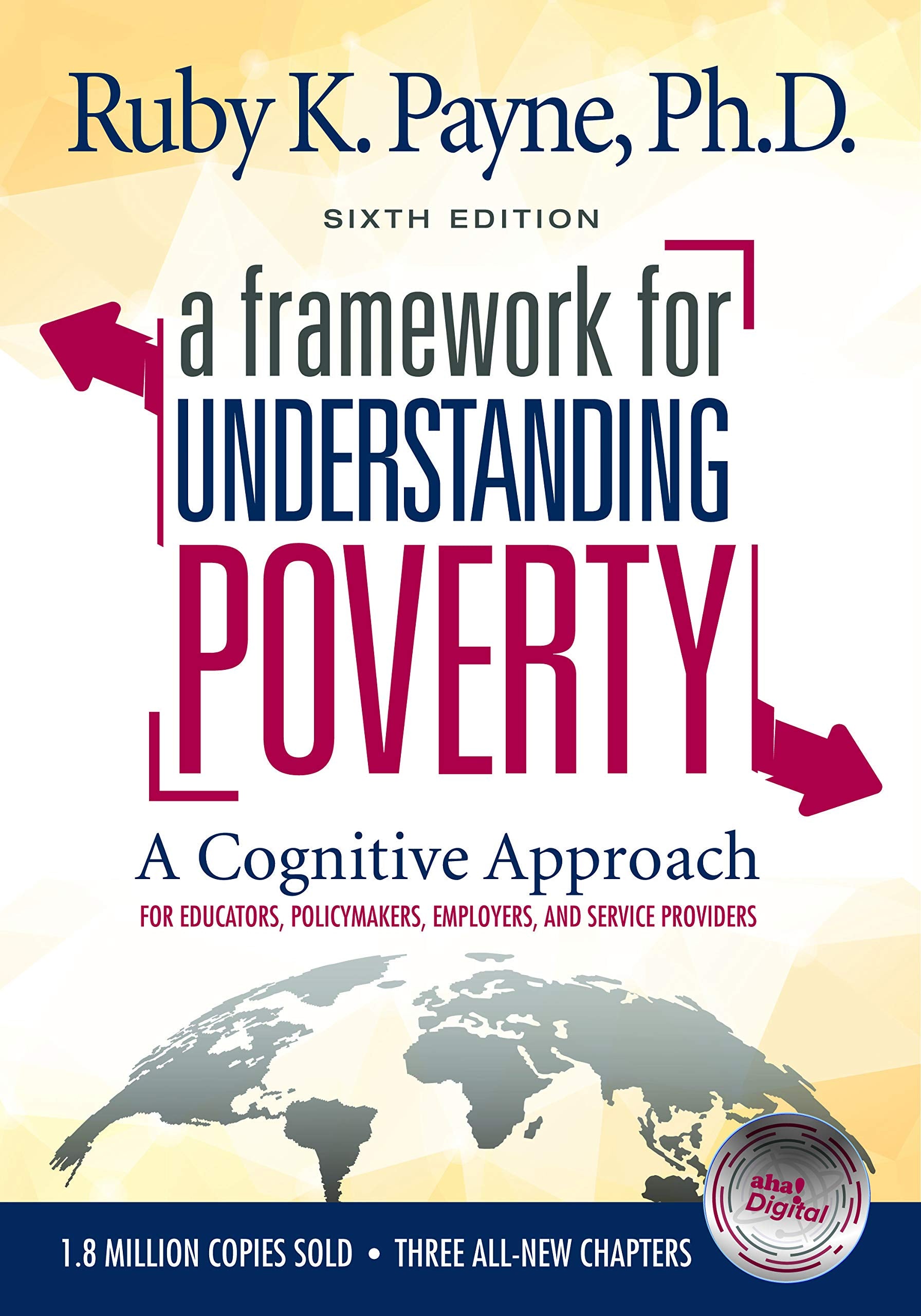
A Framework for Understanding Poverty A Cognitive Approach (Sixth Edition),Used
Sold by Ergodebooks, an authorized reseller.
Returns accepted within 30 days | support@ergodebooks.com
Shipping Information
- Free Standard Shipping — United States only
- Processing Time: 3–5 business days
- Estimated Delivery: 6–10 business days after dispatch
- Double-boxed, fully insured & discreetly packaged
- Tracking number sent via email once dispatched
Returns & Refund
Returns accepted within 30 days of delivery.
Damaged or Defective Item
Free return shipping + replacement or full refund
Wrong Item Received
Free return shipping + replacement or full refund
Change of Mind
Return shipping at customer's expense · 25% restocking fee applies
Payment Option

New Chapters on the Brain, Intersectionality, and Parents Simple, proven strategies that schools can start using today With a view through an economic lens that has only become sharper and more focused since its initial publication in 1995, Framework s premise is unchanged: Middleclass understandings of children and adults in poverty are often illsuited for connecting with people in poverty and helping them build up the resources to rise out of poverty and into selfsufficiency. Nearly 25 years and 1.8 million copies later, innumerable individuals and groups have used Framework to create a groundswell of responses to the challenge of poverty. Educators, social service and healthcare workers, law enforcement and the judiciary, communities, employers, and individuals from all walks of life are engaged in supporting children and adults to build resources, patterns of learning, and behaviors that will help them exit poverty. Expanded edition includes: Best practices teachers can use immediately to improve outcomes Deep dives into the mindsets of generational poverty, middle class, and wealth New case studies, exhaustive references, and an evolving understanding of poverty s intersections with race, health, immigration, and more What began as a guide for educators to better understand their students is now a multifaceted, multidisciplinary set of tools and resources that are applicable across society. The book expands the integration of relationships across all boundaries. Gayle C. Manchin, Past President, National Association of State Boards of Education Dr. Payne s work allows me to navigate all classes particularly wealth, where the arts are highly valued. This is transformative in that it helps me provide my students with bridges to the people in my community who run, guide, and own the institutions and businesses. Grant Manhart, D.M., Professor of High Brass and Jazz Studies, Northern State University
⚠️ WARNING (California Proposition 65):
This product may contain chemicals known to the State of California to cause cancer, birth defects, or other reproductive harm.
For more information, please visit www.P65Warnings.ca.gov.
- Q: What is the page count of this book? A: This book has two hundred eighty-six pages. It offers an in-depth exploration of poverty through a cognitive approach.
- Q: What are the dimensions of this book? A: The book measures ten point zero four inches in length, six point nine seven inches in width, and zero point seven one inches in height. These dimensions make it a portable read.
- Q: What type of binding does this book have? A: This book is available in paperback binding. It is designed for durability and ease of handling.
- Q: Who is the author of this book? A: The author of this book is Ruby K. Payne. She is known for her work on understanding poverty and its impacts.
- Q: What topics are covered in this book? A: The book covers topics like generational poverty, intersectionality, and educational strategies. It offers practical insights for various professionals.
- Q: What is the primary focus of the book? A: The primary focus is to help educators and social service workers understand and address the challenges of poverty. It emphasizes building resources for self-sufficiency.
- Q: How can educators use this book? A: Educators can implement the strategies immediately to improve student outcomes. The book includes best practices for engaging with students from diverse backgrounds.
- Q: Is this book suitable for professionals in social services? A: Yes, this book is highly suitable for social service professionals. It provides insights and tools applicable to their work with various populations.
- Q: Are there new chapters in this edition? A: Yes, this edition includes new chapters on the brain, intersectionality, and parents. These updates reflect contemporary issues related to poverty.
- Q: Can this book be helpful for law enforcement officials? A: Yes, law enforcement officials can benefit from this book. It offers strategies for understanding and engaging with communities affected by poverty.
- Q: What are some methods discussed in the book? A: The book discusses simple, proven strategies that can be implemented in educational settings. These methods aim to connect with individuals experiencing poverty.
- Q: Does this book include case studies? A: Yes, it includes new case studies that illustrate the principles discussed. These real-world examples enhance understanding and application.
- Q: Is this book appropriate for general readers? A: Yes, it is appropriate for general readers interested in poverty and education. The insights are presented in an accessible manner.
- Q: What makes this book different from others on poverty? A: This book combines cognitive theories with practical applications, making it unique among poverty literature. It provides a comprehensive framework.
- Q: Who is the publisher of this book? A: The publisher of this book is aha! Process. They are known for their focus on educational resources related to poverty.
- Q: What is the significance of intersectionality in this book? A: Intersectionality is significant as it addresses the interconnectedness of various social issues. The book explores how these factors affect individuals in poverty.