
Title
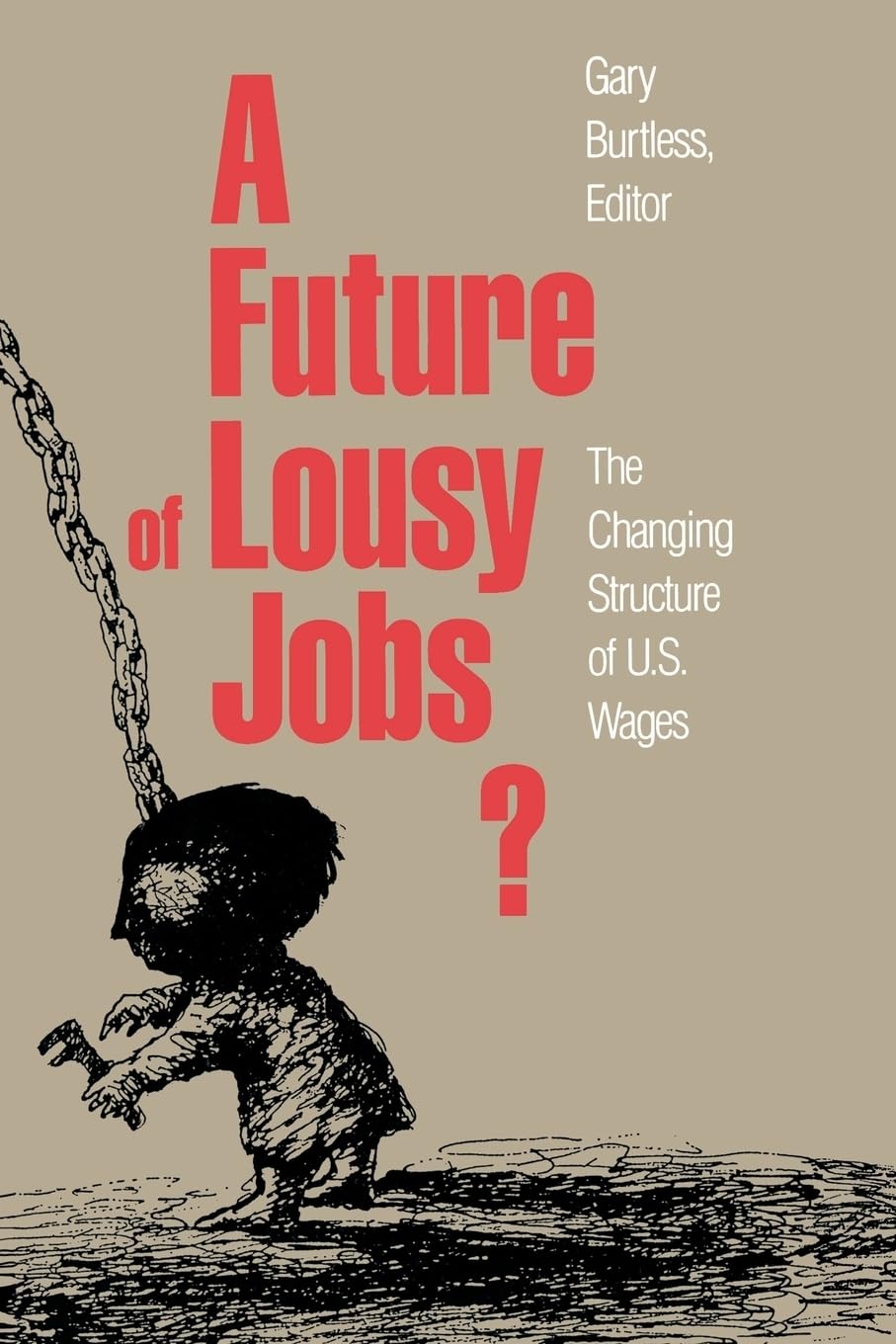
A Future Of Lousy Jobs?: The Changing Structure Of U.S. Wages,Used
Sold by Ergodebooks, an authorized reseller.
Returns accepted within 30 days | support@ergodebooks.com
Shipping Information
- Free Standard Shipping — United States only
- Processing Time: 3–5 business days
- Estimated Delivery: 6–10 business days after dispatch
- Double-boxed, fully insured & discreetly packaged
- Tracking number sent via email once dispatched
Returns & Refund
Returns accepted within 30 days of delivery.
Damaged or Defective Item
Free return shipping + replacement or full refund
Wrong Item Received
Free return shipping + replacement or full refund
Change of Mind
Return shipping at customer's expense · 25% restocking fee applies
Payment Option

Politicians, journalists, and the public have expressed rising concern about the declineor percieved declinein middleclass jobs. The U.S. work force is viewed as increasingly divided between a prosperous minority that enjoys everrising wages and a less affluent majority that struggles harder each year to make ends meet.To determine whether and why this view of the job market is accurate, labor market economists anaylze trends in the distribution of jobs and wages over the past two decades and attempt to forecast the future course of American earnings inequality.McKinley L. Blackburn, David E. Bloom, and Richard B. Freeman assess the reasons behind the deterioration of earnings and job opportunities among less skilled men. They consider the impact of changes in industrial structure, declines in unionization, and trends in the level and quality of schooling for men who have limited skills and education. Gary Burtless examines the effect of the business cycle, within and across different regions of the United States, on earnings inequality and analyzes the effects of demographic change on inequality over the past twenty years. Rebecca M. Blank studies the rise of parttime employment and its impact on wages, fringe benefits, and the quality of jobs.Linda Dachter Loury focuses on the effect of the baby boom and baby bust on demand for schooling among new labor market entrants. If young entrants are discouraged from seeking college training by the high cost or low payoff of schooling, the longterm impact will be a gradual decline in the skills of the U.S. work force.Robert Mofitt analyzes the effect of welfare state programs on the growth of lowwage jobs, and the extent to which the welfare reforms of the eighties have affected lowincome workers.'
⚠️ WARNING (California Proposition 65):
This product may contain chemicals known to the State of California to cause cancer, birth defects, or other reproductive harm.
For more information, please visit www.P65Warnings.ca.gov.