
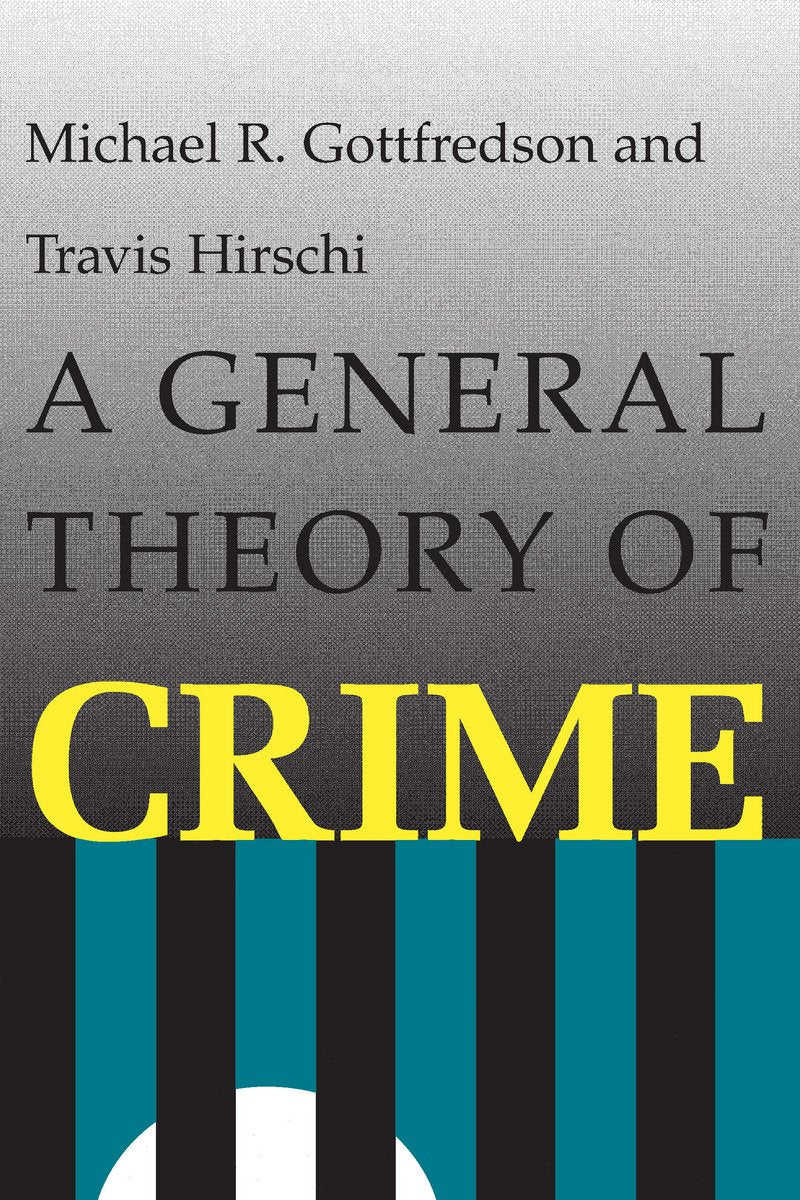
Title
A General Theory Of Crime,New
Sold by Ergodebooks, an authorized reseller.
Returns accepted within 30 days | support@ergodebooks.com
Shipping Information
- Free Standard Shipping — United States only
- Processing Time: 3–5 business days
- Estimated Delivery: 6–10 business days after dispatch
- Double-boxed, fully insured & discreetly packaged
- Tracking number sent via email once dispatched
Returns & Refund
Returns accepted within 30 days of delivery.
Damaged or Defective Item
Free return shipping + replacement or full refund
Wrong Item Received
Free return shipping + replacement or full refund
Change of Mind
Return shipping at customer's expense · 25% restocking fee applies
Payment Option

By Articulating A General Theory Of Crime And Related Behavior, The Authors Present A New And Comprehensive Statement Of What The Criminological Enterprise Should Be About. They Argue That Prevalent Academic Criminologywhether Sociological, Psychological, Biological, Or Economichas Been Unable To Provide Believable Explanations Of Criminal Behavior.The Longdiscarded Classical Tradition In Criminology Was Based On Choice And Free Will, And Saw Crime As The Natural Consequence Of Unrestrained Human Tendencies To Seek Pleasure And To Avoid Pain. It Concerned Itself With The Nature Of Crime And Paid Little Attention To The Criminal. The Scientific, Or Disciplinary, Tradition Is Based On Causation And Determinism, And Has Dominated Twentiethcentury Criminology. It Concerns Itself With The Nature Of The Criminal And Pays Little Attention To The Crime Itself. Though The Two Traditions Are Considered Incompatible, This Book Brings Classical And Modern Criminology Together By Requiring That Their Conceptions Be Consistent With Each Other And With The Results Of Research.The Authors Explore The Essential Nature Of Crime, Finding That Scientific And Popular Conceptions Of Crime Are Misleading, And They Assess The Truth Of Disciplinary Claims About Crime, Concluding That Such Claims Are Contrary To The Nature Of Crime And, Interestingly Enough, To The Data Produced By The Disciplines Themselves. They Then Put Forward Their Own Theory Of Crime, Which Asserts That The Essential Element Of Criminality Is The Absence Of Selfcontrol. Persons With High Selfcontrol Consider The Longterm Consequences Of Their Behavior; Those With Low Selfcontrol Do Not. Such Control Is Learned, Usually Early In Life, And Once Learned, Is Highly Resistant To Change.In The Remainder Of The Book, The Authors Apply Their Theory To The Persistent Problems Of Criminology. Why Are Men, Adolescents, And Minorities More Likely Than Their Counterparts To Commit Criminal Acts? What Is The Role Of The School In The Causation Of Delinquincy? To What Extent Could Crime Be Reduced By Providing Meaningful Work? Why Do Some Societies Have Much Lower Crime Rates Than Others? Does Whitecollar Crime Require Its Own Theory? Is There Such A Thing As Organized Crime? In All Cases, The Theory Forces Fundamental Reconsideration Of The Conventional Wisdom Of Academians And Crimina Justic Practitioners. The Authors Conclude By Exploring The Implications Of The Theory For The Future Study And Control Of Crime.
⚠️ WARNING (California Proposition 65):
This product may contain chemicals known to the State of California to cause cancer, birth defects, or other reproductive harm.
For more information, please visit www.P65Warnings.ca.gov.
- Q: How many pages does 'A General Theory of Crime' have? A: This book has two hundred ninety-seven pages. It provides a comprehensive exploration into criminological theories and criminal behavior.
- Q: What is the binding type of this book? A: The book is a paperback edition. This makes it lightweight and easy to handle for reading.
- Q: What are the dimensions of 'A General Theory of Crime'? A: The book measures six inches in length, zero point seventy-nine inches in width, and nine point zero two inches in height. These dimensions make it a convenient size for storage and reading.
- Q: Who is the author of 'A General Theory of Crime'? A: The author of this book is Michael Gottfredson. He is known for his contributions to criminology and criminal behavior theories.
- Q: What themes does the book explore? A: The book explores themes of crime causation and the nature of criminal behavior. It challenges conventional wisdom and presents a new theory based on self-control.
- Q: Is 'A General Theory of Crime' suitable for academic study? A: Yes, this book is suitable for academic study. It presents a comprehensive examination of criminological theories and is valuable for students and professionals in the field.
- Q: How should I care for this book to keep it in good condition? A: To keep this book in good condition, store it in a cool, dry place away from direct sunlight. Avoid bending the cover or pages to prevent damage.
- Q: Can this book be returned if I am not satisfied? A: Yes, this book can typically be returned if you are not satisfied, depending on the seller's return policy. Always check the specific return guidelines before purchasing.
- Q: Is there any hazardous material in this book? A: No, there is no hazardous material in this book. It is a standard paperback publication and safe for general use.
- Q: What background knowledge is needed to read this book? A: A basic understanding of criminology and social sciences is beneficial for reading this book. It delves into complex theories that may require prior knowledge.
- Q: How does this book compare to others in criminology? A: This book stands out by integrating classical and modern criminological theories. It presents a unique perspective on crime that differs from many traditional texts.
- Q: What can I do if the book arrives damaged? A: If the book arrives damaged, contact the seller immediately for assistance. Most sellers have a return or exchange policy for damaged items.
- Q: Does this book address contemporary issues in criminology? A: Yes, it addresses contemporary issues such as crime rates among different demographics and the impact of societal factors on criminal behavior.
- Q: Is this book appropriate for high school students? A: Yes, this book can be appropriate for advanced high school students studying criminology. It provides foundational knowledge that can enhance their understanding.
- Q: What unique perspective does the book offer on crime? A: The book offers a perspective that emphasizes self-control as a key factor in criminality. This challenges traditional views and encourages new interpretations of behavior.