
Title
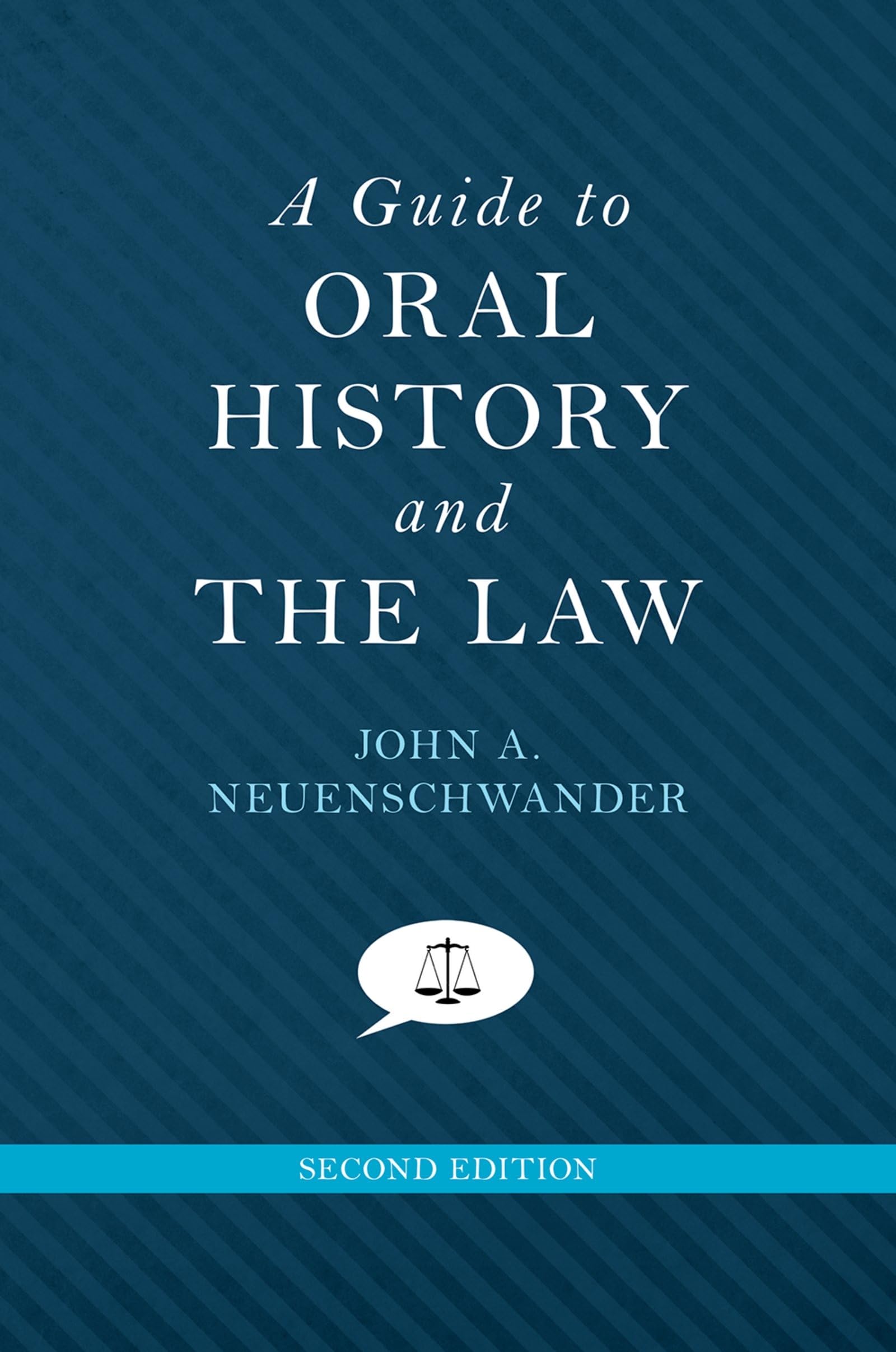
A Guide to Oral History and the Law (Oxford Oral History Series),Used
Sold by Ergodebooks, an authorized reseller.
Returns accepted within 30 days | support@ergodebooks.com
Shipping Information
- Free Standard Shipping — United States only
- Processing Time: 3–5 business days
- Estimated Delivery: 6–10 business days after dispatch
- Double-boxed, fully insured & discreetly packaged
- Tracking number sent via email once dispatched
Returns & Refund
Returns accepted within 30 days of delivery.
Damaged or Defective Item
Free return shipping + replacement or full refund
Wrong Item Received
Free return shipping + replacement or full refund
Change of Mind
Return shipping at customer's expense · 25% restocking fee applies
Payment Option

According to the Oral History Association, the term oral history refers to 'a method of recording and preserving oral testimony' which results in a verbal document that is 'made available in different forms to other users, researchers, and the public.' Ordinarily such an academic process would seem to be far removed from legal challenges. Unfortunately this is not the case. While the field has not become a legal minefield, given its tremendous growth and increasing focus on contemporary topics, more legal troubles could well lie ahead if sound procedures are not put in place and periodically revisited.A Guide to Oral History and the Law is the definitive resource for all oral history practitioners. In clear, accessible language it thoroughly explains all of the major legal issues including legal release agreements, the protection of restricted interviews, the privacy torts (including defamation), copyright, the impact of the Internet, and the role of Institutional Review Boards (IRBs). The author accomplishes this by examining the most relevant court cases and citing examples of policies and procedures that oral history programs have used to avoid legal difficulties.Neuenschwander's central focus throughout the book is on prevention rather than litigation. He underscores this approach by strongly emphasizing how close adherence to the Oral History Association's Principles and Best Practices provides the best foundation for developing sound legal policies. The book also provides more than a dozen sample legal release agreements that are applicable to a wide variety of situations. This volume is an essential one for all oral historians regardless of their interviewing focus.
⚠️ WARNING (California Proposition 65):
This product may contain chemicals known to the State of California to cause cancer, birth defects, or other reproductive harm.
For more information, please visit www.P65Warnings.ca.gov.
- Q: How many pages are in 'A Guide to Oral History and the Law'? A: This book contains one hundred seventy-six pages. It offers a comprehensive overview of legal issues in oral history.
- Q: What is the binding type of this book? A: The book is available in paperback binding. This makes it lightweight and easy to handle for readers.
- Q: Who is the author of 'A Guide to Oral History and the Law'? A: The author is John A. Neuenschwander. He focuses on legal practices and principles in oral history.
- Q: How do I use 'A Guide to Oral History and the Law' effectively? A: You can use this book as a reference for legal issues in oral history projects. It provides guidelines and examples for practitioners.
- Q: Is 'A Guide to Oral History and the Law' suitable for beginners? A: Yes, it is suitable for beginners. The book explains complex legal concepts in clear, accessible language.
- Q: What topics are covered in 'A Guide to Oral History and the Law'? A: The book covers topics like legal release agreements, privacy torts, and copyright. It emphasizes the importance of legal policies in oral history.
- Q: How do I keep 'A Guide to Oral History and the Law' in good condition? A: Store the book in a dry place away from direct sunlight. Avoid bending the pages to maintain its quality.
- Q: Are there any specific care instructions for this book? A: There are no special care instructions, but keeping it away from moisture can prolong its life. Handle it gently to prevent wear.
- Q: What if my copy of 'A Guide to Oral History and the Law' arrives damaged? A: If it arrives damaged, you should contact the seller for a replacement or refund. Most sellers have return policies in place.
- Q: Can I find sample legal agreements in this book? A: Yes, the book includes more than a dozen sample legal release agreements. These are useful for various oral history situations.
- Q: Is this book relevant for oral historians working in the United States? A: Yes, the book is specifically tailored for oral historians in the United States. It addresses relevant legal issues in that context.
- Q: Does 'A Guide to Oral History and the Law' provide case studies? A: Yes, the book examines relevant court cases. This helps illustrate the legal principles discussed throughout the text.
- Q: What is the main focus of 'A Guide to Oral History and the Law'? A: The main focus is on prevention rather than litigation. It promotes adherence to best practices in oral history.
- Q: Is 'A Guide to Oral History and the Law' a comprehensive resource? A: Yes, it is a comprehensive resource for oral history practitioners. It covers critical legal aspects thoroughly.
- Q: How does this book address the impact of the Internet on oral history? A: It discusses the implications of the Internet on legal practices. The book highlights the need for updated policies in the digital age.