If you have any questions, you are always welcome to contact us. We'll get back to you as soon as possible, withing 24 hours on weekdays.
Customer service
All questions about your order, return and delivery must be sent to our customer service team by e-mail at yourstore@yourdomain.com
Sale & Press
If you are interested in selling our products, need more information about our brand or wish to make a collaboration, please contact us at press@yourdomain.com
Help
If you have any questions, you are always welcome to contact us. We'll get back to you as soon as possible, withing 24 hours on weekdays.
Customer service
All questions about your order, return and delivery must be sent to our customer service team by e-mail at yourstore@yourdomain.com
Sale & Press
If you are interested in selling our products, need more information about our brand or wish to make a collaboration, please contact us at press@yourdomain.com
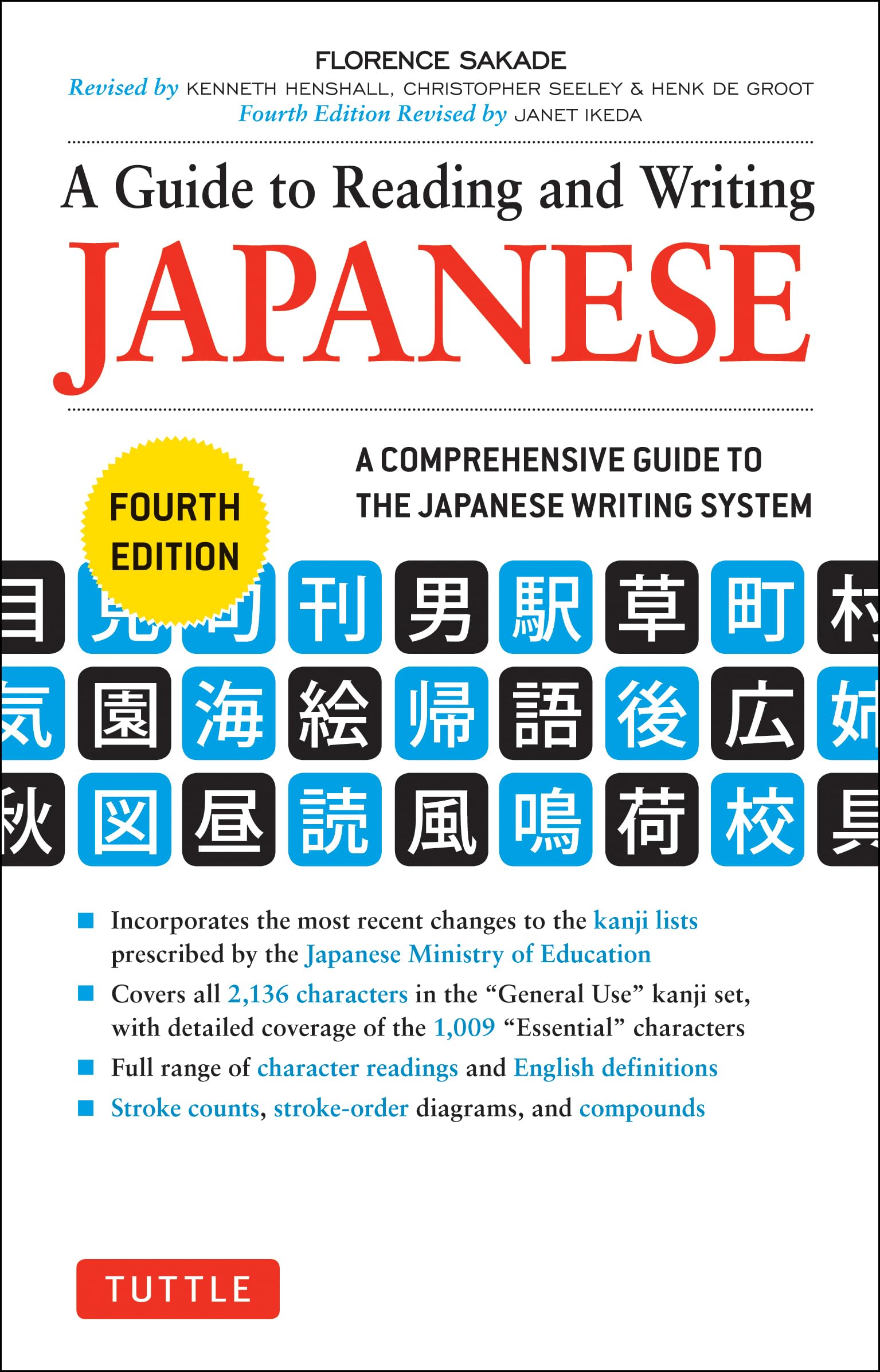
This is an essential study tool for students seeking to learn Japanese and dramatically improve their ability to read and write kanji and kana.Students have been reading and writing the Japanese language for centuries, and they build their knowledge most successfully when they rely on a trusted resource. Today's most trustedand readily availableresource is A Guide to Reading and Writing Japanese. This classic, bestselling learning and reference work, trusted by beginning and intermediate students of Japanese is the best way to learn kanji and kana, and is now being offered as a fourth, thoroughly revised and uptodate edition.Having a knowledge of the full set of General Use characters is the key to mastering everyday Japanese and will allow students to read and write Japanese up to the level of a typical Japanese newspaper with ease and confidence.Key features of this revised edition include:The most recent changes prescribed by the Japanese Ministry of Education. Covers all the 2,136 characters in the 'General Use' / Joyo Kanji set. Special codes indicate the kanji required for the JLPT and AP exams. Full range of Japanese character readings and English definitions Stroke counts, strokeorder diagrams, and compounds. Essential Japanese characters are presented according to the new arrangement by grade, based on their frequency of usage rather than their complexity. Numerous examples are given of the kanji compounds and derivatives used to form everyday words in Japanese.
⚠️ WARNING (California Proposition 65):
This product may contain chemicals known to the State of California to cause cancer,
birth defects, or other reproductive harm.
For MAP (Minimum Advertised Price) violations and Intellectual Property (IP) or Trademark concerns, please contact:
support@ergodebooks.com
⚠️ California Proposition 65 Warning: Some products sold on this website may expose you to chemicals known to the State of California to cause cancer, birth defects, or other reproductive harm. For more information, visit www.P65Warnings.ca.gov.