
Title
A Guide to Selecting Software Measures and Metrics,Used
Sold by Ergodebooks, an authorized reseller.
Returns accepted within 30 days | support@ergodebooks.com
Shipping Information
- Free Standard Shipping — United States only
- Processing Time: 3–5 business days
- Estimated Delivery: 6–10 business days after dispatch
- Double-boxed, fully insured & discreetly packaged
- Tracking number sent via email once dispatched
Returns & Refund
Returns accepted within 30 days of delivery.
Damaged or Defective Item
Free return shipping + replacement or full refund
Wrong Item Received
Free return shipping + replacement or full refund
Change of Mind
Return shipping at customer's expense · 25% restocking fee applies
Payment Option

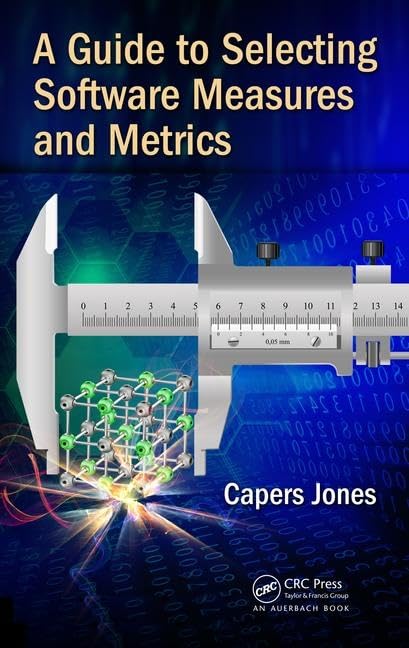
Going where no book on software measurement and metrics has previously gone, this critique thoroughly examines a number of bad measurement practices, hazardous metrics, and huge gaps and omissions in the software literature that neglect important topics in measurement. The book covers the major gaps and omissions that need to be filled if data about software development is to be useful for comparisons or estimating future projects.Among the more serious gaps are leaks in reporting about software development efforts that, if not corrected, can distort data and make benchmarks almost useless and possibly even harmful. One of the most common leaks is that of unpaid overtime. Software is a very laborintensive occupation, and many practitioners work very long hours. However, few companies actually record unpaid overtime. This means that software effort is underreported by around 15%, which is too large a value to ignore. Other sources of leaks include the work of parttime specialists who come and go as needed. There are dozens of these specialists, and their combined effort can top 45% of total software effort on large projects.The book helps software project managers and developers uncover errors in measurements so they can develop meaningful benchmarks to estimate software development efforts. It examines variations in a number of areas that include: Programming languages Development methodology Software reuse Functional and nonfunctional requirements Industry type Team size and experienceFilled with tables and charts, this book is a starting point for making measurements that reflect current software development practices and realities to arrive at meaningful benchmarks to guide successful software projects.
⚠️ WARNING (California Proposition 65):
This product may contain chemicals known to the State of California to cause cancer, birth defects, or other reproductive harm.
For more information, please visit www.P65Warnings.ca.gov.