
Title
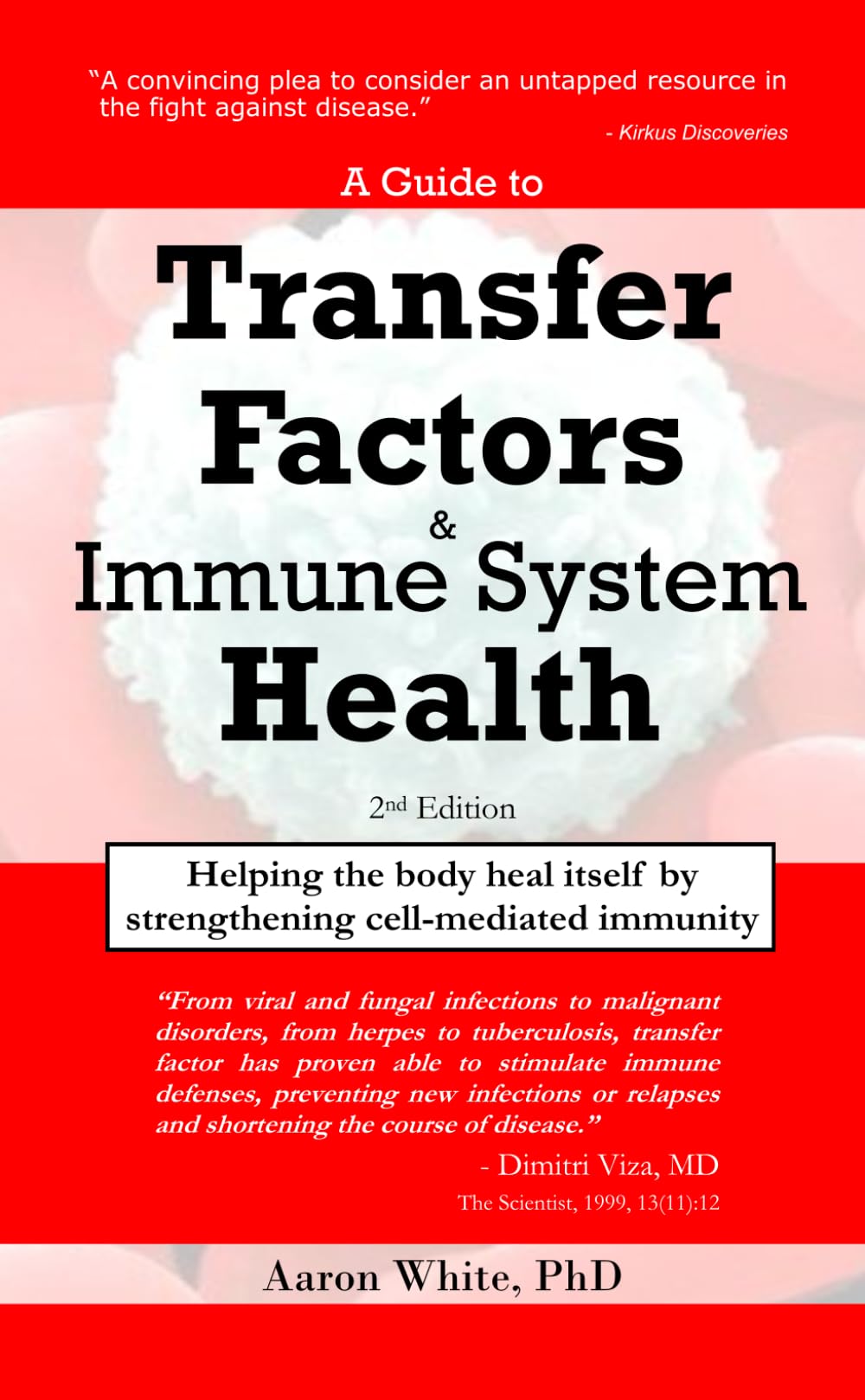
A Guide to Transfer Factors and Immune System Health: 2nd edition, Helping the body heal itself by strengthening cellmediated i,Used
Sold by Ergodebooks, an authorized reseller.
Returns accepted within 30 days | support@ergodebooks.com
Shipping Information
- Free Standard Shipping — United States only
- Processing Time: 3–5 business days
- Estimated Delivery: 6–10 business days after dispatch
- Double-boxed, fully insured & discreetly packaged
- Tracking number sent via email once dispatched
Returns & Refund
Returns accepted within 30 days of delivery.
Damaged or Defective Item
Free return shipping + replacement or full refund
Wrong Item Received
Free return shipping + replacement or full refund
Change of Mind
Return shipping at customer's expense · 25% restocking fee applies
Payment Option

In the second edition of his book, Aaron White takes readers on a tour of research on transfer factors, peptides found in premilk (colostrum) and white blood cells. While antibodies help the immune system target pathogens floating in blood and lymph, transfer factors are hypothesized to support cellmediated immunity by helping the body locate pathogens hiding inside of cells, beyond the reach of antibodies. Cellmediated immunity also plays a central role in suppressing and destroying cancer cells. This book explores 60 years of scientific research on these mysterious molecules, beginning with the discovery in 1949 by distinguished immunologist, H Sherwood Lawrence, that extracts from white blood cells could transfer delayedtype (cellmediated) immune responses from patients with tuberculosis to patients without. Evidence collected since suggests that these immune components, which Dr. Lawrence called "transfer factor" because of their ability to transfer an immune response, are generated by white blood cells while fighting infections and are passed from mothers to newborns via colostrum to help prepare the offsprings immune system. Studies explored in the book suggest transfer factors (there are multiple types) might carry information that could help the body fight, and even prevent, infections with viruses (e.g., herpes, hepatitis C, HPV, HIV), bacteria, mycobacteria (e.g., tuberculosis), and perhaps some forms of cancer. The author concludes that the exact nature of transfer factors and their roles in immune function remain unclear but that additional scientific inquiry certainly seems warranted. More broadly, the areas of research pioneered by Dr. Lawrence suggest that greater emphasis should be placed on promoting cellmediated immunity, rather than antibodymediated immunity alone, to help the body avoid and fight infectious pathogens.Please note that this not a medical advice book. It is science writing that explores a fascinating and still understudied discovery that could hold tremendous value for public health if early findings are borne out by further research.
⚠️ WARNING (California Proposition 65):
This product may contain chemicals known to the State of California to cause cancer, birth defects, or other reproductive harm.
For more information, please visit www.P65Warnings.ca.gov.
- Q: What is the length and height of the book? A: The book measures five point twenty-five inches in length and eight point five inches in height. This size makes it convenient for reading.
- Q: How many pages does this book have? A: The book contains three hundred two pages. This length provides a comprehensive exploration of the subject matter.
- Q: What type of binding does the book have? A: The book features a paperback binding. This makes it lightweight and easy to handle.
- Q: How should I read this book effectively? A: To read this book effectively, take notes on key concepts and revisit sections as needed. The book discusses complex immune system topics, so engaging with the material is beneficial.
- Q: Is this book suitable for beginners in immunology? A: Yes, this book is suitable for beginners. It presents the information in an accessible manner while explaining scientific concepts related to immune health.
- Q: What age group is this book appropriate for? A: This book is appropriate for adults and older teenagers interested in health and science. It covers advanced topics that may not be suitable for younger readers.
- Q: How should I store this book to maintain its condition? A: Store the book in a cool, dry place away from direct sunlight. This helps preserve the quality of the pages and binding.
- Q: Can I clean the book if it gets dirty? A: Yes, you can gently wipe the cover with a damp cloth. Avoid using harsh chemicals to prevent damage to the cover and pages.
- Q: What if the book arrives damaged? A: If the book arrives damaged, contact the seller for a return or replacement. Most sellers offer a satisfaction guarantee.
- Q: Is there a warranty for this book? A: No, there is typically no warranty for books. However, check with the retailer for their specific return policies.
- Q: Are there any other books by the same author? A: Yes, Aaron White has written other books on health and science topics. Exploring his other works may provide additional insights.
- Q: How does this book compare to other health books? A: This book focuses specifically on transfer factors in immune health, making it unique compared to general health books that cover broader topics.
- Q: Is this book considered a medical guide? A: No, this book is not a medical guide. It is a science writing exploration of research on immune health and transfer factors.
- Q: Does this book contain any personal testimonials? A: No, this book primarily focuses on scientific research and does not include personal testimonials. It emphasizes evidence-based information.
- Q: Are there illustrations or diagrams in the book? A: The book may contain illustrations or diagrams to aid in understanding complex concepts, but the primary focus is on textual content.