
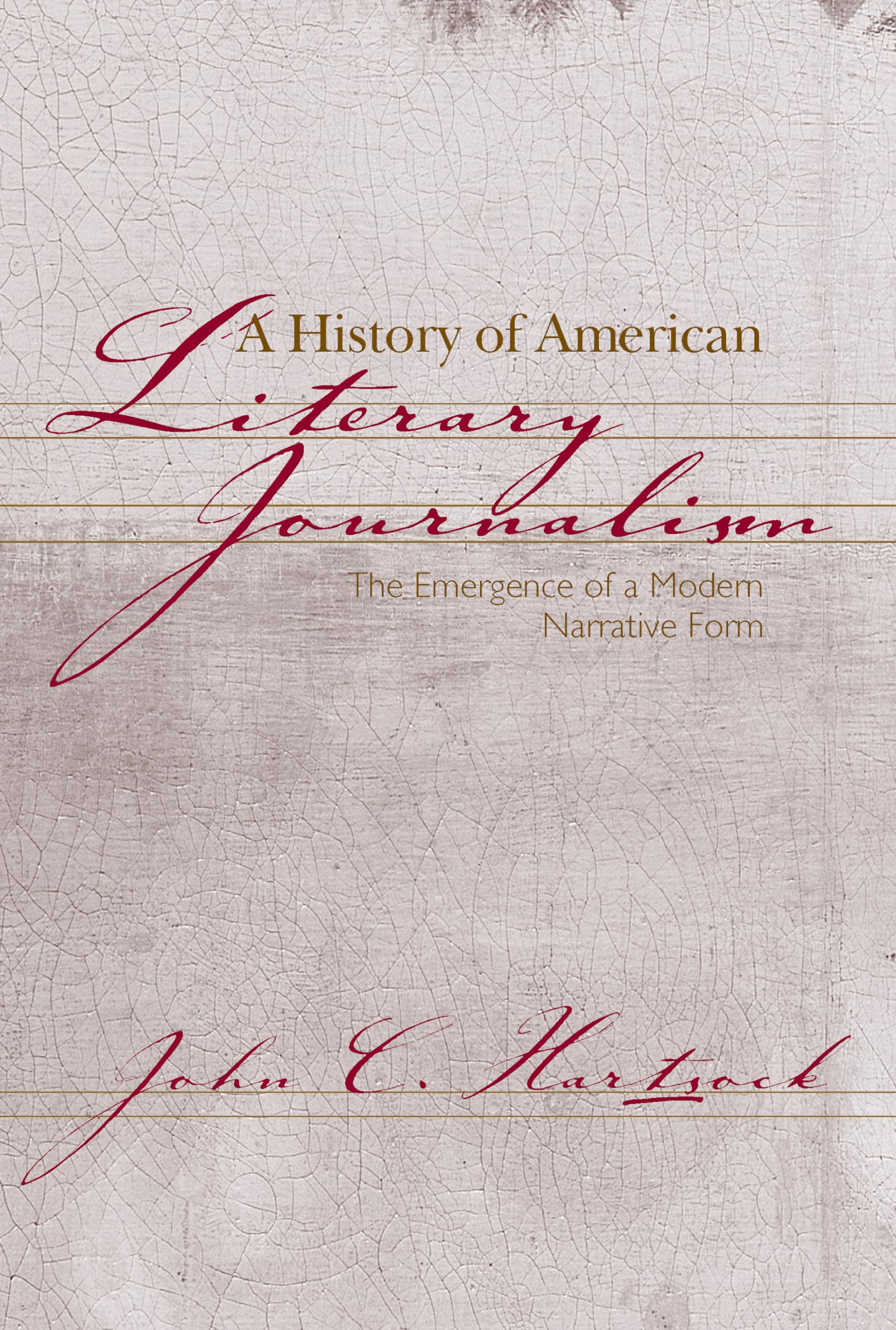
Title
A History of American Literary Journalism,New
Sold by Ergodebooks, an authorized reseller.
Returns accepted within 30 days | support@ergodebooks.com
Shipping Information
- Free Standard Shipping — United States only
- Processing Time: 3–5 business days
- Estimated Delivery: 6–10 business days after dispatch
- Double-boxed, fully insured & discreetly packaged
- Tracking number sent via email once dispatched
Returns & Refund
Returns accepted within 30 days of delivery.
Damaged or Defective Item
Free return shipping + replacement or full refund
Wrong Item Received
Free return shipping + replacement or full refund
Change of Mind
Return shipping at customer's expense · 25% restocking fee applies
Payment Option

During the 1960s, such works as Truman Capote's In Cold Blood and Joan Didion's Slouching Towards Bethlehem were cited as examples of the 'new journalism.' True stories that read like novels, they combined the journalist's task of factual reporting with the art of fictional narration.Yet as John C. Hartsock shows in this revealing study, the roots of this distinctive form of writingwhether called new journalism, literary journalism, or creative nonfictioncan be traced at least as far back as the late nineteenth century. In the decades following the American Civil War, Stephen Crane, Lafcadio Hearn, and other journalists challenged the notion, then just emerging, that the reporter's job was to offer a concise statement of the 'objective truth.' Drawing on the techniques of the realistic novel, these writers developed a new narrative style of reporting aimed at lessening the distance between observer and observed, subject and object.By the 1890s, Hartsock argues, literary journalism had achieved critical recognition as a new form of writing, different not only from 'objective' reporting but also from the sensationalistic 'yellow press' and at times the socially engaged 'muckrakers.' In the twentieth century, the form has continued to evolve and maintain its vitality, despite being marginalized by the academic establishment.A former journalist who covered Capitol Hill for UPI and reported on the collapse of the Soviet Union for the San Francisco Examiner, Hartsock brings a fresh and informed perspective to the issues he examines. The result is a concise introduction to the genesis and development of a significant literary genre.
⚠️ WARNING (California Proposition 65):
This product may contain chemicals known to the State of California to cause cancer, birth defects, or other reproductive harm.
For more information, please visit www.P65Warnings.ca.gov.