
Title
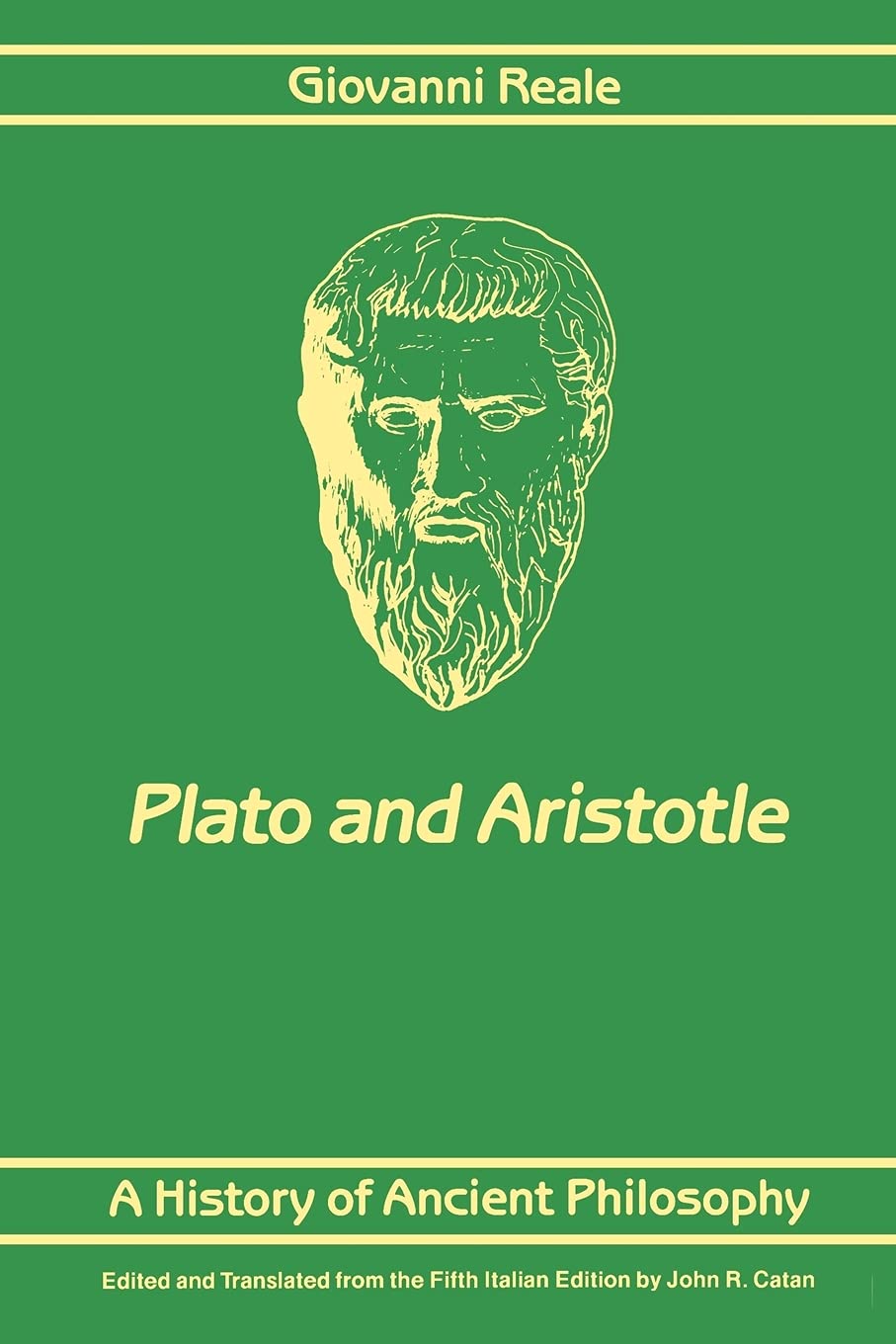
A History of Ancient Philosophy II: Plato and Aristotle (SUNY Series in Philosophy),Used
Sold by Ergodebooks, an authorized reseller.
Returns accepted within 30 days | support@ergodebooks.com
Shipping Information
- Free Standard Shipping — United States only
- Processing Time: 3–5 business days
- Estimated Delivery: 6–10 business days after dispatch
- Double-boxed, fully insured & discreetly packaged
- Tracking number sent via email once dispatched
Returns & Refund
Returns accepted within 30 days of delivery.
Damaged or Defective Item
Free return shipping + replacement or full refund
Wrong Item Received
Free return shipping + replacement or full refund
Change of Mind
Return shipping at customer's expense · 25% restocking fee applies
Payment Option

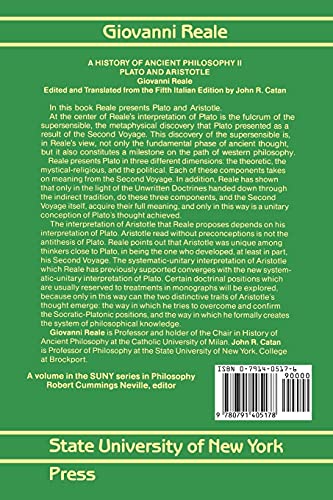
In this book Reale presents Plato and Aristotle.At the center of Reale's interpretation of Plato is the fulcrum of the supersensible, the metaphysical discovery that Plato presented as a result of the Second Voyage. This discovery of the supersensible is, in Reale's view, not only the fundamental phase of ancient thought, but it also constitutes a milestone on the path of western philosophy.Reale presents Plato in three different dimensions: the theoretic, the mysticalreligious, and the political. Each of these components takes on meaning from the Second Voyage. In addition, Reale has shown that only in the light of the Unwritten Doctrines handed down through the indirect tradition, do these three components, and the Second Voyage itself, acquire their full meaning, and only in this way is a unitary conception of Plato's thought achieved.The interpretation of Aristotle that Reale proposes depends on his interpretation of Plato. Aristotle read without preconceptions is not the antithesis of Plato. Reale points out that Aristotle was unique among thinkers close to Plato, in being the one who developed, at least in part, his Second Voyage. The systematicunitary interpretation of Aristotle which Reale has previously supported converges with the new systematicunitary interpretation of Plato. Certain doctrinal positions which are usually reserved to treatments in monographs will be explored, because only in this way can the two distinctive traits of Aristotle's thought emerge: the way in which he tries to overcome and confirm the SocraticPlatonic positions, and the way in which he formally creates the system of philosophical knowledge.
⚠️ WARNING (California Proposition 65):
This product may contain chemicals known to the State of California to cause cancer, birth defects, or other reproductive harm.
For more information, please visit www.P65Warnings.ca.gov.