
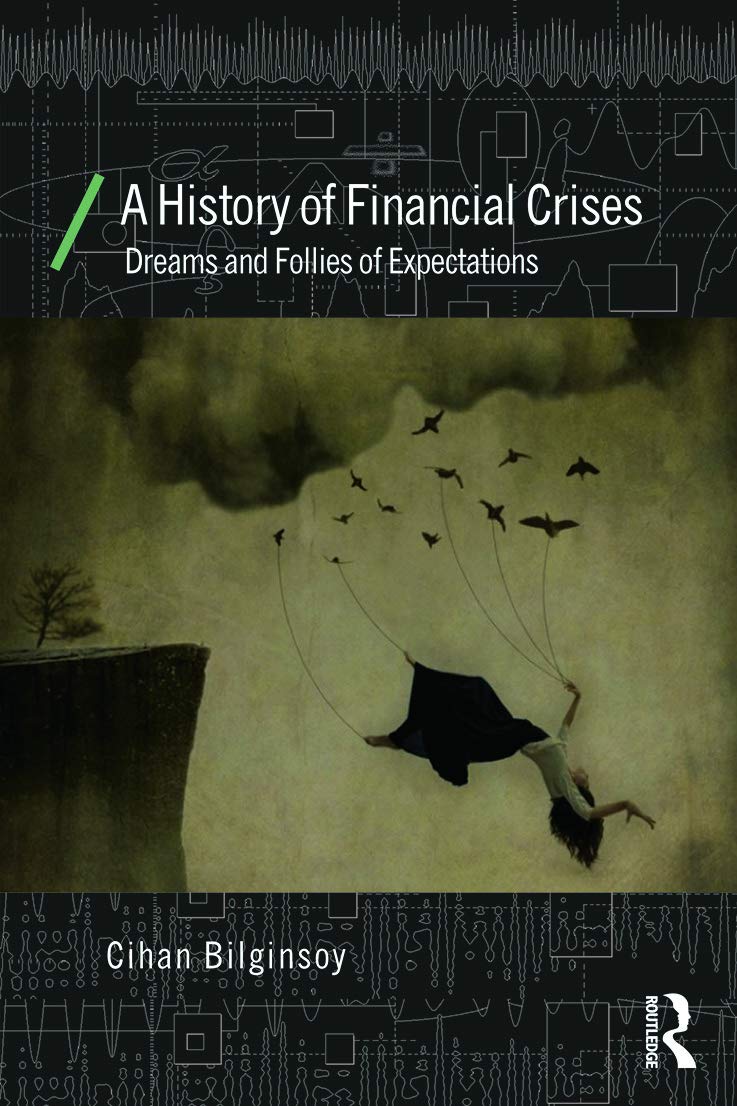
Title
A History of Financial Crises: Dreams and Follies of Expectations (Economics as Social Theory),Used
Sold by Ergodebooks, an authorized reseller.
Returns accepted within 30 days | support@ergodebooks.com
Shipping Information
- Free Standard Shipping — United States only
- Processing Time: 3–5 business days
- Estimated Delivery: 6–10 business days after dispatch
- Double-boxed, fully insured & discreetly packaged
- Tracking number sent via email once dispatched
Returns & Refund
Returns accepted within 30 days of delivery.
Damaged or Defective Item
Free return shipping + replacement or full refund
Wrong Item Received
Free return shipping + replacement or full refund
Change of Mind
Return shipping at customer's expense · 25% restocking fee applies
Payment Option

Onceinalifetime' financial crises have been a recurrent part of life in the last three decades. It is no longer possible to dismiss or ignore them as aberrations in an otherwise wellfunctioning system. Nor are they peculiar to recent times. Going back in history, asset price bubbles and bankruns have been an endemic feature of the capitalist system over the last four centuries. The historical record offers a treasure trove of experience that may shed light on how and why financial crises happen and what can be done to avoid them provided we are willing to learn from history.This book interweaves historical accounts with competing economic crisis theories and reveals why commentaries are often contradictory. First, it presents a series of episodes from tulip mania in the 17th century to the subprime mortgage meltdown. In order to tease out their commonalities and differences, it describes political, economic, and social backgrounds, identifies the primary actors and institutions, and explores the mechanisms behind the asset price bubbles, crashes, and bankruns. Second, it starts with basic economic concepts and builds five competing theoretical approaches to understanding financial crises. Competing theoretical standpoints offer different interpretations of the same event, and draw dissimilar policy implications.This book analyses divergent interpretations of the historical record in relation to how markets function, the significance of market imperfections, economic decisionmaking process, the role of the government, and evolutionary dynamics of the capitalist system. Its diverse theoretical and historical content of this book complements economics, history and political science curriculum.
⚠️ WARNING (California Proposition 65):
This product may contain chemicals known to the State of California to cause cancer, birth defects, or other reproductive harm.
For more information, please visit www.P65Warnings.ca.gov.