
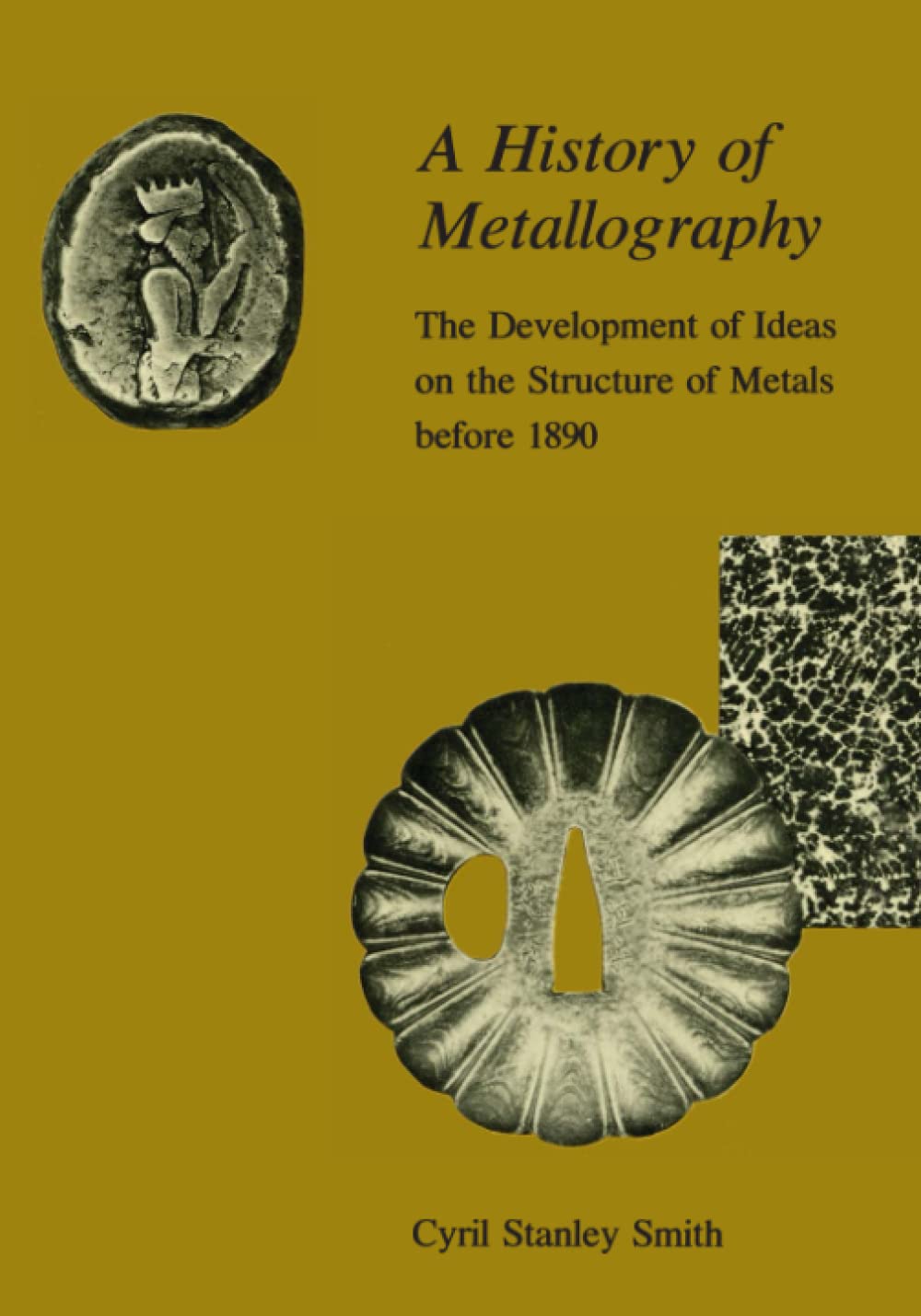
Title
A History Of Metallography: The Development Of Ideas On The Structure Of Metals Before 1890
Sold by Ergodebooks, an authorized reseller.
Returns accepted within 30 days | support@ergodebooks.com
Shipping Information
- Free Standard Shipping — United States only
- Processing Time: 3–5 business days
- Estimated Delivery: 6–10 business days after dispatch
- Double-boxed, fully insured & discreetly packaged
- Tracking number sent via email once dispatched
Returns & Refund
Returns accepted within 30 days of delivery.
Damaged or Defective Item
Free return shipping + replacement or full refund
Wrong Item Received
Free return shipping + replacement or full refund
Change of Mind
Return shipping at customer's expense · 25% restocking fee applies
Payment Option

Cyril Smith'S Study Of The Structure Of Metals And Alloys And The Properties That Result From Their Processing Remains, After More Than Two Decades, A Foundational Work On The History Of Metallography. It Starts From The Intuitive Knowledge Of Metals Achieved By Such Early Artists And Craftsmen As Biringuccio, Descartes, Raumur, Brant, Osmond, Sorby, Brinell, Tschernoff, Howe, Percy And Others, And Then Describes The Evolution Of The Modern Scientific Understanding Of Materials. Throughout, The Author Emphasizes The Interplay Of Contributions From Practical Engineering, From Experimental And Theoretical Science, And From The Workings Of The Aesthetic Imagination.The Original Hardcover Edition Of A History Of Metallography Won The Pfizer Prize Of The History Of Science Society.
⚠️ WARNING (California Proposition 65):
This product may contain chemicals known to the State of California to cause cancer, birth defects, or other reproductive harm.
For more information, please visit www.P65Warnings.ca.gov.
- Q: What is the page count of this book? A: This book contains three hundred twenty-six pages. It provides a comprehensive exploration of metallography's history and development.
- Q: What are the dimensions of the book? A: The book measures seven point zero one inches in length, zero point seven five inches in width, and ten inches in height. Its size makes it suitable for easy handling.
- Q: What type of binding does this book have? A: This book is available in paperback binding. This makes it lightweight and portable for readers.
- Q: Who is the author of this book? A: The book is authored by Cyril Stanley Smith. He is known for his significant contributions to the field of metallography.
- Q: What is the main subject of this book? A: The book focuses on the history and development of metallography. It discusses ideas on the structure of metals before eighteen ninety.
- Q: Is this book suitable for beginners? A: Yes, this book is suitable for beginners. It presents complex ideas in an accessible manner for those new to metallography.
- Q: Can this book be used as a reference for academic research? A: Yes, it can be used as a reference for academic research. Its detailed examination of metallography makes it a valuable resource.
- Q: Who would benefit from reading this book? A: Students, researchers, and professionals in materials science would benefit from reading this book. It provides foundational knowledge of metallography.
- Q: How can I best utilize this book for studying? A: You can utilize this book by reading it chapter by chapter and taking notes. This approach helps in understanding the evolution of metallographic concepts.
- Q: How should I store this book to keep it in good condition? A: Store the book upright on a shelf to keep it in good condition. Avoid exposing it to direct sunlight or moisture.
- Q: Is this book safe for children? A: Yes, this book is safe for children. However, it is more suitable for older children due to its complex subject matter.
- Q: What if the book arrives damaged? A: If the book arrives damaged, you should contact the retailer for a return or exchange. Most retailers have policies in place for such issues.
- Q: Is there a warranty for this book? A: No, there is no warranty for this book. However, customer service can assist with any concerns.
- Q: Can I read this book online? A: No, this book is not available for online reading. It is sold as a physical paperback edition.
- Q: What are the key themes discussed in the book? A: Key themes include the historical development of metallography and the interplay between science and art in understanding metals. These themes are explored through various historical figures.