If you have any questions, you are always welcome to contact us. We'll get back to you as soon as possible, withing 24 hours on weekdays.
Customer service
All questions about your order, return and delivery must be sent to our customer service team by e-mail at yourstore@yourdomain.com
Sale & Press
If you are interested in selling our products, need more information about our brand or wish to make a collaboration, please contact us at press@yourdomain.com
Help
If you have any questions, you are always welcome to contact us. We'll get back to you as soon as possible, withing 24 hours on weekdays.
Customer service
All questions about your order, return and delivery must be sent to our customer service team by e-mail at yourstore@yourdomain.com
Sale & Press
If you are interested in selling our products, need more information about our brand or wish to make a collaboration, please contact us at press@yourdomain.com
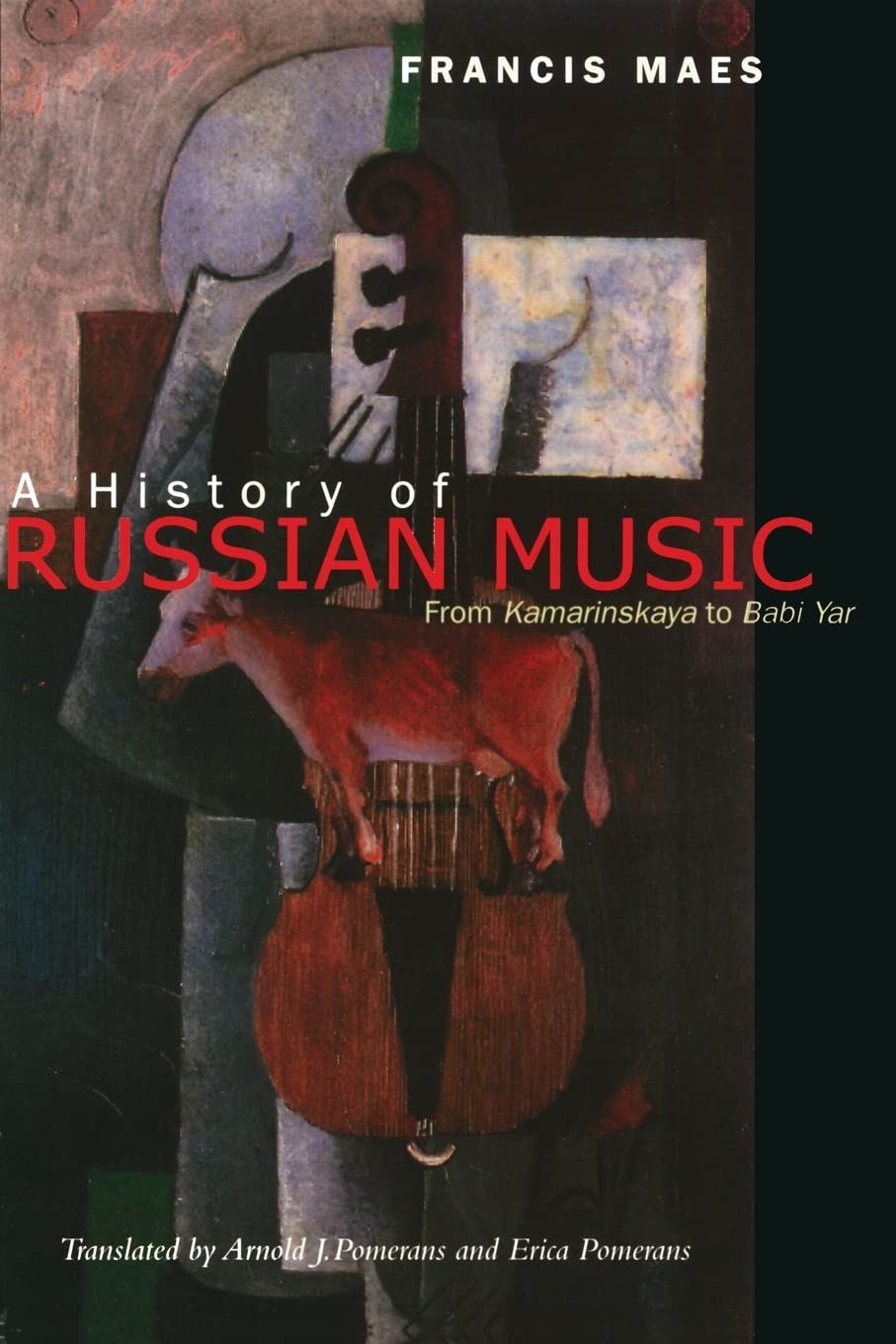
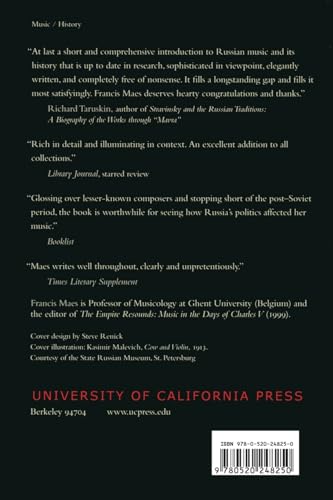
Francis Maes's comprehensive and imaginative book introduces the general public to the scholarly debate that has revolutionized Russian music history over the past two decades. Based on the most recent critical literature, A History of Russian Music summarizes the new view of Russian music and provides a solid overview of the relationships between artistic movements and political ideas.The revision of Russian music history may count as one of the most significant achievements of recent musicology. The Western view used to be largely based on the ideas of Vladimir Stasov, a friend and confidant of leading nineteenthcentury Russian composers who was more a propagandist than a historian. With the deconstruction of Stasov's interpretation, stereotyped views have been replaced by a fuller understanding of the conditions and the context in which composers such as Tchaikovsky, Mussorgsky, and Stravinsky created their oeuvres. Even the more recent history of Soviet music, in particular the achievement of Dmitry Shostakovich, is being assessed on new documentary grounds.A more complex conception of Russian music develops as Maes explores the cultural and historical milieu from which great works have emerged. Questioning and reexamining traditional views, the author considers the personal development of composers, the relationship of art to social and political ideals in Russia, and the ideologies behind musical research.
⚠️ WARNING (California Proposition 65):
This product may contain chemicals known to the State of California to cause cancer,
birth defects, or other reproductive harm.
For MAP (Minimum Advertised Price) violations and Intellectual Property (IP) or Trademark concerns, please contact:
support@ergodebooks.com
⚠️ California Proposition 65 Warning: Some products sold on this website may expose you to chemicals known to the State of California to cause cancer, birth defects, or other reproductive harm. For more information, visit www.P65Warnings.ca.gov.