
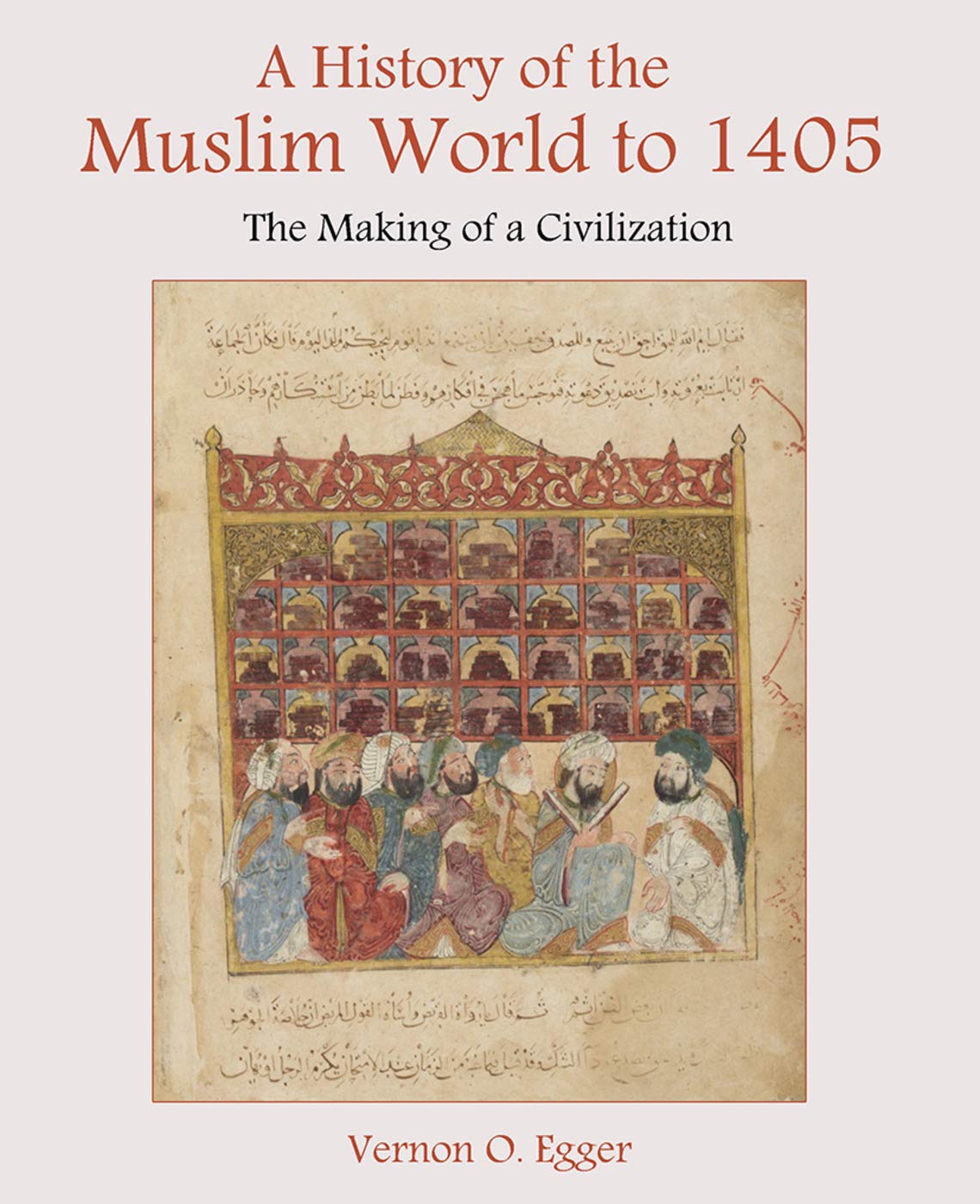
Title
A History of the Muslim World to 1405: The Making of a Civilization,Used
Sold by Ergodebooks, an authorized reseller.
Returns accepted within 30 days | support@ergodebooks.com
Shipping Information
- Free Standard Shipping — United States only
- Processing Time: 3–5 business days
- Estimated Delivery: 6–10 business days after dispatch
- Double-boxed, fully insured & discreetly packaged
- Tracking number sent via email once dispatched
Returns & Refund
Returns accepted within 30 days of delivery.
Damaged or Defective Item
Free return shipping + replacement or full refund
Wrong Item Received
Free return shipping + replacement or full refund
Change of Mind
Return shipping at customer's expense · 25% restocking fee applies
Payment Option

Muslims first appeared in the early seventh century as members of a persecuted religious movement in a sunbaked town in Arabia. Within a century, their descendants were ruling a vast territory that extended from the Atlantic Ocean to the Indus River valley in modern Pakistan. This region became the arena for a new cultural experiment in which Muslim scholars and creative artists synthesized and reworked the legacy of Rome, Greece, Iran, and India into a new civilization.A History of the Muslim World to 1405 traces the development of this civilization from the career of the Prophet Muhammad to the death of the Mongol emperor Timur Lang. Coverage includes the unification of the Dar a1Islam (the territory ruled by Muslims), the fragmentation into various religious and political groups including the Shi'ite and Sunni, and the series of catastrophes in the twelfth and thirteenth centuries that threatened to destroy the civilization.Features:Balanced coverage of the Muslim world encompassing the region from the Iberian Peninsula to South Asia.Detailed accounts of all cultures including major Shi'ite groups and the Sunni community.Primary sources.Numerous maps and photographs featuring a special fourcolor art insert.Glossary, charts, and timelines.
⚠️ WARNING (California Proposition 65):
This product may contain chemicals known to the State of California to cause cancer, birth defects, or other reproductive harm.
For more information, please visit www.P65Warnings.ca.gov.
- Q: How many pages does the book have? A: The book has three hundred thirty-six pages. It provides an extensive exploration of the Muslim world's history up to the year fourteen oh five.
- Q: What are the dimensions of the book? A: The book measures six point nine inches in length, zero point eight inches in width, and nine point one inches in height. This size makes it convenient for reading and portability.
- Q: What type of binding does this book have? A: This book is paperback bound. This binding type is lightweight and flexible, making it easy to handle and read.
- Q: Who is the author of 'A History of the Muslim World to 1405'? A: The author is Vernon Egger. He provides insights into the development of Muslim civilization in this historical account.
- Q: What is the genre of this book? A: The genre of this book is historical non-fiction. It focuses on the historical events and cultural developments of the Muslim world.
- Q: Is this book suitable for beginners? A: Yes, this book is suitable for beginners. It offers a balanced coverage of complex topics in an accessible manner, making it great for newcomers.
- Q: What topics does the book cover? A: The book covers a range of topics, including the life of the Prophet Muhammad, the unification of the Dar al-Islam, and the fragmentation into various sects. It also discusses significant historical events and cultural synthesis.
- Q: Is there a glossary in this book? A: Yes, the book includes a glossary. This feature helps readers understand key terms and concepts related to the history of the Muslim world.
- Q: Are there maps and photographs in the book? A: Yes, the book contains numerous maps and photographs. It also features a special four-color art insert that enhances the reading experience.
- Q: How should I store this book? A: Store this book in a cool, dry place to maintain its condition. Avoid direct sunlight to prevent fading of the cover and pages.
- Q: Can I clean the book if it gets dirty? A: Yes, you can clean the book. Use a soft, dry cloth to gently wipe the cover and edges to remove dust and dirt.
- Q: What should I do if the book arrives damaged? A: If the book arrives damaged, you should contact the seller for a return or exchange. Most sellers have policies in place for handling such issues.
- Q: Is there a warranty on this book? A: No, there is typically no warranty on books. However, you may have protection under the seller's return policy.
- Q: Is this book appropriate for academic use? A: Yes, this book is appropriate for academic use. It includes primary sources and detailed accounts that can support research in history and cultural studies.
- Q: What makes this book stand out among others? A: This book stands out due to its balanced coverage of diverse cultures within the Muslim world and its detailed historical analysis. It synthesizes various legacies into a coherent narrative.