If you have any questions, you are always welcome to contact us. We'll get back to you as soon as possible, withing 24 hours on weekdays.
Customer service
All questions about your order, return and delivery must be sent to our customer service team by e-mail at yourstore@yourdomain.com
Sale & Press
If you are interested in selling our products, need more information about our brand or wish to make a collaboration, please contact us at press@yourdomain.com
Help
If you have any questions, you are always welcome to contact us. We'll get back to you as soon as possible, withing 24 hours on weekdays.
Customer service
All questions about your order, return and delivery must be sent to our customer service team by e-mail at yourstore@yourdomain.com
Sale & Press
If you are interested in selling our products, need more information about our brand or wish to make a collaboration, please contact us at press@yourdomain.com
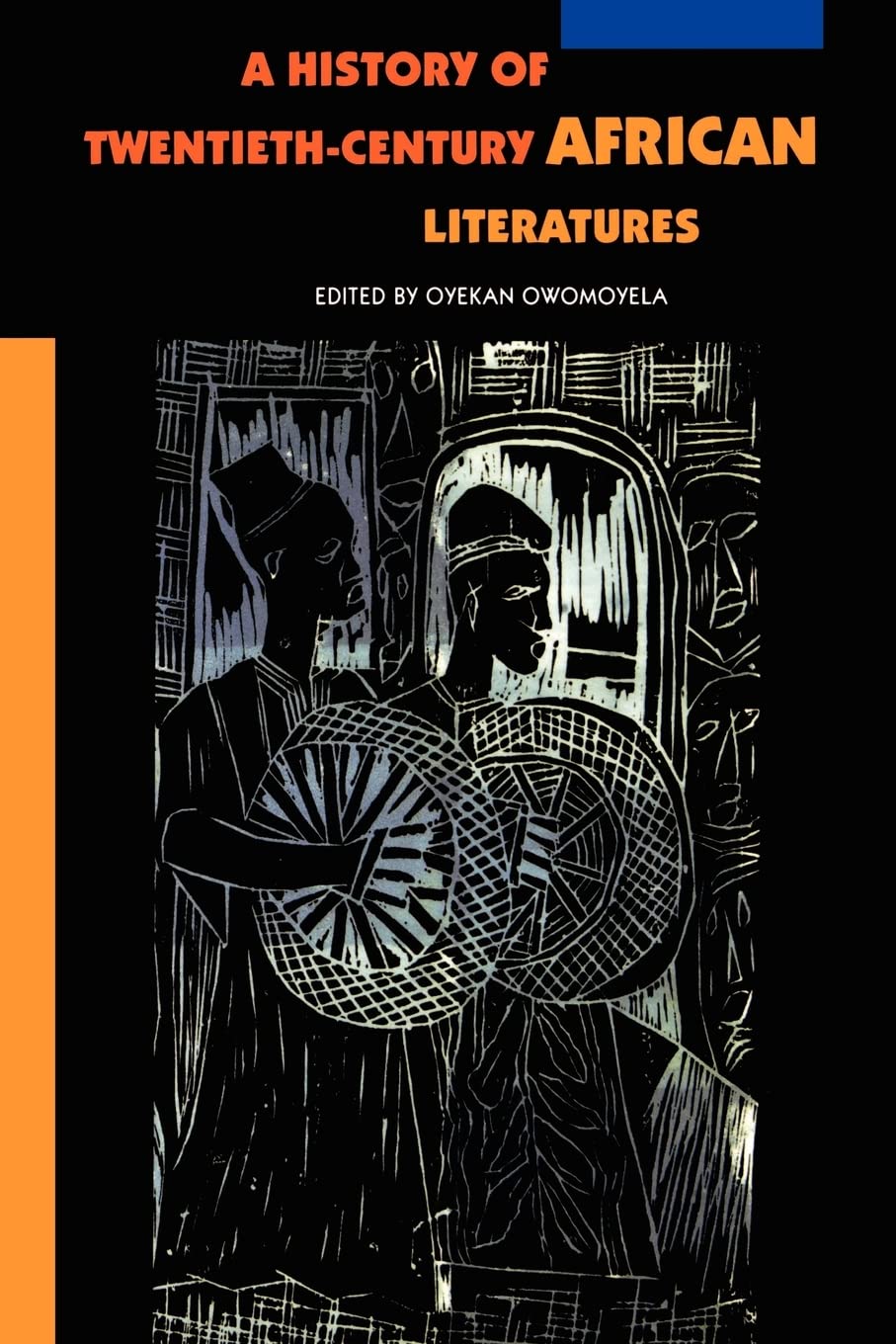
African literatures, says volume editor Oyekan Owomoyela, 'testify to the great and continuing impact of the colonizing project on the African universe.' African writers must struggle constantly to define for themselves and other just what 'Africa' is and who they are in a continent constructed as a geographic and cultural entity largely by Europeans.This study reflects the legacy of colonialism by devoting nine of its thirteen chapters to literature in 'Europhone' languagesEnglish, French, and Portuguese. Foremost among the Anglophone writers discussed are Nigerians Amos Tutuola, Chinua Achebe, and Wole Soyinka. Writers from East Africa are also represented, as are those from South Africa. Contributors for this section include Jonathan A. Peters, Arlene A. Elder, John F. Povey, Thomas Knipp, and J. Ndukaku Amankulor.In African Francophone literature, we see both writers inspired by the French assimilationist system and those influenced by Negritude, the Africanculture affirmation movement. Contributors here include Servanne Woodward, Edris Makward, and Alain Ricard. African literature in Portuguese, reflecting the nature of one of the most oppressive colonizing projects in Africa, is treated by Russell G. Hamilton. Robert Cancel discusses Africanlanguage literatures, while Oyekan Owomoyela treats the question of the language of African literatures.Carole Boyce Davies and Elaine Savory Fido focus on the special problems of African women writers, while Hans M. Zell deals with the broader issues of publishingcensorship, resources, and organization.
⚠️ WARNING (California Proposition 65):
This product may contain chemicals known to the State of California to cause cancer,
birth defects, or other reproductive harm.
For MAP (Minimum Advertised Price) violations and Intellectual Property (IP) or Trademark concerns, please contact:
support@ergodebooks.com
⚠️ California Proposition 65 Warning: Some products sold on this website may expose you to chemicals known to the State of California to cause cancer, birth defects, or other reproductive harm. For more information, visit www.P65Warnings.ca.gov.