If you have any questions, you are always welcome to contact us. We'll get back to you as soon as possible, withing 24 hours on weekdays.
Customer service
All questions about your order, return and delivery must be sent to our customer service team by e-mail at yourstore@yourdomain.com
Sale & Press
If you are interested in selling our products, need more information about our brand or wish to make a collaboration, please contact us at press@yourdomain.com
Help
If you have any questions, you are always welcome to contact us. We'll get back to you as soon as possible, withing 24 hours on weekdays.
Customer service
All questions about your order, return and delivery must be sent to our customer service team by e-mail at yourstore@yourdomain.com
Sale & Press
If you are interested in selling our products, need more information about our brand or wish to make a collaboration, please contact us at press@yourdomain.com
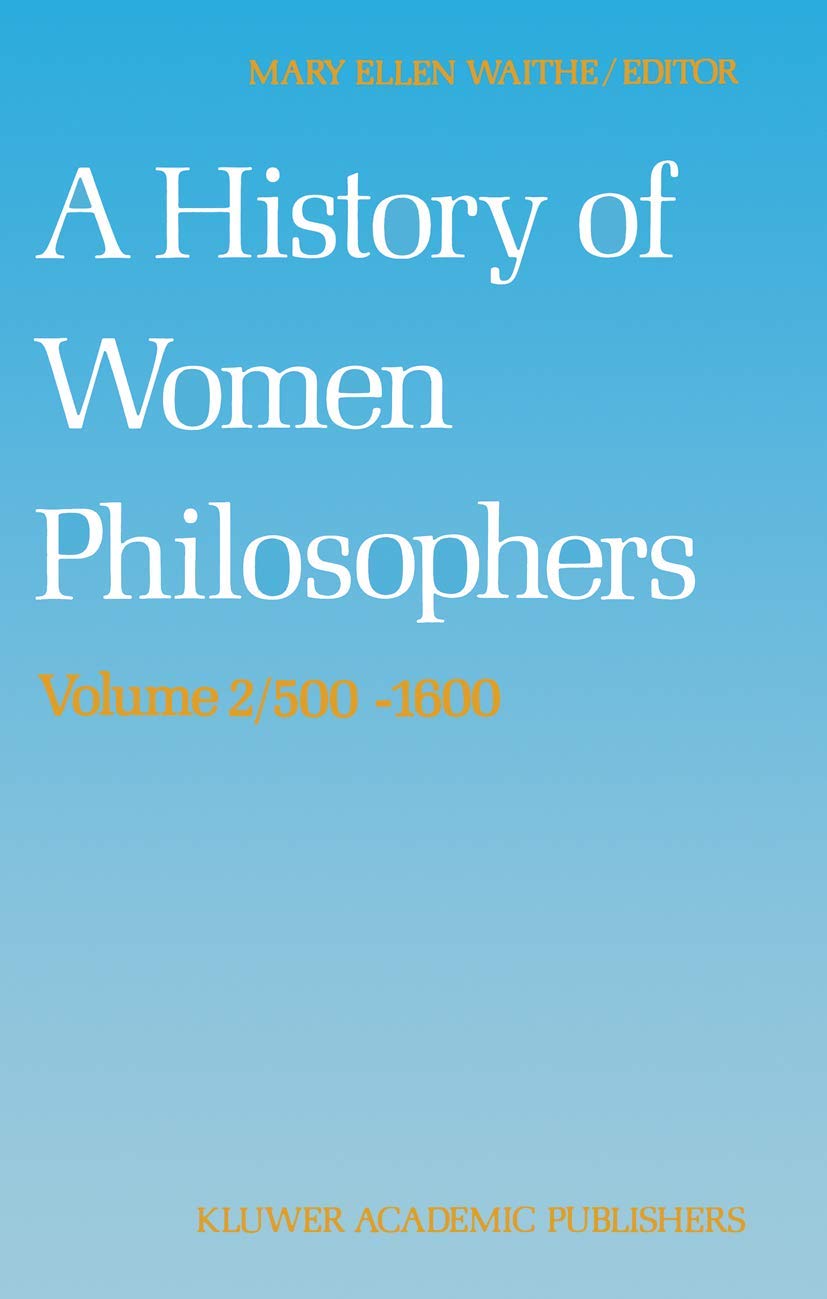
aspirations, the rise of western monasticism was the most note worthy event of the early centuries. The importance of monasteries cannot be overstressed as sources of spirituality, learning and auto nomy in the intensely masculinized, militarized feudal period. Drawing their members from the highest levels of society, women's monasteries provided an outlet for the energy and ambition of strongwilled women, as well as positions of considerable authority. Even from periods relatively inhospitable to learning of all kinds, the memory has been preserved of a good number of women of education. Their often considerable achievements and influence, however, generally lie outside even an expanded definition of philo sophy. Among the most notable foremothers of this early period were several whose efforts signal the possibility of later philosophical work. Radegund, in the sixth century, established one of the first Frankish convents, thereby laying the foundations for women's spiritual andintellectual development. From these beginnings, women's monasteries increased rapidly in both number and in fluence both on the continent and in AngloSaxon England. Hilda (d. 680) is well known as the powerful abbsess of the double monastery of Whitby. She was eager for knowledge, and five Eng lish bishops were educated under her tutelage. She is also accounted the patron of Caedmon, the first AngloSaxon poet of religious verse. The AngloSaxon nun Lioba was versed in the liberal arts as well as Scripture and canon law.
⚠️ WARNING (California Proposition 65):
This product may contain chemicals known to the State of California to cause cancer,
birth defects, or other reproductive harm.
For MAP (Minimum Advertised Price) violations and Intellectual Property (IP) or Trademark concerns, please contact:
support@ergodebooks.com
⚠️ California Proposition 65 Warning: Some products sold on this website may expose you to chemicals known to the State of California to cause cancer, birth defects, or other reproductive harm. For more information, visit www.P65Warnings.ca.gov.