
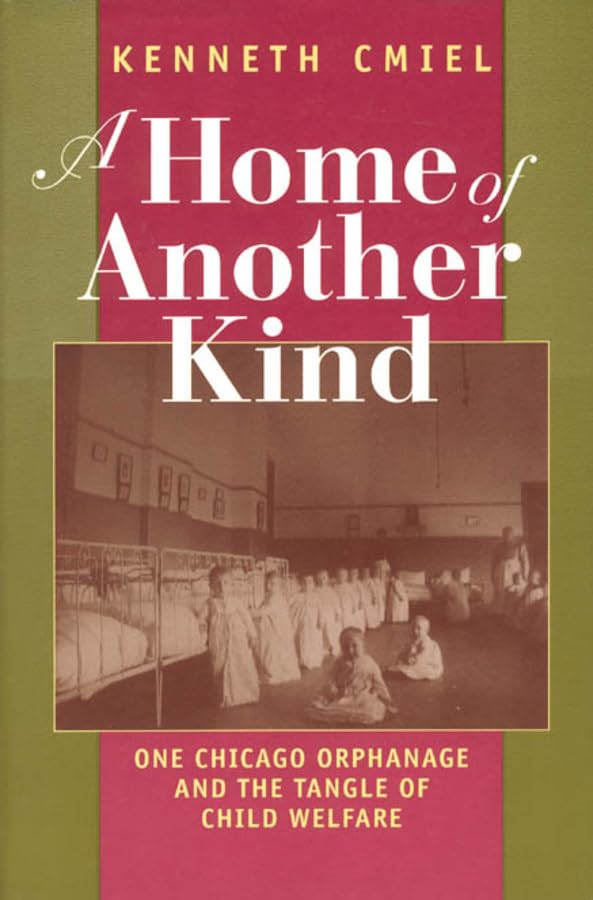
Title
A Home of Another Kind: One Chicago Orphanage and the Tangle of Child Welfare,Used
Sold by Ergodebooks, an authorized reseller.
Returns accepted within 30 days | support@ergodebooks.com
Shipping Information
- Free Standard Shipping — United States only
- Processing Time: 3–5 business days
- Estimated Delivery: 6–10 business days after dispatch
- Double-boxed, fully insured & discreetly packaged
- Tracking number sent via email once dispatched
Returns & Refund
Returns accepted within 30 days of delivery.
Damaged or Defective Item
Free return shipping + replacement or full refund
Wrong Item Received
Free return shipping + replacement or full refund
Change of Mind
Return shipping at customer's expense · 25% restocking fee applies
Payment Option

In the most comprehensive account ever written of an American orphanage, an institution about which even its many new advocates and experts know little, Kenneth Cmiel exposes America's changing attitudes toward child welfare.The book begins with the fascinating history of the Chicago Nursery and HalfOrphan Asylum from 1860 through 1984, when it became a fulltime research institute. Founded by a group of wealthy volunteers, the asylum was a Protestant institution for Protestant childrenone of dozens around the country designed as places where single parents could leave their children if they were temporarily unable to care for them.But the asylum, which later became known as Chapin Hall, changed dramatically over the years as it tried to respond to changing policies, priorities, regulations, and theories concerning child welfare. Cmiel offers a vivid portrait of how these changes affected the daytoday realities of group living. How did the kind of care given to the children change? What did the staff and management hope to accomplish? How did they define 'family'? Who were the children who lived in the asylum? What brought them there? What were their needs? How did outside forces change what went on inside Chapin Hall?This is much more than a richly detailed account of one institution. Cmiel shatters a number of popular myths about orphanages. Few realize that almost all children living in nineteenthcentury orphanages had at least one living parent. And the austere living conditions so characteristic of the orphanage were prompted as much by health concerns as by strict Victorian morals.
⚠️ WARNING (California Proposition 65):
This product may contain chemicals known to the State of California to cause cancer, birth defects, or other reproductive harm.
For more information, please visit www.P65Warnings.ca.gov.