
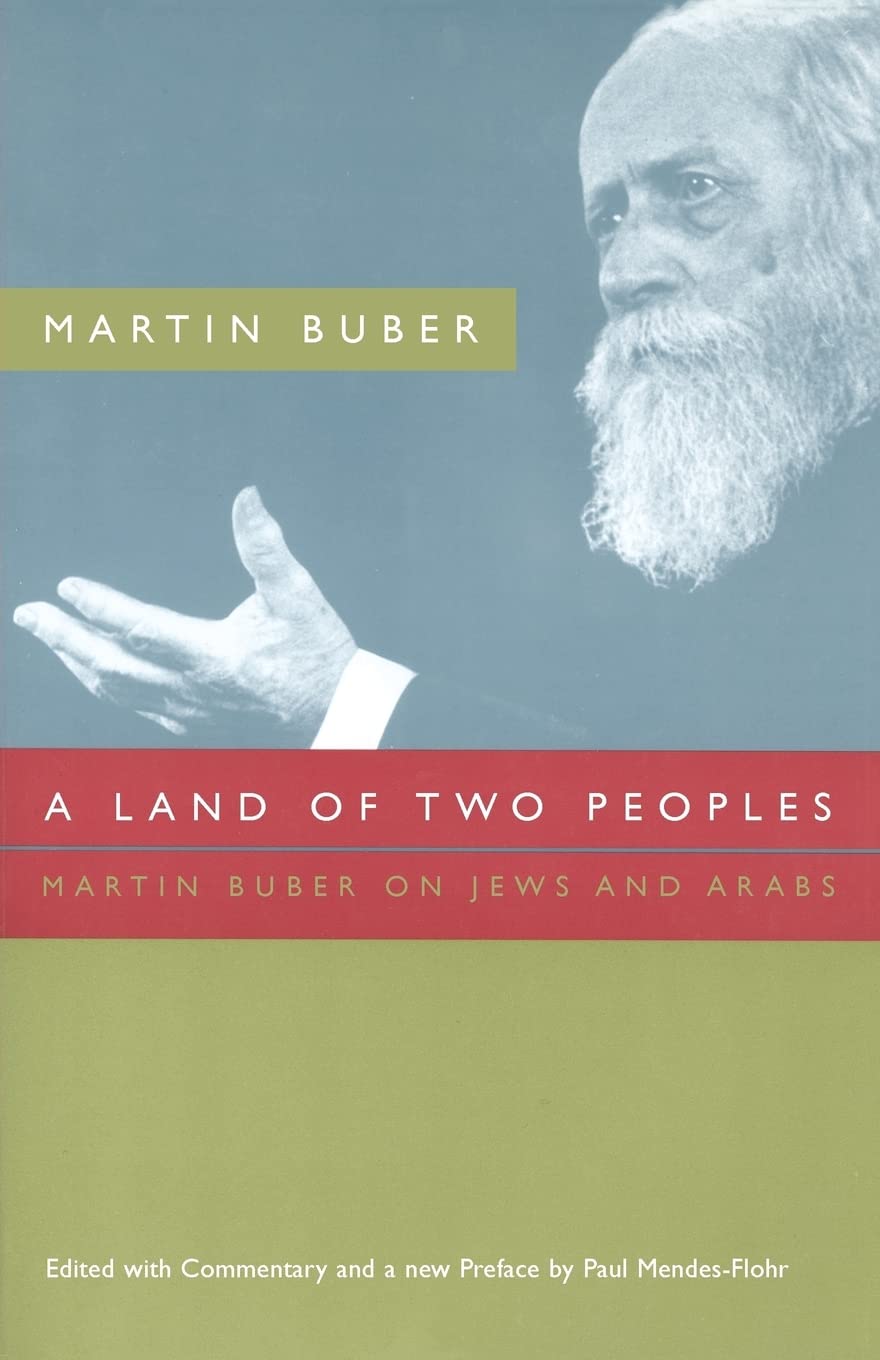
Title
A Land Of Two Peoples: Martin Buber On Jews And Arabs
Sold by Ergodebooks, an authorized reseller.
Returns accepted within 30 days | support@ergodebooks.com
Shipping Information
- Free Standard Shipping — United States only
- Processing Time: 3–5 business days
- Estimated Delivery: 6–10 business days after dispatch
- Double-boxed, fully insured & discreetly packaged
- Tracking number sent via email once dispatched
Returns & Refund
Returns accepted within 30 days of delivery.
Damaged or Defective Item
Free return shipping + replacement or full refund
Wrong Item Received
Free return shipping + replacement or full refund
Change of Mind
Return shipping at customer's expense · 25% restocking fee applies
Payment Option

Theologian, philosopher, and political radical, Martin Buber (18781965) was actively committed to a fundamental economic and political reconstruction of society as well as the pursuit of international peace. In his voluminous writings on ArabJewish relations in Palestine, Buber united his religious and philosophical teachings with his politics, which he felt were essential to a life of public dialogue and service to God.Collected in ALand of Two Peoples are the private and open letters, addresses, and essays in which Buber advocated binationalism as a solution to the conflict in the Middle East. A committed Zionist, Buber steadfastly articulated the moral necessity for reconciliation and accommodation between the Arabs and Jews. From the Balfour Declaration of November 1917 to his death in 1965, he campaigned passionately for a 'one state solution.With the Middle East embroiled in religious and ethnic chaos, A Land of Two Peoples remains as relevant today as it was when it was first published more than twenty years ago. This timely reprint, which includes a new preface by Paul MendesFlohr, offers context and depth to current affairs and will be welcomed by those interested in Middle Eastern studies and political theory.
⚠️ WARNING (California Proposition 65):
This product may contain chemicals known to the State of California to cause cancer, birth defects, or other reproductive harm.
For more information, please visit www.P65Warnings.ca.gov.
- Q: What is the binding type of the book? A: The book has a paperback binding. This makes it lightweight and flexible, ideal for easy handling and reading.
- Q: How many pages does 'A Land of Two Peoples' have? A: The book contains three hundred forty-two pages. This length provides a comprehensive exploration of Martin Buber's thoughts and writings.
- Q: What are the dimensions of the book? A: The book measures five point five one inches in length, zero point eight seven inches in width, and eight point five inches in height. These dimensions make it a convenient size for reading.
- Q: Is there a specific reading age for this book? A: The book is suitable for adult readers. It addresses complex themes in political theory and Middle Eastern studies.
- Q: What themes are covered in this book? A: The book explores themes of binationalism, reconciliation, and Arab-Jewish relations. It reflects on Martin Buber's advocacy for peace in the Middle East.
- Q: How do I approach reading this book? A: To read this book, you can start with the preface, which provides context. Then, consider reading it in sections to fully digest the complex themes.
- Q: Is this book suitable for beginners in political theory? A: While the book is insightful, it may be challenging for beginners. A basic understanding of Middle Eastern history and political theory would be beneficial.
- Q: What is the best way to store this book? A: Store the book in a cool, dry place away from direct sunlight. This will help preserve its condition and prevent damage to the pages.
- Q: How should I clean the book if it gets dirty? A: To clean the book, gently wipe the cover with a dry cloth. Avoid using water or cleaning solutions, as they can damage the pages.
- Q: Can I return the book if I don't like it? A: Yes, you can return the book if you are not satisfied. Check the retailer's return policy for specific details on time frames and conditions.
- Q: What should I do if my book arrives damaged? A: If your book arrives damaged, contact the seller immediately for a replacement or refund. Most retailers have policies in place for such situations.
- Q: How does this book compare to other works on Middle Eastern studies? A: This book offers a unique perspective by focusing on Martin Buber's philosophical approach to Arab-Jewish relations, which may differ from more historical analyses.
- Q: Who is the author of 'A Land of Two Peoples'? A: The author is Martin Buber, a noted theologian and philosopher known for his contributions to religious and political thought.
- Q: Does this book include any additional commentary? A: Yes, the reprint includes a new preface by Paul Mendes-Flohr, which adds context to Buber's work and its relevance today.
- Q: What makes this book relevant today? A: The themes of reconciliation and binationalism in the book are still pertinent in contemporary discussions about Middle Eastern conflicts and peace efforts.