
Title
A Local Habitation and a Name: Imagining Histories in the Italian Renaissance,Used
Sold by Ergodebooks, an authorized reseller.
Returns accepted within 30 days | support@ergodebooks.com
Shipping Information
- Free Standard Shipping — United States only
- Processing Time: 3–5 business days
- Estimated Delivery: 6–10 business days after dispatch
- Double-boxed, fully insured & discreetly packaged
- Tracking number sent via email once dispatched
Returns & Refund
Returns accepted within 30 days of delivery.
Damaged or Defective Item
Free return shipping + replacement or full refund
Wrong Item Received
Free return shipping + replacement or full refund
Change of Mind
Return shipping at customer's expense · 25% restocking fee applies
Payment Option

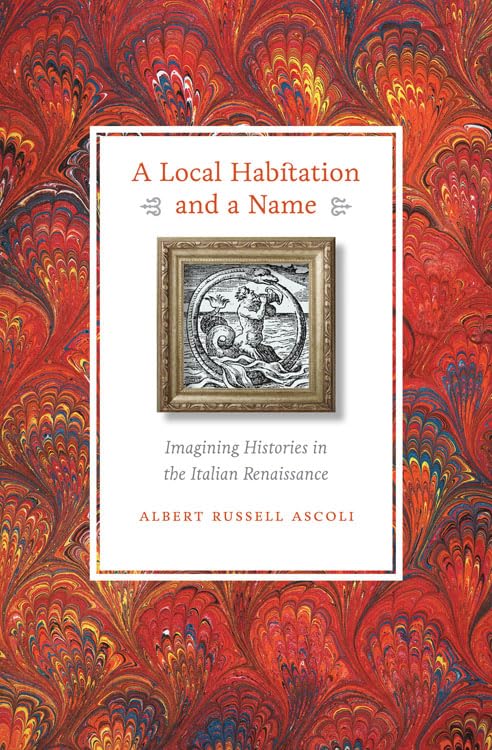
Focusing on major authors and problems from the Italian fourteenth and sixteenth centuries, from Petrarch and Boccaccio to Machiavelli, Ariosto and Tasso, A Local Habitation and a Name examines the unstable dialectic of reality and imagination, as well as of history and literature. Albert Ascoli identifies and interprets the ways in which literary texts are shaped by and serve the purposes of multiple, intertwined historical discourses and circumstances, and he equally probes the function of such texts in constructing, interpreting, critiquing, and effacing the histories in which they are embedded. Throughout, he poses the theoretical and methodological question of how formal analysis and literary forms can at once resist and further the historicist enterprise.Along the way Ascoli interrogates the mechanisms of historical periodization that have governed for so long our study of what is sometimes called the Renaissance, sometimes the early modern period. He also addresses the periods own unstable version of the literature/history opposition, the place of gendered discourse in the construction of historical narratives (and vice versa), the elaborate formal strategies by which poets and intellectuals negotiate their relations to power, and, finally, the way in which proper names (of authors, works, and exemplary characters) serve as points of negotiation between individual identity and social order in the Renaissance.The book brings to culmination two decades of a major scholars thinking about some of the most important figures and questions that shaped the Renaissance, with emphasis on the question of history, both the historical context of literature and the writing of literary history.
⚠️ WARNING (California Proposition 65):
This product may contain chemicals known to the State of California to cause cancer, birth defects, or other reproductive harm.
For more information, please visit www.P65Warnings.ca.gov.