
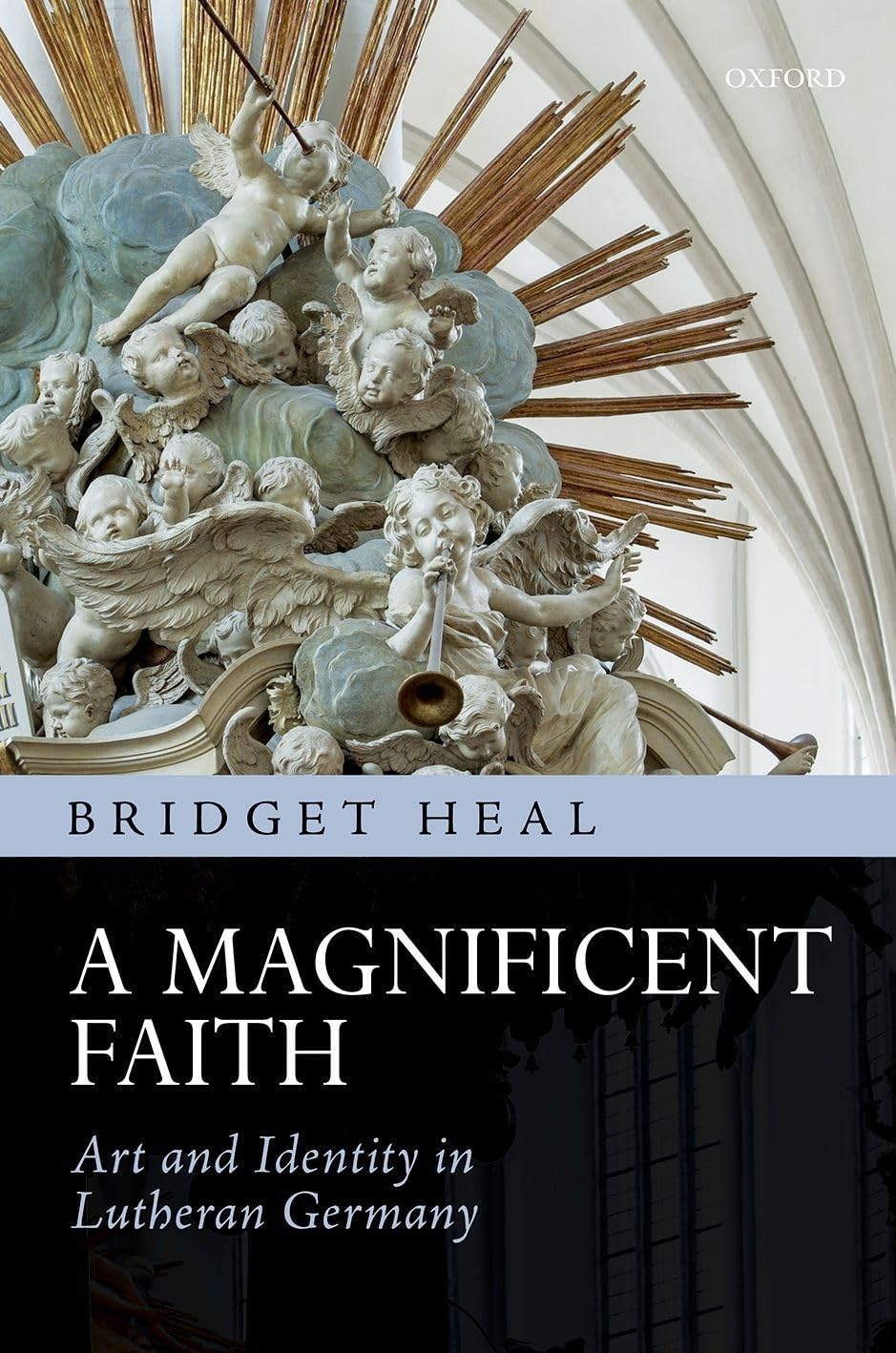
Title
A Magnificent Faith: Art and Identity in Lutheran Germany,Used
Sold by Ergodebooks, an authorized reseller.
Returns accepted within 30 days | support@ergodebooks.com
Shipping Information
- Free Standard Shipping — United States only
- Processing Time: 3–5 business days
- Estimated Delivery: 6–10 business days after dispatch
- Double-boxed, fully insured & discreetly packaged
- Tracking number sent via email once dispatched
Returns & Refund
Returns accepted within 30 days of delivery.
Damaged or Defective Item
Free return shipping + replacement or full refund
Wrong Item Received
Free return shipping + replacement or full refund
Change of Mind
Return shipping at customer's expense · 25% restocking fee applies
Payment Option

A Magnificent Faith explains how and why Lutheranisma confession that derived its significance from the promulgation of God's Wordbecame a visually magnificent faith, a faith whose adherents sought to captivate Christians' hearts and minds through seeing as well as through hearing. Although Protestantism is no longer understood as an exclusively wordbased religion, the paradigm of evangelical ambivalence towards images retains its power. This is the first study to offer an account of the Reformation origins and subsequent flourishing of the Lutheran baroque, of the rich visual culture that developed in parts of the Holy Roman Empire during the later seventeenth and early eighteenth centuries. The volume opens with a discussion of the legacy of the Wittenberg Reformation. Three sections then focus on the confessional, devotional, and magnificent image, exploring turning points in Lutherans' attitudes towards religious art. Drawing on a wide variety of archival, printed, and visual sources from two of the Empire's most important Protestant territoriesSaxony, the heartland of the Reformation, and BrandenburgA Magnificent Faith shows the extent to which Lutheran culture was shaped by territorial divisions. It traces the development of a theologicallygrounded aesthetic, and argues that images became prominent vehicles for the articulation of Lutheran identity not only amongst theologians but also amongst laymen and women. By examining the role of images in the Lutheran tradition as it developed over the course of two centuries, A Magnificent Faith offers a new understanding of the relationship between Protestantism and the visual arts.
⚠️ WARNING (California Proposition 65):
This product may contain chemicals known to the State of California to cause cancer, birth defects, or other reproductive harm.
For more information, please visit www.P65Warnings.ca.gov.